Awareness to Action: Tier 1 Mental Health Strategies that Center Student Experiences


"I often say MTSS is not about labeling students, it's about listening to their story. #ahamoment" - Angela Ryg, Coordinator of Student Success, School District U-46 in Elgin, IL
When wise words like this enter the Zoom chat, they're definitely worth repeating. And for attendees of Sown To Grow's April 16 webinar, this meaningful moment was one of many highlighting how trauma-informed, healing-centered practices help classrooms feel like safe spaces.
Many teachers worry they lack the training to handle student support issues, but all staff members—not just counselors and social workers—should feel empowered with tools to build protective relationships, and use those to help identify elevated needs and bridge to the appropriate intervention.
Led by Sown To Grow team members Dr. Monica Coverson and LaKisha Hoffman—both of whom are also licensed mental health professionals and previously served as school and district administrators—the webinar truly united those with a shared commitment to caring for students.
Why Tier 1 Is the Foundation for Trauma-Informed Classrooms
Before diving into strategies, Dr. Coverson reviewed the landscape of school-based mental health for attendees by covering the role of proactive MTSS.
"You don't have to be a clinician to make an impact on a student's mental health,” she explained. “It starts at Tier 1, and that means everybody…That space is so essential at creating safe, predictable, and relationship-centered environments."
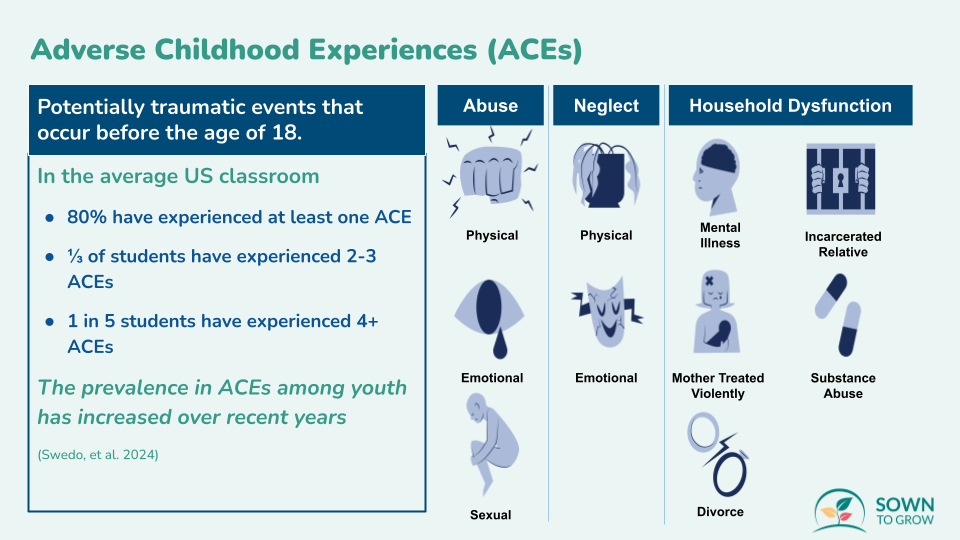
Dr. Coverson also referenced data points about the rising prevalence of Adverse Childhood Experiences (ACEs) for students in U.S. classrooms, which can show up as disengagement, emotional outbursts, difficulty focusing, chronic absenteeism, and withdrawal.
These above-the-surface behaviors are often just the tip of the iceberg; underneath lies unmet emotional needs, stress responses, and a nervous system that doesn't feel safe.
However, when Tier 1 is strong, Dr. Coverson explained, this universal layer of the MTSS framework makes it easier to notice when something isn't right, and to bridge students toward the additional support they need.
“Tier 1 is about prevention,” she said. “It's not extra work, it's essential work, and it's the work that makes everything else that we're going to talk about possible.”
Building Trauma-Informed, Healing-Centered Classrooms
Along with the importance of MTSS, the session made a key distinction between trauma-informed practice and healing-centered practice: although related, they are not the same.
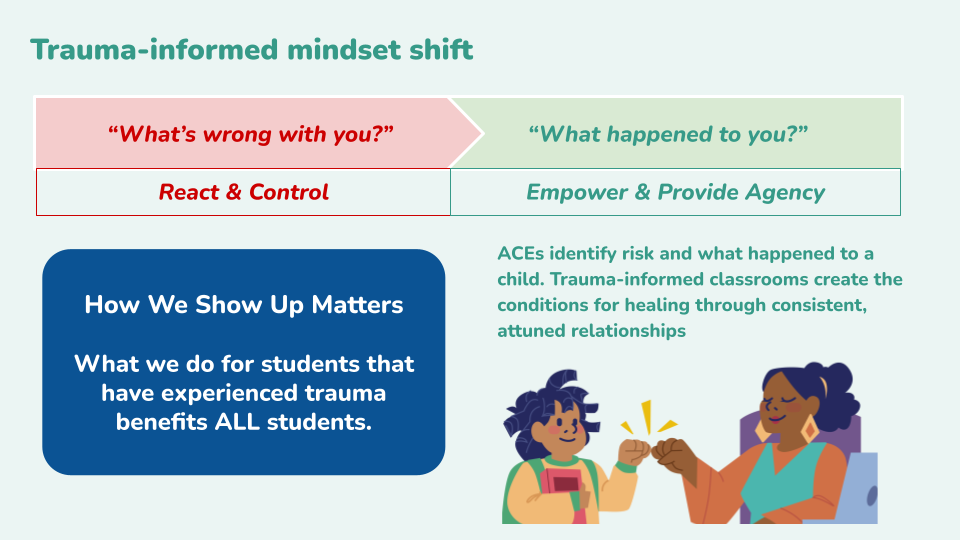
A trauma-informed approach shifts the question from "What's wrong with you?" to "What happened to you?" and responds with curiosity rather than control, and prioritizes emotional safety and belonging.
Healing-centered classrooms go a step further, explained Hoffman, by intentionally creating environments where students can heal, grow, and thrive academically, socially, and emotionally.
She cited Dr. Shawn Ginwright's CARMA framework to help make this point actionable:
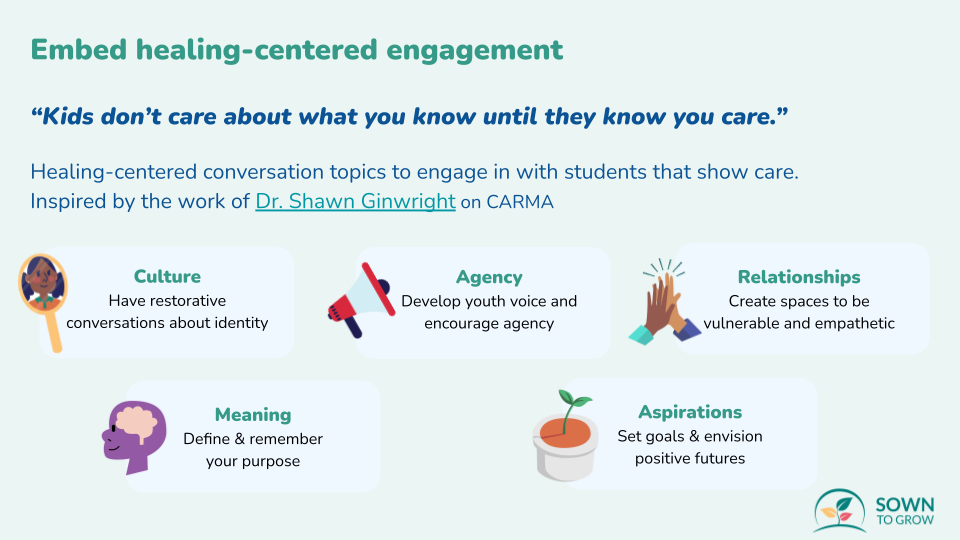
Together, these five pillars offer a practical roadmap for healing-centered engagement at Tier 1, but they’re just a starting point, Hoffman said. Genuine connection building takes consistency in order to achieve real growth.
Being a Bridge: Early Identification and Proactive Support
Healing-centered classrooms don't just help students thrive—they help educators notice when someone is struggling. And that heightened awareness is the first step in getting students the support they need.
Dr. Coverson introduced two complementary frameworks for educators to put this into practice: the Notice. Talk. Act. framework (from the American Psychiatric Association Foundation) and the Regulate. Relate. Reason. framework (based on the work of Dr. Bruce Perry).
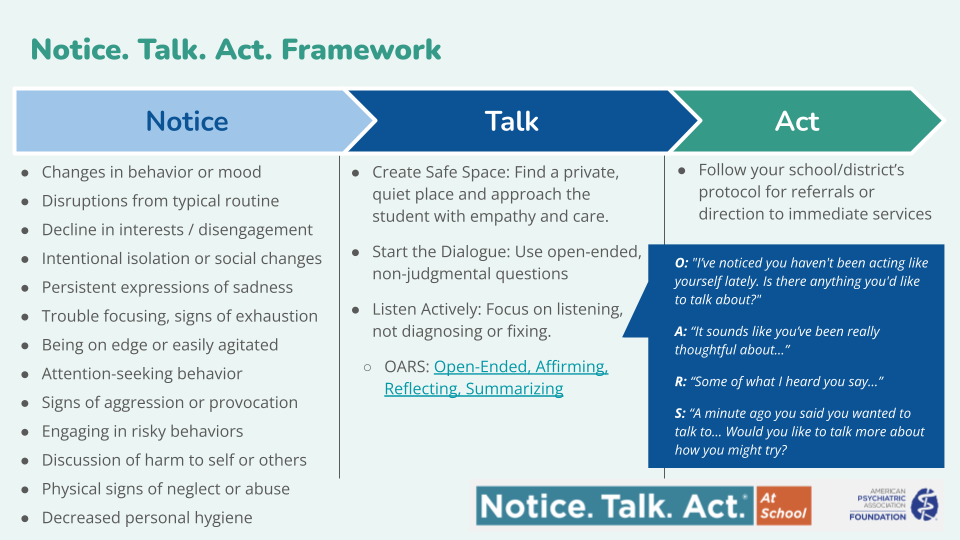
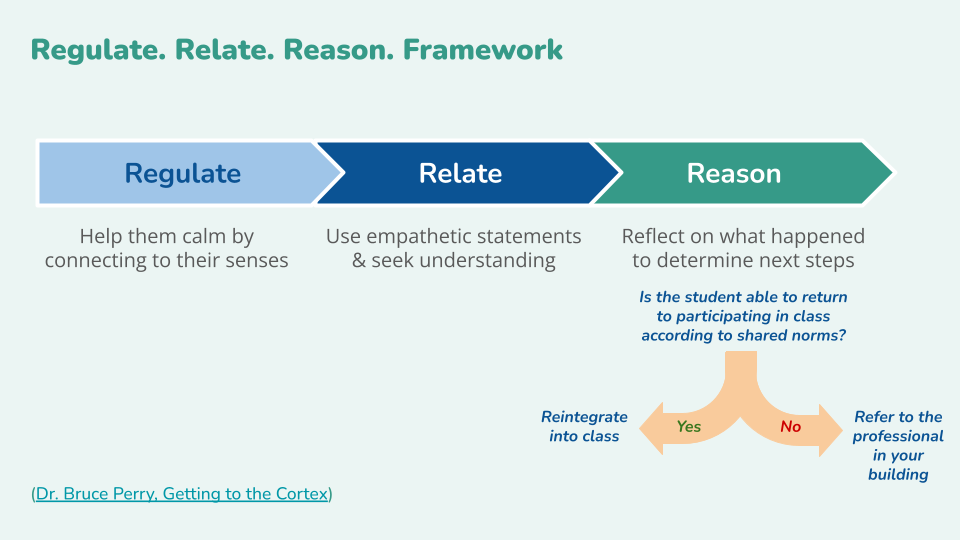
The underlying question the session kept returning to: How do we make this part of every student's experience, not just the ones we happen to notice? That shift — from individual relationship to systemic practice — is what turns good intentions into real support.
From Strategies to Systems: How Sown To Grow Supports Healing-Centered Practice
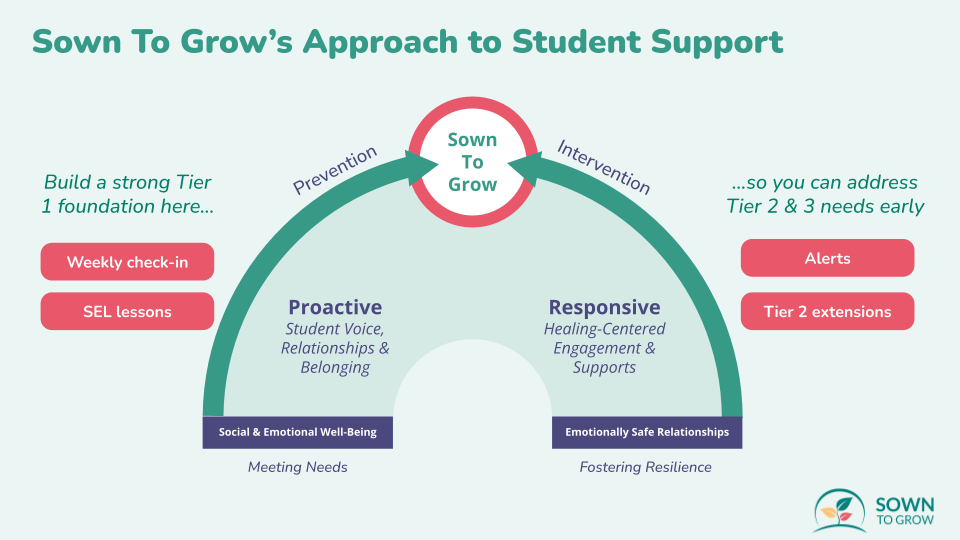
Individual strategies matter, but sustainable student support requires actual systems. That's the design philosophy behind Sown To Grow, a platform meant to support this important work.
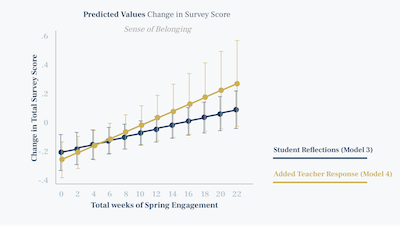
The final segment of the webinar featured two educators whose districts use Sown To Grow’s weekly student check-in. The brief 3-5 minute reflective routine gives every student a consistent, low-stakes opportunity to share how they're doing. Teachers can then reply to students, and in time, further the in-person connections. That routine does two things simultaneously: it’s a research-backed practice to build belonging, and it provides data that surfaces students with additional needs.
Additionally, when a student reflection is flagged as concerning based on a response that signals distress, isolation, or risk, Sown To Grow alerts the tagged student support staff, counselors, social workers, and/or administrators to respond proactively rather than waiting for a crisis.
The result is a platform that supports both sides of the MTSS equation: building a strong Tier 1 foundation through consistent SEL routines and student voice, while also enabling early identification and responsive support at Tiers 2 and 3. Beyond this, the personal benefits vary from teacher to teacher.
“For me, Sown To Grow has been a really good opportunity to cultivate that safe space,” explained Kelly McColl, high school science teacher from Grossmont Union High School District in California. “It’s just one piece of the puzzle, but giving students a voice, giving them a sense of agency, a sense that they belong. It makes it a lot easier to convince them that, ‘hey, biology’s cool’ when they know I actually care about them.”
For others, Sown To Grow provides a window into students’ worlds outside of school, said Kayla Knighten, an elementary teacher in Cherokee County School District in South Carolina.
“It gives me a way to see what's going on in their mind and what's going on at home so I can help here to know why they might be struggling.”
When Theory Becomes Practice: The daily realities of carrying out this work
Both McColl and Knighten are designated by Sown To Grow as Heartfelt Responders, which are educators who demonstrate an exceptional commitment amongst their staff through their authentic, consistent responses to student reflections.
Their webinar presence was a reminder that the strategies discussed aren't simply theoretical. They're already happening in real classrooms, every day, every week. In time, hopefully increasingly more educators can feel empowered to help their students feel seen, heard, and supported in school.
---
If you're curious how Sown To Grow can support your school or district's Tier 1 mental health strategy, we'd love to connect — reach out at mtss@sowntogrow.com or schedule a conversation with our team.
.png)
.png)
.png)
.png)
.png)