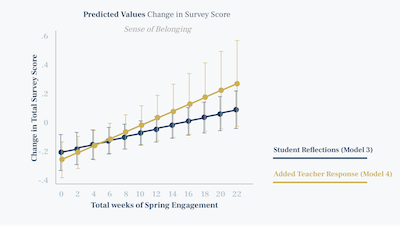
Getting to the Root: Growing Attendance Through Proactive Identification & Support

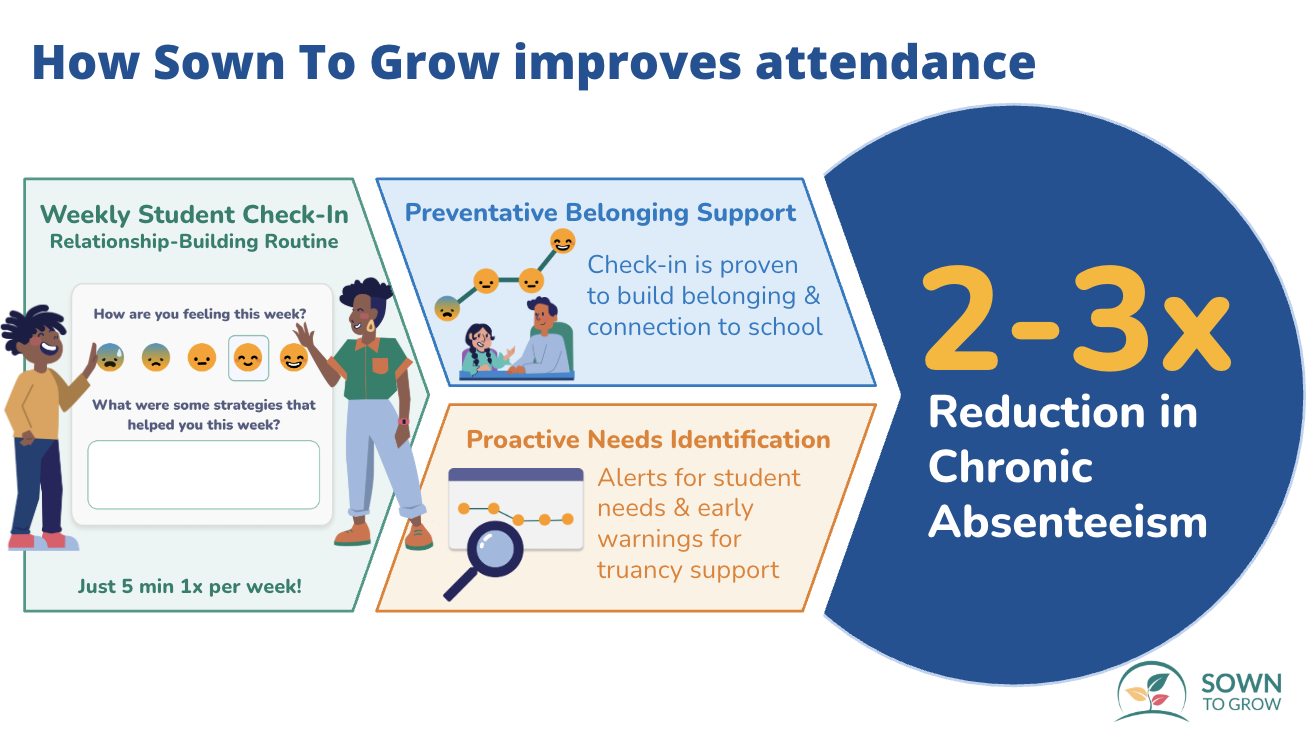
The research is clear: when students feel they belong, they show up.
And when they don’t, behind every missed day is a story schools often don’t hear until it’s too late.
Solving chronic absenteeism is complex, but districts making progress are using preventative, connection-driven approaches that prove belonging—not punishment—is what brings students back.
This belief isn’t just philosophical—it’s measurable. Based on the results from our latest study, Sown To Grow’s simple, relationship-centered approach can reduce chronic absenteeism 2-3 times more than schools without this intervention.
This exciting development was unveiled at our Jan. 22 webinar, “Getting to the Root: Growing Attendance Through Proactive Identification & Support of Root Causes,” which was hosted by Rupa Gupta, Sown To Grow’s CEO and Co-Founder, and former district administrator, alongside Dr. Don Parker, keynote speaker, education expert, professional development provider, and former principal.
Access Additional Resources:
Continue reading to learn more about the research process, data findings, stories from the field, and strategies to improve attendance in your own schools and districts starting this semester.
Our Purpose: Why Every Day Matters
The webinar discussion began by unpacking the basics: why attendance matters, how the various causes of chronic absenteeism contribute to the problem’s depth, and what more successful support systems look like.
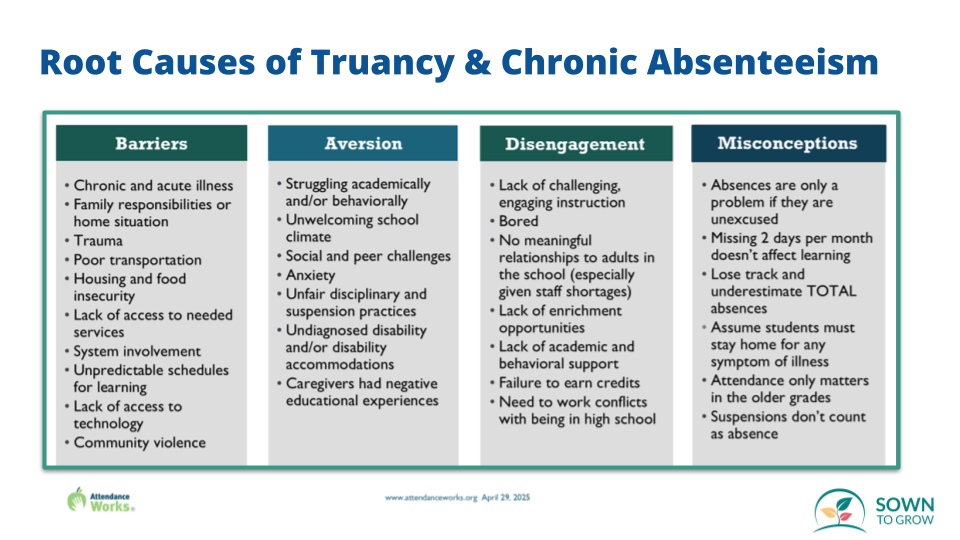
First, Gupta emphasized, we need to remember that absences typically aren’t just about not wanting to come to school. There are root causes—and they tend to fall into a few clear categories:
If we overlook these deeper issues in favor of data points like attendance numbers, behavior referrals, or academic performance, we end up treating symptoms, not causes, Gupta explained while referring to the graphic below:
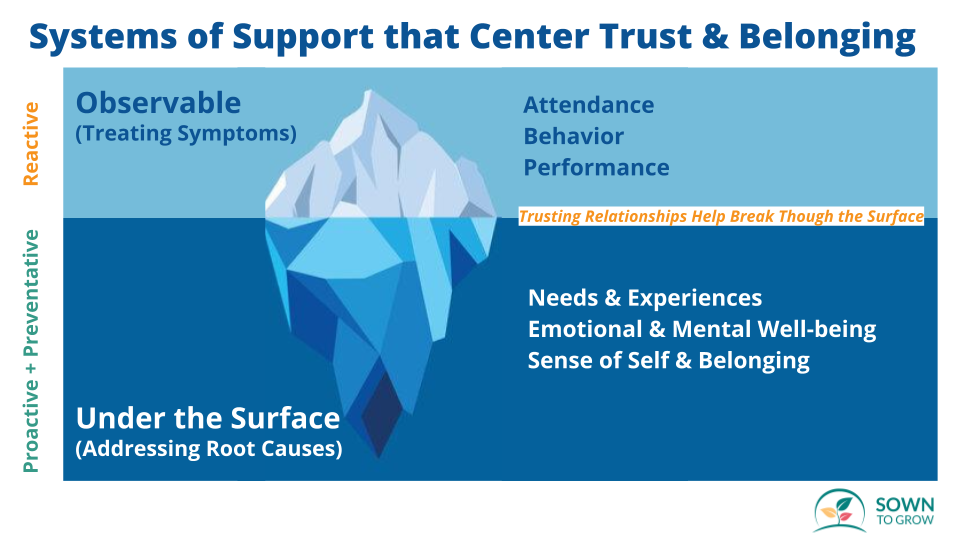
Sown To Grow combines this kind of preventative belonging support with proactive needs identification through a weekly student check-in that takes just 5 minutes, and provides invaluable insights to what’s happening in students’ lives and how they’re feeling.
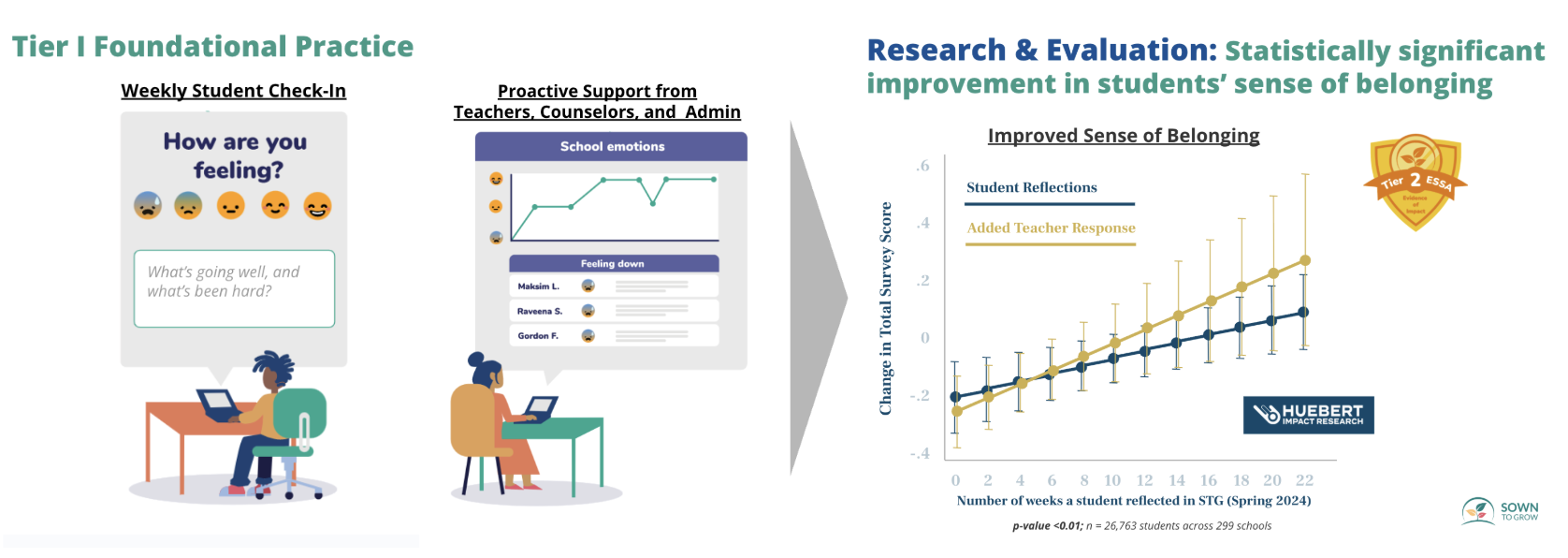
Beyond relationship-building benefits, Sown To Grow’s weekly check-ins provide real-time alerts showing which students are feeling down, trends in school emotions over time, and patterns indicating need for additional support. This proactive MTSS approach enables educators to address challenges before they become chronic issues.
Grounding ourselves in the root causes mindset is key to making a true impact. The results take time, but based on the positive data, an improved sense of belonging is well worth the investment.
New Research: Sown To Grow Driving Solid Attendance Gains
Our organization has a long history of leading with research-backed, relationship-driven practices. This mission—combined with the results of our latest study—is a powerful validation on the importance of this work. Here’s a snapshot of the data, followed by Gupta’s explanation of the study:
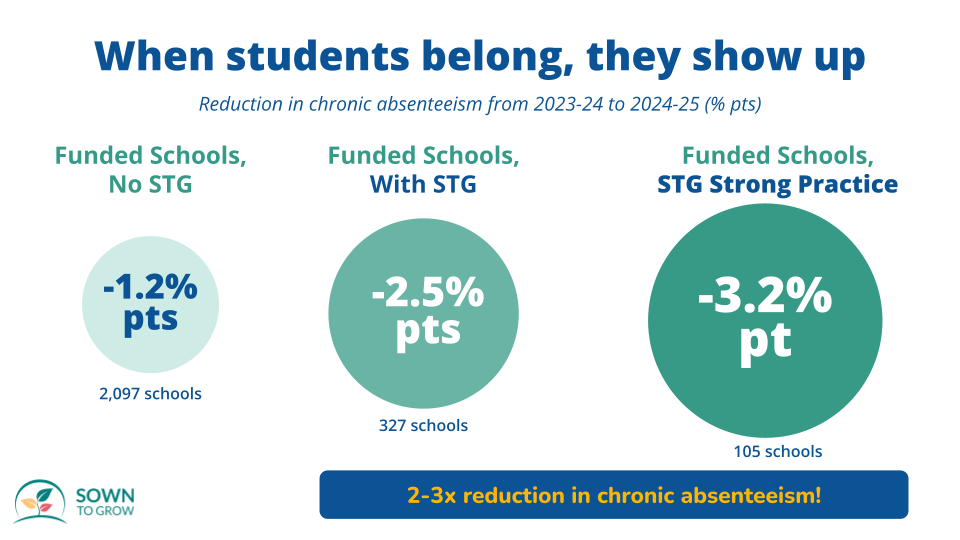
Funded community schools that implemented Sown To Grow reduced chronic absenteeism between the 2023-24 and 2024-25 school years by multiple percentage points than schools that did not use this relationship and belonging-based strategy. The impact was greatest for schools that implemented Sown To Grow with strong practice, amounting to a 2-3x impact compared to the state average.
This pattern holding consistent across elementary, middle, and high schools, with and without community schools. The message is unmistakable: by establishing a weekly routine rooted in connection, schools build belonging, give students a stronger reason to attend, and double or triple attendance improvement.
Access the full white paper on the chronic absenteeism analysis here.
In Practice: From Attendance Strategy to Action
Technology is one essential to make groundbreaking gains on attendance, but dedicated educators willing to extend their time, talents, and empathy are still the most essential way to build authentic relationships.
As a firm believer of this fact, Dr. Parker is a prime example of a school leader genuinely dedicated to helping students, teachers, and administrators on these goals.
Platforms like Sown To Grow offer low-lift pilots for schools and districts, but for educators seeking practical supports to implement immediately, Dr. Parker shared his favorite evidence-based strategies to initiate, engage, and sustain student-teacher relationships over time:
- Greeting students at the door: Sets a positive daily tone
- 2x10 Method: Two minutes per day, ten consecutive days, personal conversations with individual students
- Check and Connect: Comprehensive relationship-building program
- Small-group and circle discussions: Builds community and provides targeted support
Implementing practices like these often uncover many of the barriers, aversions, disengagements, and misconceptions discussed earlier. This knowledge, Dr. Parker noted, offers even more power to make an impact in the lives of students and families.
The Path Forward: Every Day Matters, Starting Today
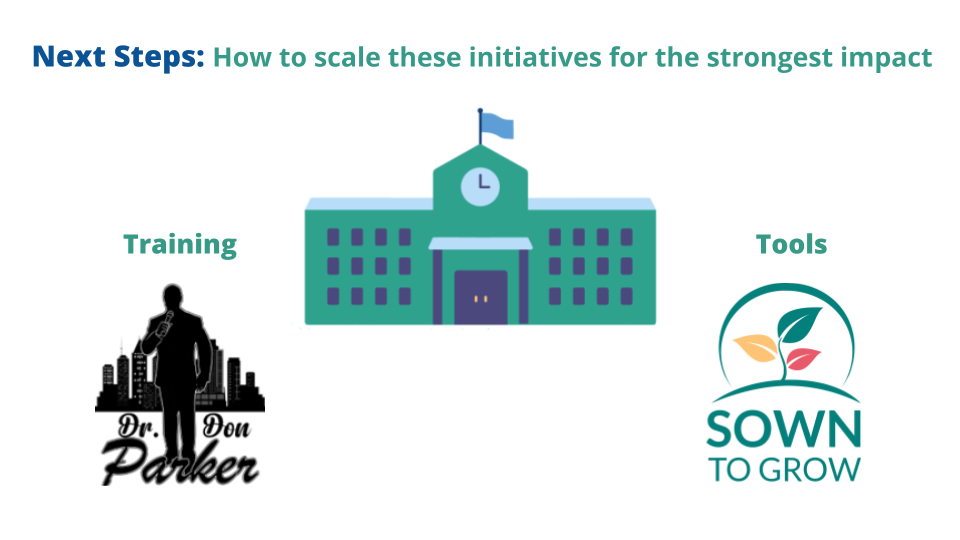
Reducing chronic absenteeism takes a village: personnel, professional development, platforms, and more—but by assembling well-researched and validated training and tools, it’s absolutely attainable, Dr. Parker encouraged.
With this combination of resources, Gupta explained, schools can be empowered to create scalable, sustainable systems that transform culture and dramatically improve attendance outcomes.
“Using sense of belonging as an absenteeism strategy,” Gupta urged, “it’s not just positive for school culture and school climate and for all the things we know around student emotional well-being and engagement and academic success. It impacts kids showing up. And when students belong, they come to school.”
---
Want to move from research to real results in attendance this semester? Schedule a time to talk with us about your current goals and how a low-lift spring pilot can jump-start progress now.
.png)
.png)
.png)
.png)
.png)