Building Belonging to Beat Absenteeism


Chronic absenteeism has become one of the most urgent challenges facing U.S. schools. But many districts are proving that the solution isn't just about getting students to show up—it’s about giving them a reason to belong.

Two groundbreaking initiatives from Oakland Unified School District (OUSD) and Metro Nashville Public Schools (MNPS) demonstrate that when schools prioritize student connectedness and belonging, attendance naturally improves. Their work reveals a powerful truth: students come to school when they feel they matter.
The Oakland Story: Reframing the Challenge
Following the pandemic, Oakland USD faced a stark reality. By 2022-23, their chronic absenteeism rate had skyrocketed to 61.4%—a dramatic increase from just 11.5% a decade earlier in 2011-12. The disparities were even more concerning: Black and Latinx student absences were even higher: 70.5% and 67.2% respectively, compared to 47.8% for White students and 35.6% for Asian students.
However, rather than responding with punitive measures, OUSD leaders asked a fundamental question: How can we help students feel known, valued, and connected so that school is a place they actually want to be?
With the goal to center student voice in their solution, the district’s Equitable Design Grant Team brought together experts from across the district—from the Office of Equity to MTSS, SEL, and research. They recognized that for their most vulnerable populations (McKinney-Vento, foster, and newcomer youth) the path to attendance ran through belonging.
The Three Pillars of Connection
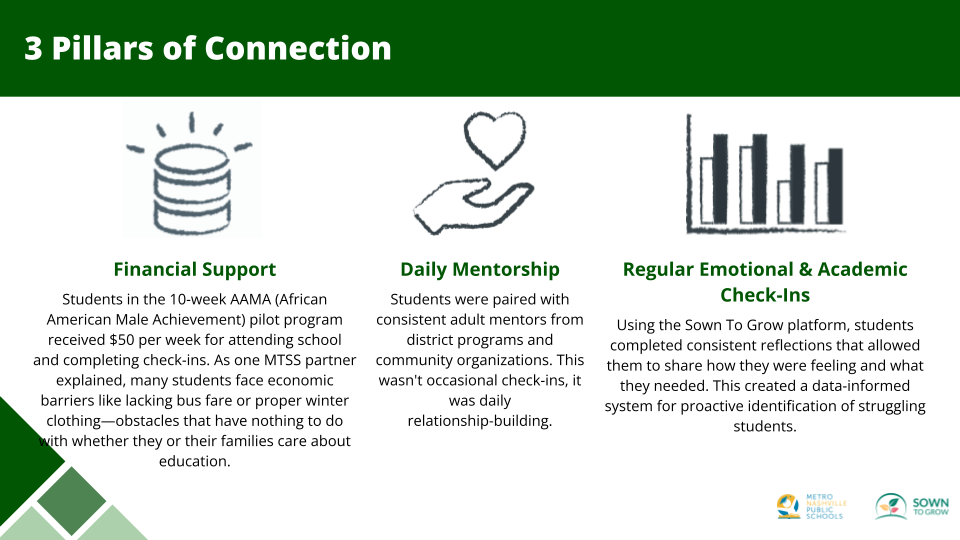
Oakland's approach combined three critical elements:
The Results Speak Volumes
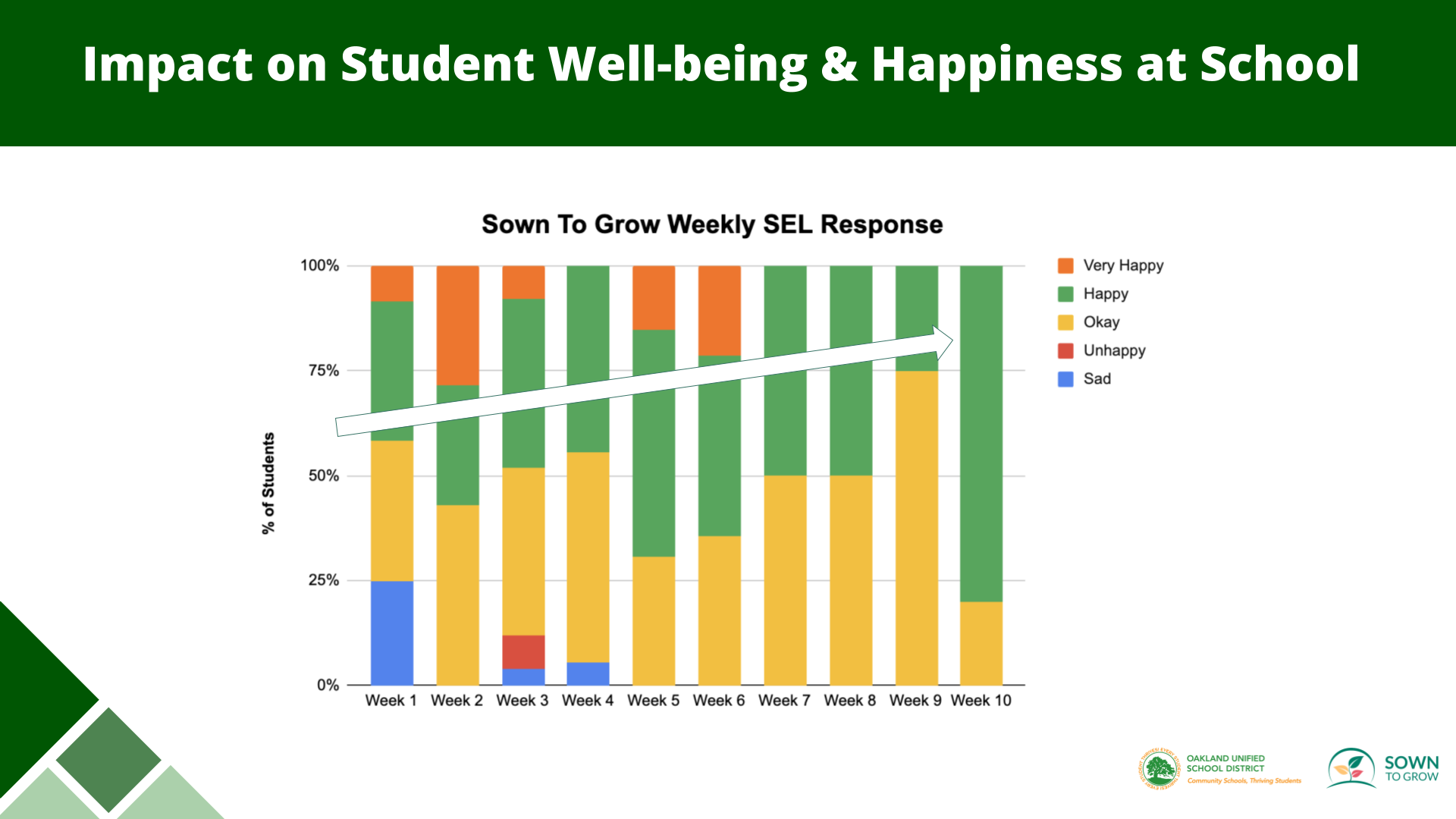
The impact was dramatic. Student well-being improved significantly during the program, with weekly happiness at school climbing from around 60% reporting positive emotions in Week 1 to over 75% by Week 10. When compared to the general OUSD population (average emotion rating of 3.8), AAMA students averaged 4.2—showing the student experience and emotional wellbeing improved dramatically relative to their peers.
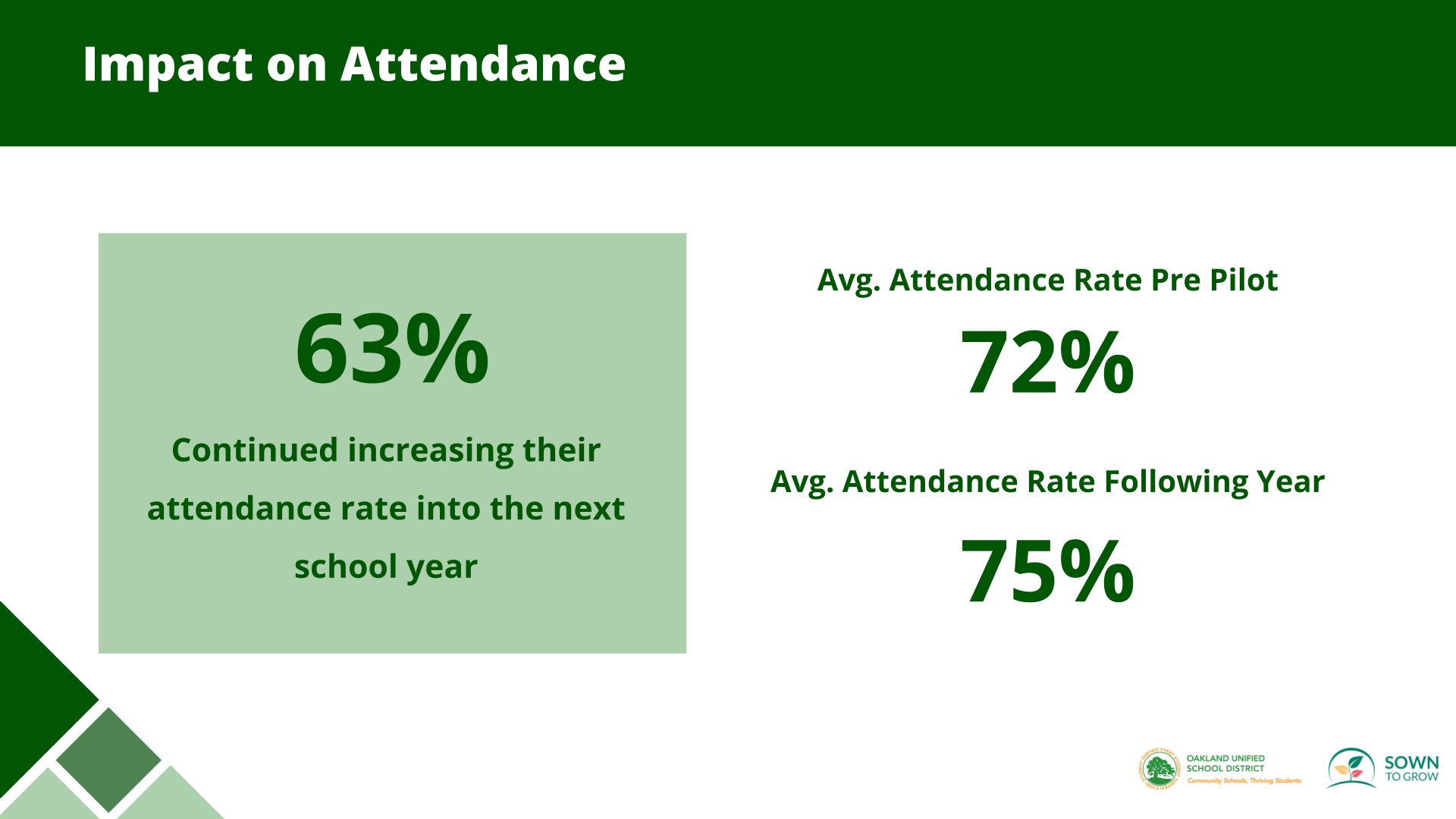
Most importantly, attendance increased. By the end of the 10-week program, students were consistently attending school. Even more remarkable: 63% of participants continued increasing their attendance rate into the next school year, with average attendance climbing from 72% pre-pilot to 75% the following year.
Student voices tell the story best: "If it wasn't for this program, I wouldn't be in school right now," one student shared. Another explained, "Communicating with an adult. You got to know them. Before, they didn't really know we were there, now we are more connected."
The Nashville Journey: Scaling What Works
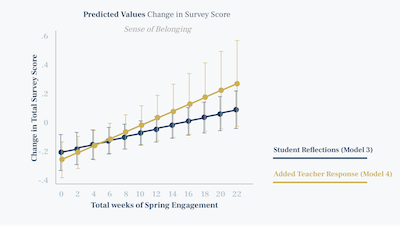
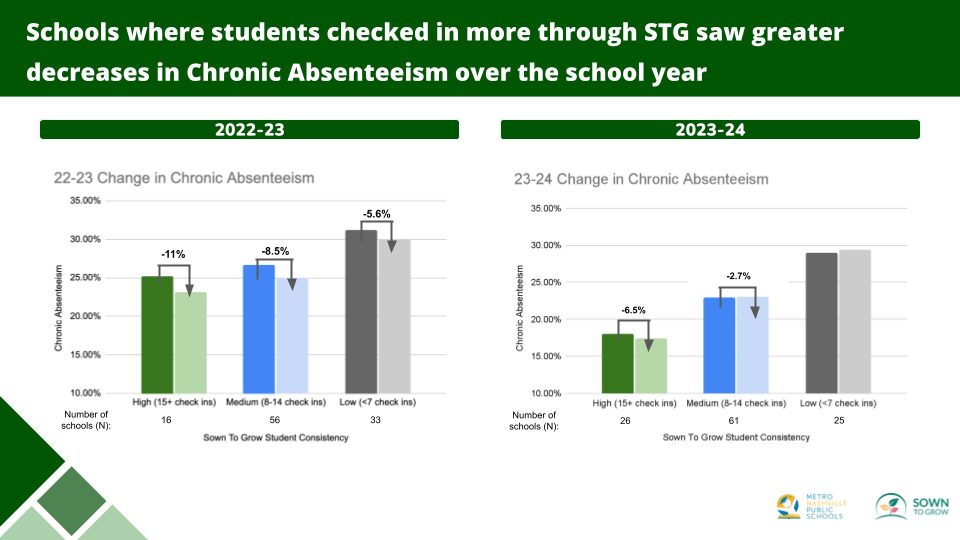
Similarly motivated to improve their own attendance rates, Metro Nashville Public Schools took their belief in the principles of belonging and connectedness district-wide by implementing Sown To Grow's check-in system across multiple schools. The resulting data revealed a clear pattern: schools where students checked in more frequently through the platform saw greater decreases in chronic absenteeism.
In 2022-23, schools with high student check-in consistency (15+ check-ins) saw an 11% decrease in chronic absenteeism, compared to just 5.6% in schools with low consistency. The pattern held in 2023-24, with high-consistency schools seeing a 6.5% decrease versus 0.8% in low-consistency schools.
MNPS built this into a tiered support system, using check-in data to identify students with low sense of belonging and target interventions.
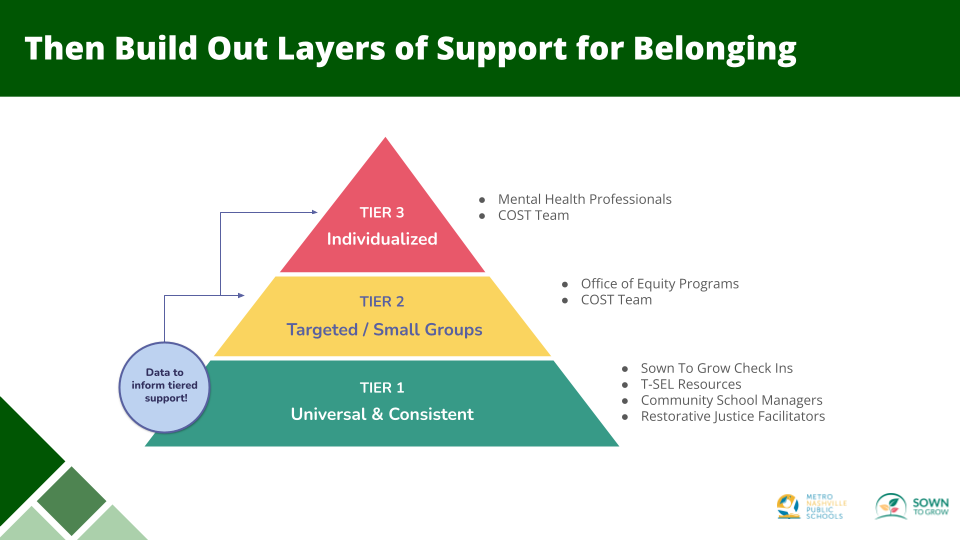
Students reporting "never" to statements like "I matter to others at this school" showed a 15% increase in positive expressed emotions and a 5% decrease in negative emotions over the school year after receiving targeted support.
The Takeaway: Belonging Drives Attendance
Both districts demonstrated that chronic absenteeism isn't primarily a compliance problem—it's a connection problem. When students have trusted adults checking in daily, when they can express their feelings and be heard, and when their basic needs are addressed, they show up.
As one Oakland adult mentor observed about two previously absent students: "They DO have a place on campus. The program helped them open up to more opportunities...They know what it means to be held accountable and be consistent."
The lesson is clear: building belonging isn't just good for student wellness—it's essential for getting students through the door.
.png)
.png)
.png)
.png)