From Belonging to Succeeding: A Recap of PESD’s Peer Learning Workshop on Community Schools and Proactive Student Support

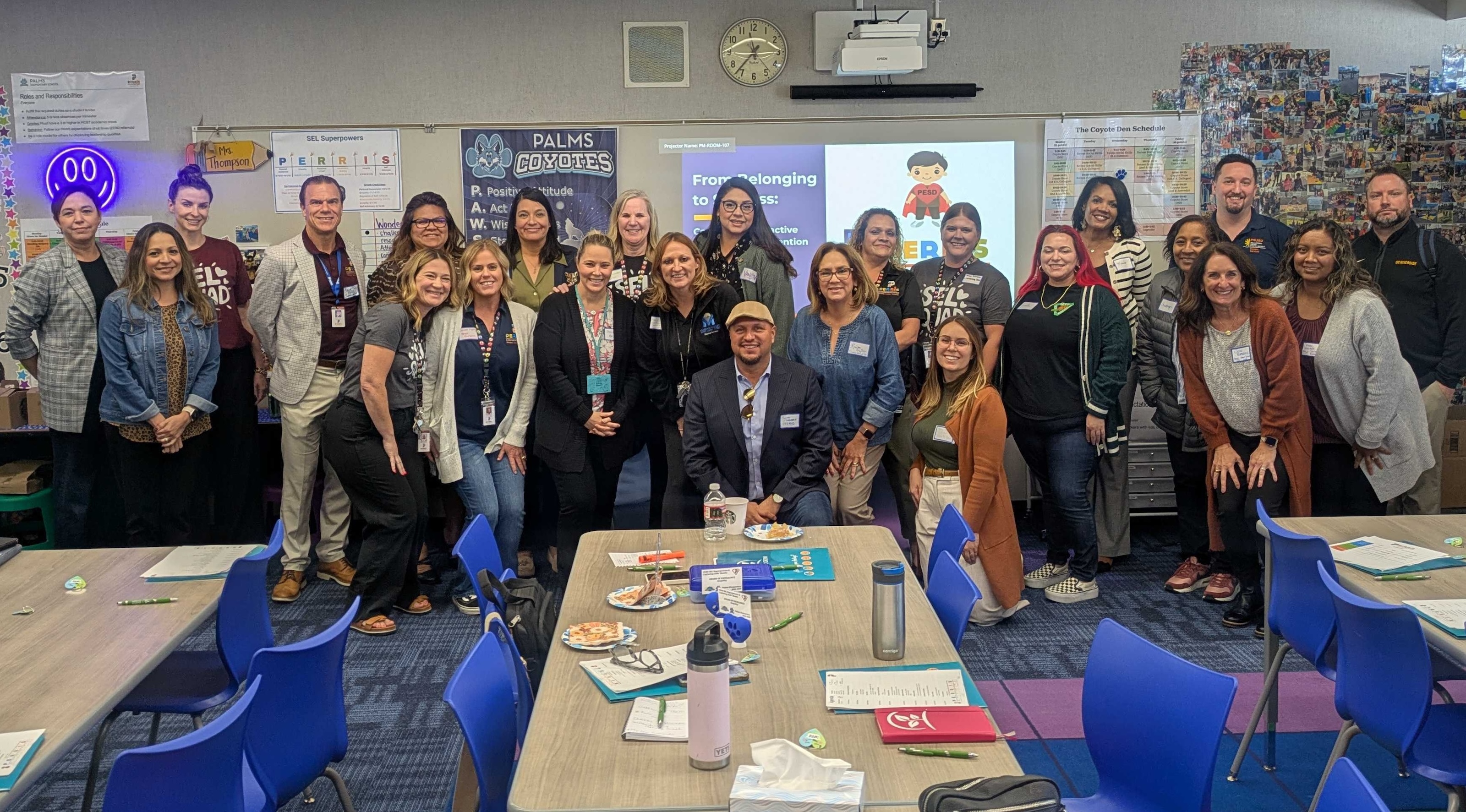
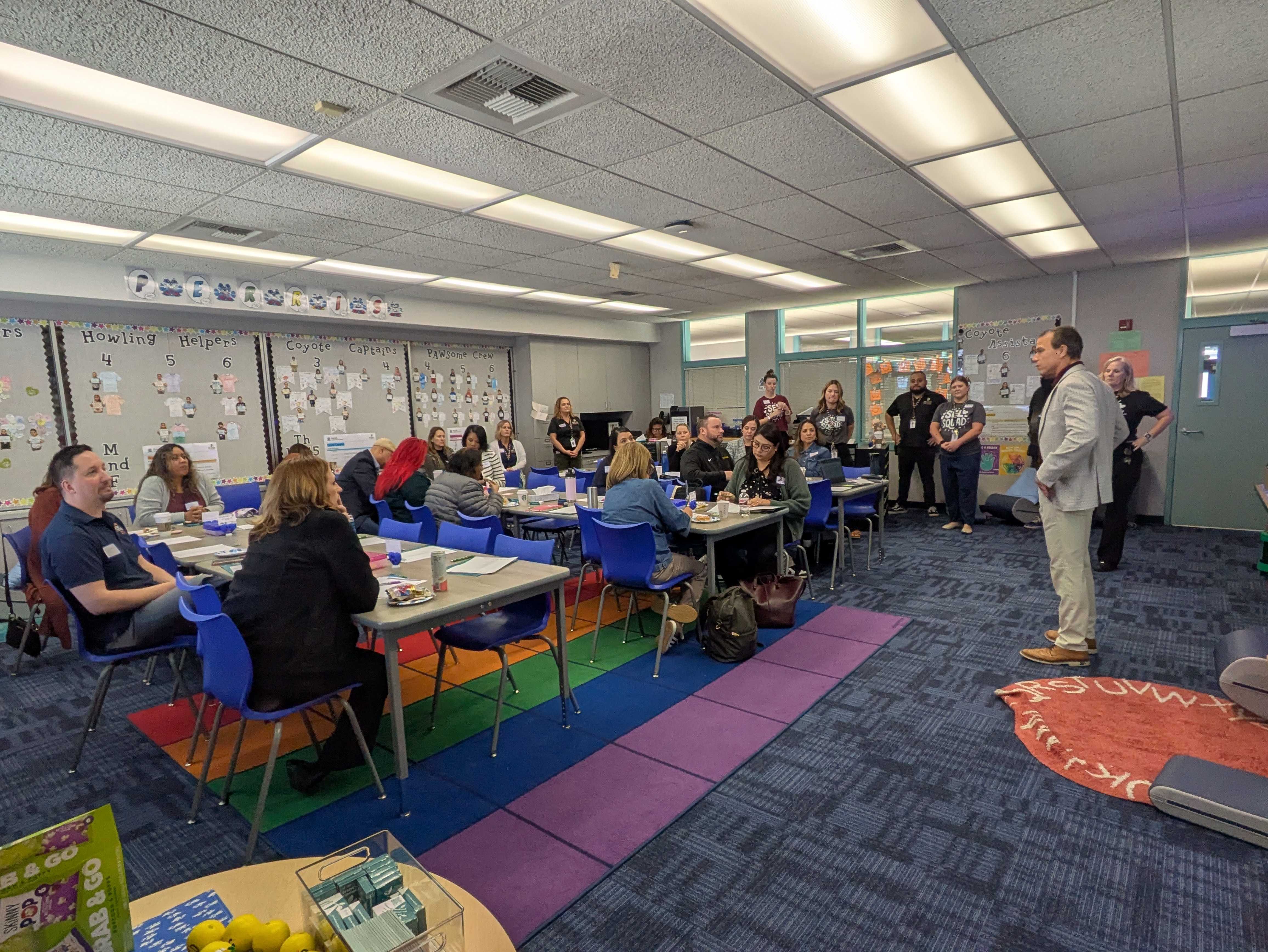
On Wednesday, November 5th, the Perris Elementary School District (PESD) opened its doors, and its practices, to district and school leaders from across SoCal. With support from Sown To Grow, PESD hosted a half-day workshop illustrating their reimagined approach to student support: one that begins with belonging, is grounded in relationships, and intentionally refocused MTSS to nurture the whole child and whole community.
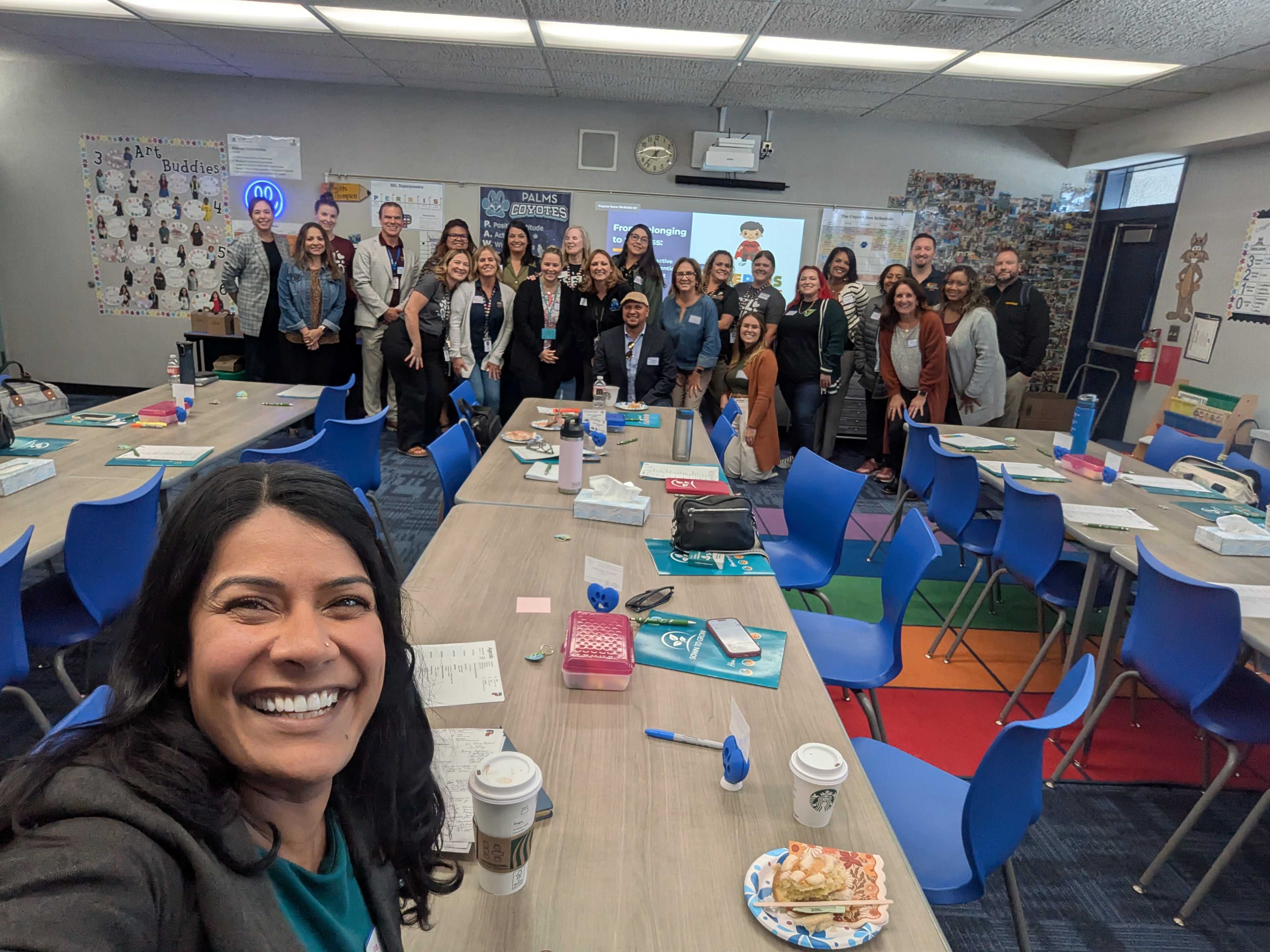
A Morning Immersed in Connection
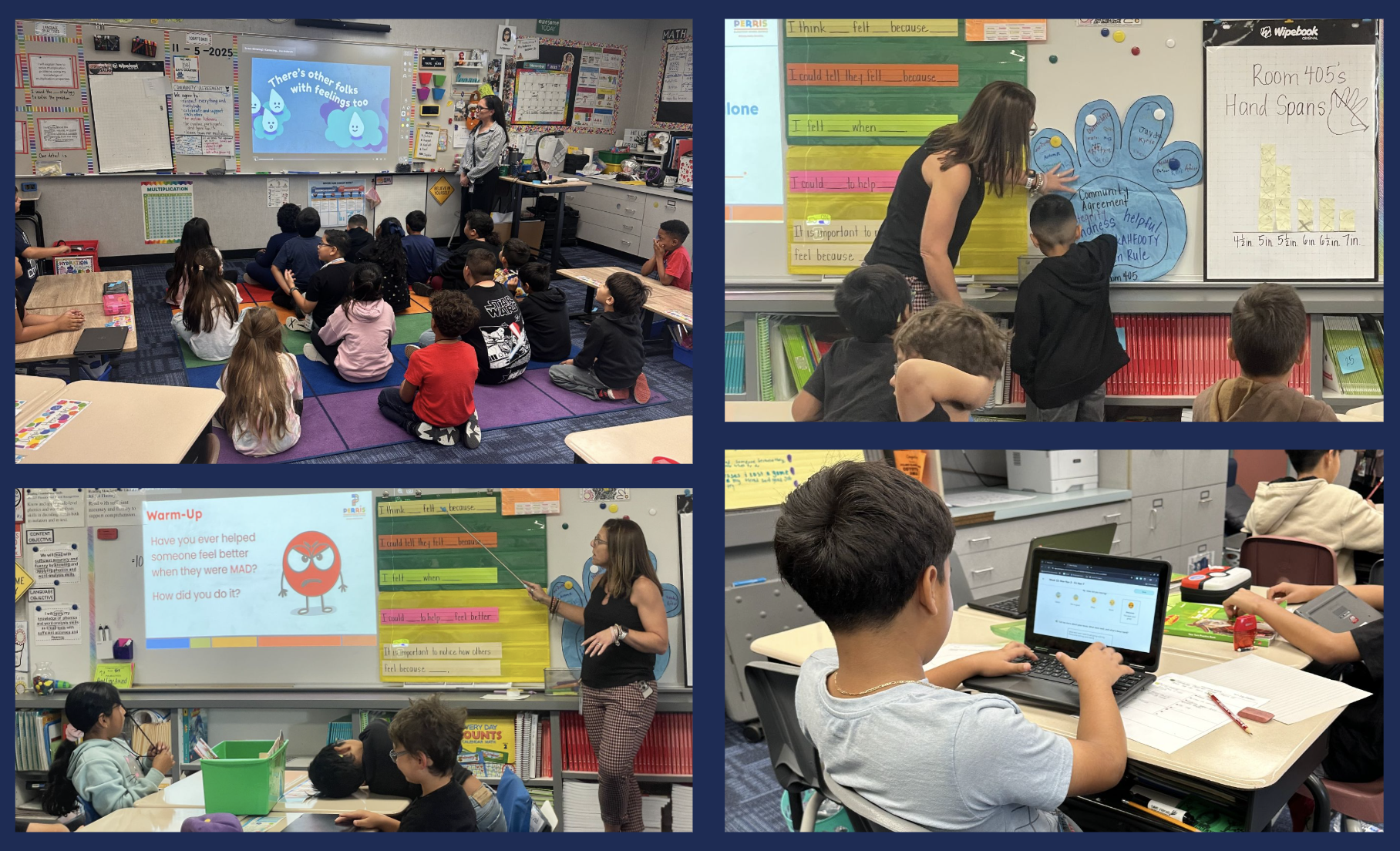
The morning at Palms Elementary began with attendees stepping directly into classrooms to observe the daily rhythms and weekly routines of well-being in PESD. Teachers facilitated morning community circles, students moved quietly in and out of Zen Zones for self-regulation, and classrooms engaged in SEL lessons tied to the district’s “SEL Superpowers” framework.
The Wednesday morning routine concluded with each student participating in a Sown To Grow check-in, an open space for students to share their feelings and reflect on the experiences that impact the way they show up at school. As student reflections came in, teachers scanned responses to identify who might need connection or support, either from themselves or a member of the well-being team.
“If the student feels like they're valued, heard, they're part of something, they're part of a community, they feel connected, they feel relationships are trusted, well then my brain can shift to better engagement,” said Superintendent Bruce Bivins. “So belonging, although it sounds wonderful and lovely and has attributes in and of itself, it's also essential for learning.”
The coherence across classrooms was a testament to a district that has built a shared language and approach to well-being that every child can count on, no matter which classroom or school they walk into.
“We have our set common expectations…. We have a lot of students moving within the district, going from one school to another. So this is something where if they leave a third grade classroom here at Palms and they go to Good Hope, they're going to be on the same exact lesson in the same exact week,” shared Melissa Thompson, one of the district's Well-Being TOSAs. “Everybody is getting the same thing across the whole district, so it's something really powerful that we are able to give to all of our students.”
A New MTSS: Building Skills into Systems, Relationship into Routines
In both a pre-visit welcome and after the classroom visits, participants gathered in the school’s Wellness Center, where the PESD district leaders and members of the well-being team from different school sites—including TOSAs, SOSAs, and COFAs—shared how the district has woven together community schools strategies, their vision for SEL Superpowers, and a relationship-first model of MTSS.
Dr. Jennifer Wiley, the Coordinator of Community Schools that oversees the well-being team emphasized the vision where school is not just a place where children learn to navigate academics; it's a place where they learn to navigate life. Staff spoke candidly about the neuroscience behind belonging and the practical realities that teachers face when student behavior is interpreted without considering underlying skill deficits. “We’re not here to fix kids,” Dr. Wiley explained. “We’re here to set the conditions for kids to be their awesome selves and take their next best step.”
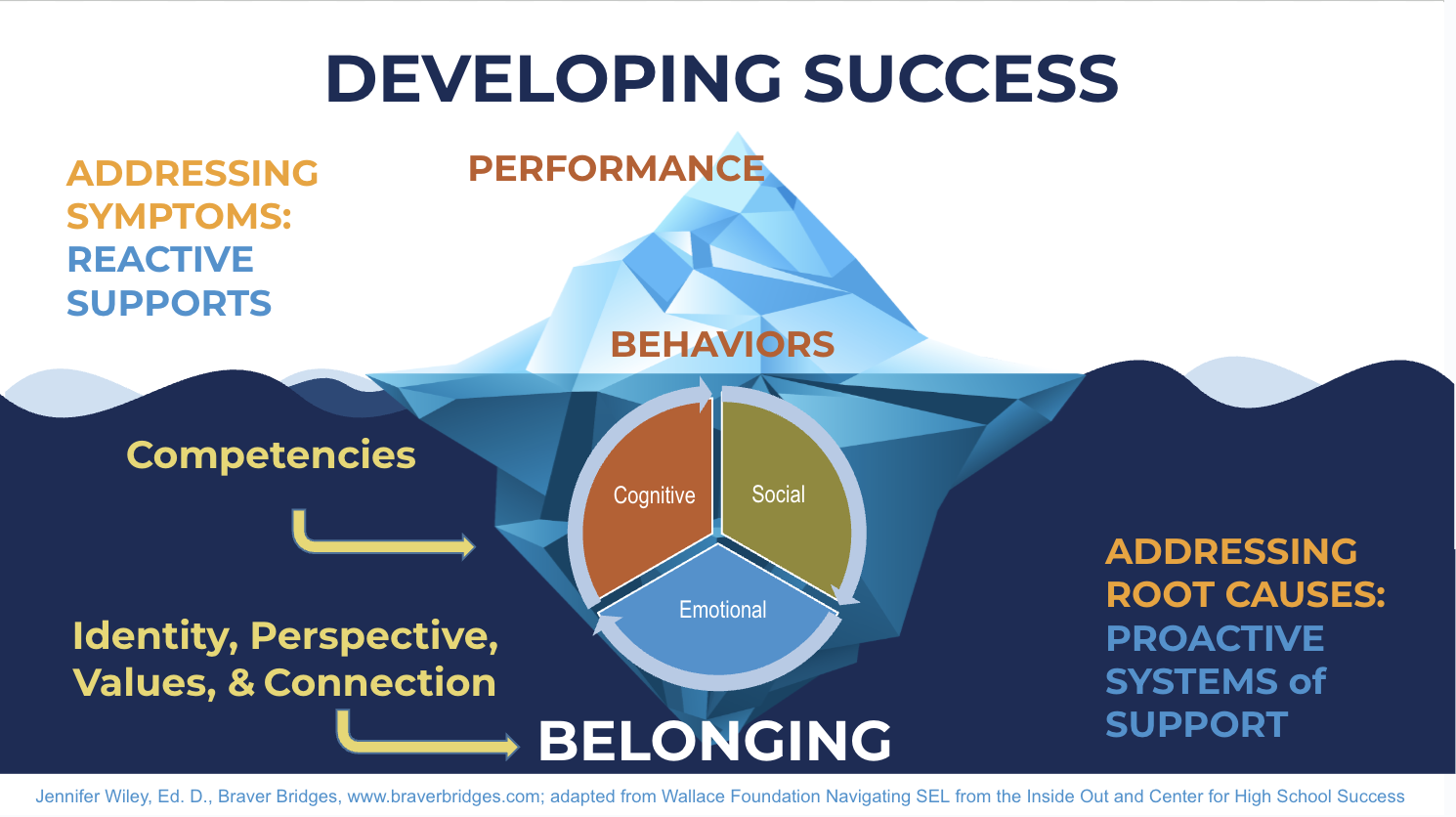
In living out that vision, PESD has moved from a traditional, reactive MTSS model to one centered on skills, identity, and relational connection. Instead of predetermined interventions, staff start by asking: What skill is missing? They then build a plan rooted in strengths and tailored to the individual student.
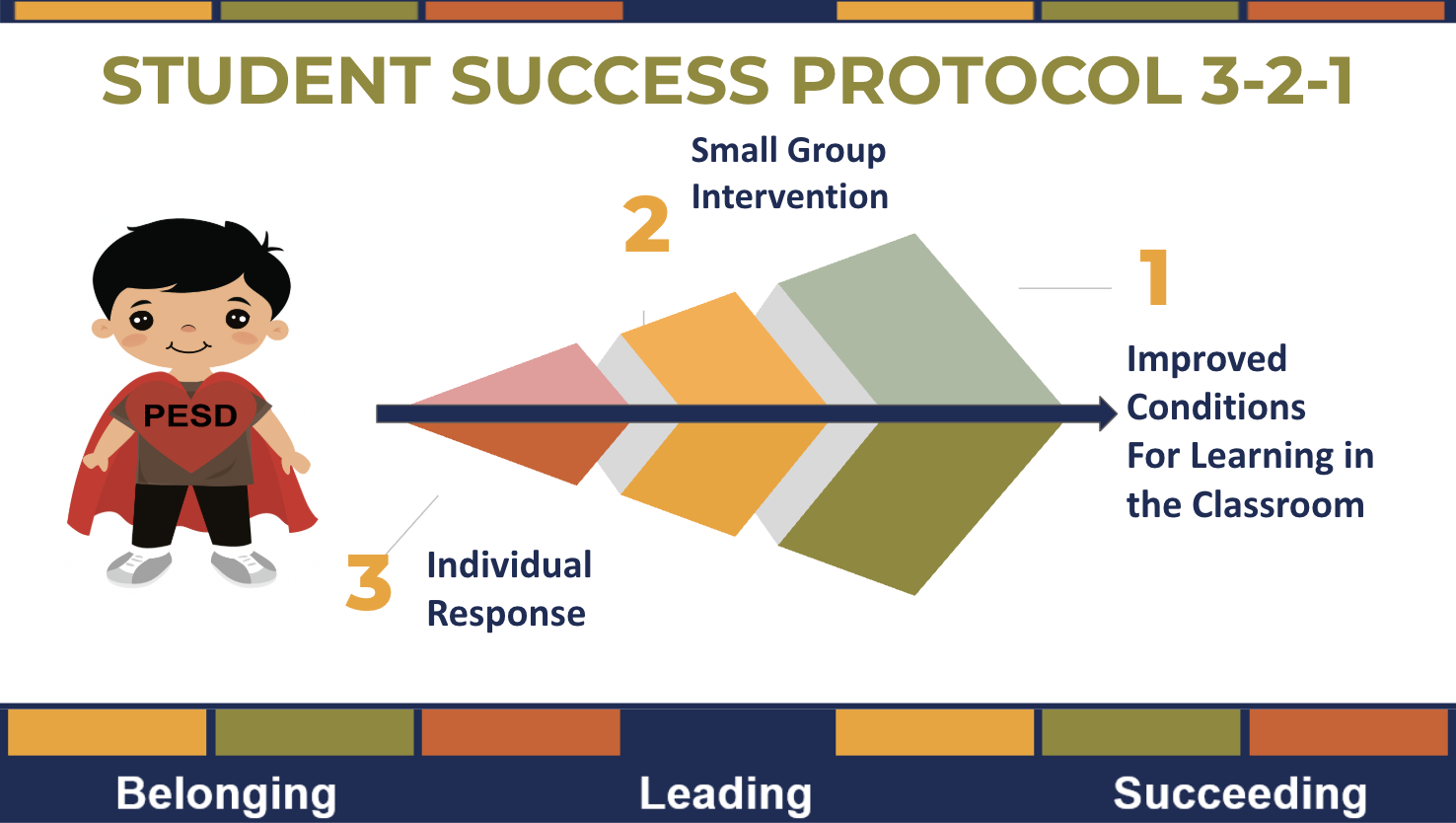
Each day, school sites hold a morning or afternoon huddle where teachers and support staff review the previous day’s behaviors through the lens of their SEL Superpowers. Teachers identify whether a concern relates to personal awareness, empathy, or other core skills. From there, the group determines who on the well-being team has the right relationship, the right strength, or the right role to provide support.
Superintendent Bivins described how, “Intervention doesn’t live with one person. We’re creating a circle of influence around each child.” That circle might include a counselor checking in after a tough morning, a SOSA building a proactive relationship with a student struggling with attendance, or a COFA making supportive contact with families. Rather than reacting to behavior, PESD works to build the skills beneath it.
Listening to Students—And Acting on What They Say
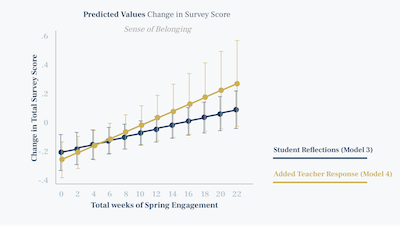
Another powerful theme was PESD’s commitment to using data directly from students to guide their decisions. Weekly Sown To Grow check-ins and customized Growth Checks at the end of each SEL Superpower unit give students voice in their emotional well-being, sense of belonging, and progress on the district’s “Belonging, Leading, and Succeeding” framework.
One school shared that after analyzing Growth Check responses, they identified 25 students who did not feel they belonged. Staff created “art buddies,” a leadership opportunity framed around contribution and connection for these students.
Many of these student leaders at Palms spoke to the visiting administrators about their leadership roles at Palms, speaking of their contributions and the Palms community with pride. Examples like this illuminated how PESD turns raw data into relational action. The student never sees a report or a label; they feel an invitation to lead in their school community.
Rooted in Belonging, Growing Community Impact through a Shared Vision
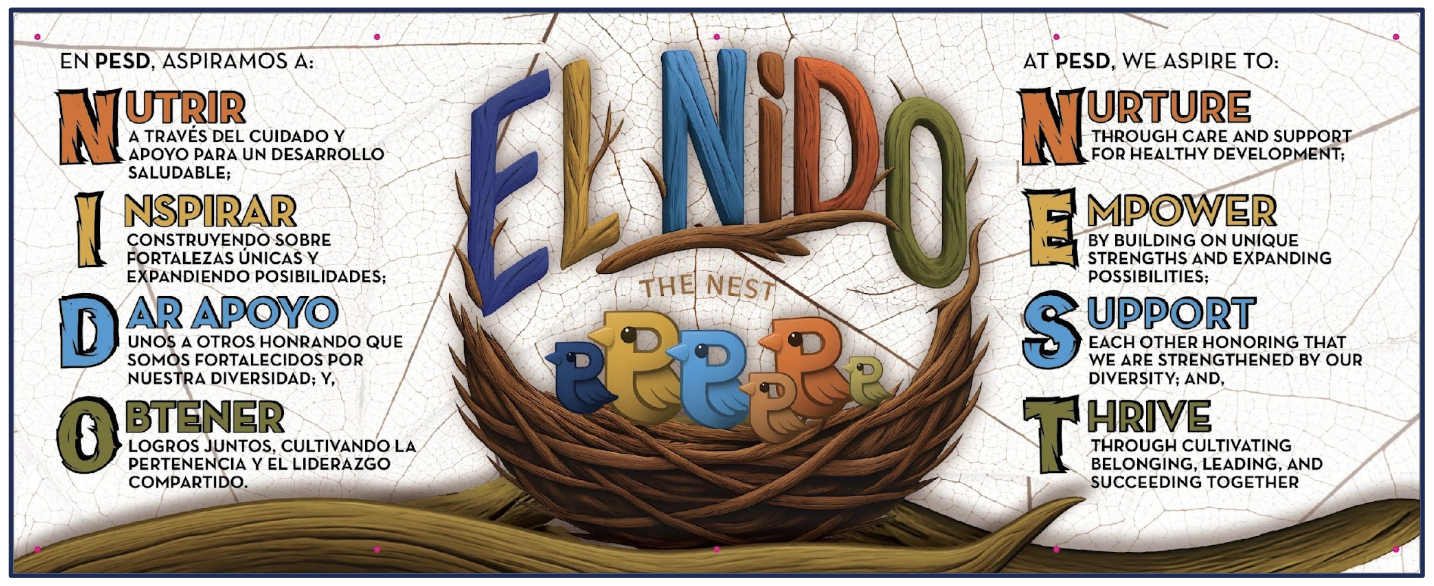
The workshop also offered a glimpse into PESD’s broader community schools work. Leaders described “El Nido” or “The Nest,” a resource space where families can access essential items, do laundry, and get connected to staff and community partners. It is both a practical resource and a symbolic anchor: a place where belonging extends beyond the classroom and into the broader community.
While the stories were compelling, the data spoke just as loudly. Since implementing this relationship-centered model, PESD has seen attendance consistently rise, chronic absenteeism fall by 9%, and suspensions decrease by roughly 75%.
Leaders emphasized that these gains weren't achieved through new programs alone, but through rethinking how adults work together. “Those who implement the work must be at the table to decide the work,” Superintendent Bivins said. “And those who support them must stay close to the work.” That clarity of purpose has created coherence across roles, grade levels, and school sites.
PESD is continuing to iterate and become more community-centered as they move their work from Perris 2.0 to Perris 3.0 and beyond. The workshop served as an invitation for districts across the region to also rethink their own models, challenge inherited structures, and build environments where every student feels seen, known, and ready to succeed.
.png)
.png)
.png)
.png)
.png)