Creating Space for Reflection in Today’s High Schools


What is Reflection?
If you were to be asked who you are and what you believe in right now, what might you say? Can you imagine answering this same question when you were a child in elementary school or a young person finishing up high school?
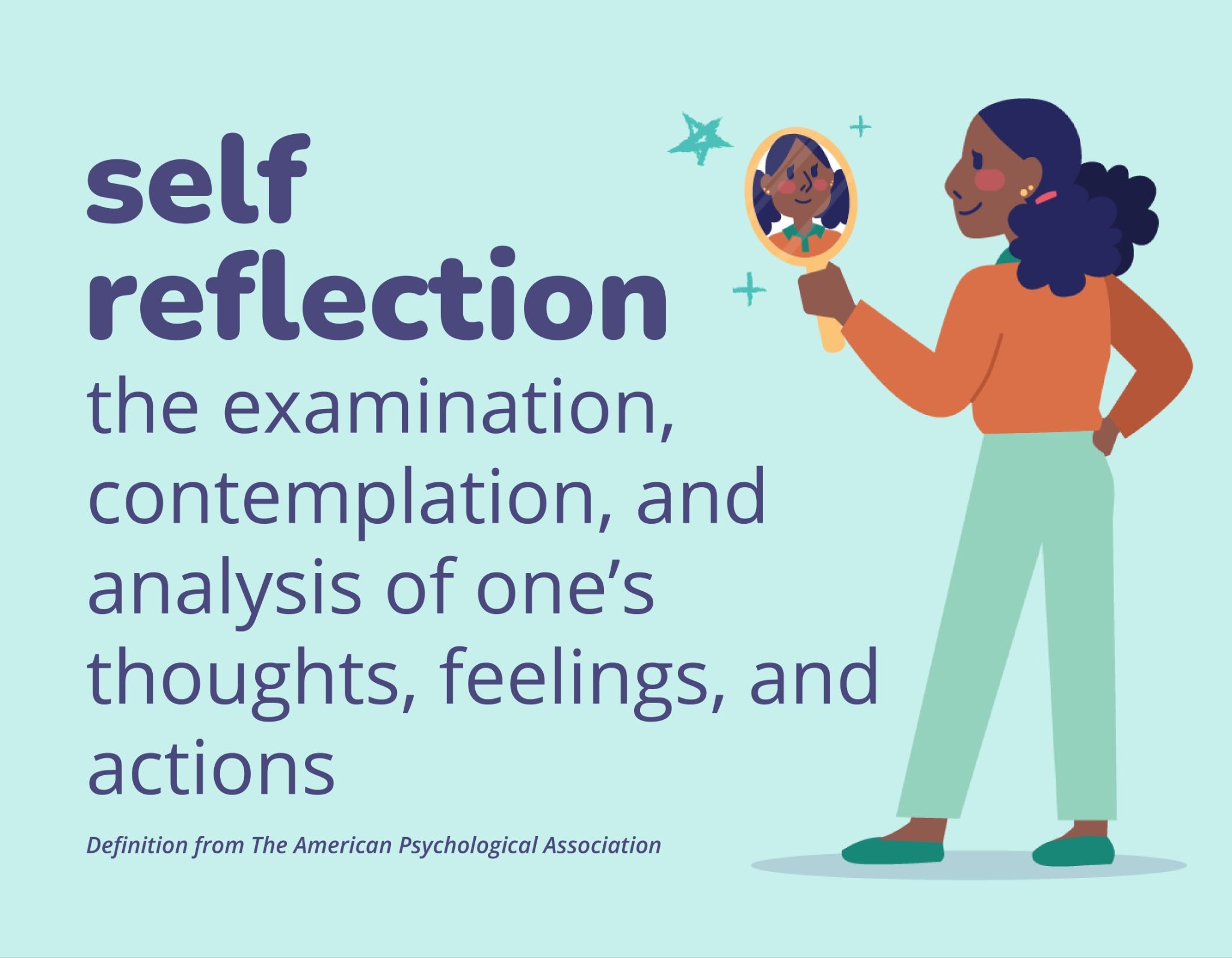
The idea of reflection, especially reflection on oneself, has been and will always remain at the center of our lives. The American Psychological Association defines self-reflection as the “examination, contemplation, and analysis of one’s thoughts, feelings, and actions.”
Since the pandemic, and the world we live in now, reflection on oneself and the world around us has been more than just an intriguing exercise in what shapes us. It has turned into an explosion of podcasts, self-help books, phone apps, even self-help retreats.
With that said, it is essential that we know what quality self-reflection is, and more importantly, what it is not. When a person practices self-reflection and mindfulness, it is essential they do it from a strengths-based, trauma-informed approach. It is also important that a person reflects with others with whom they can trust and can ask questions to gain a further understanding of the world around them.
Educators often get asked multiple times in their careers, very often by loved ones, “Why do you choose to be in schools?” Reflection gets to the heart of our answers, and the best schools and districts can listen and be in tune with that heart.
Now More Than Ever: Why Reflection Matters So Much in High School Today

The educational landscape has shifted dramatically over the past decade. Expectations are higher, and students have access to more information than ever before. During a critical period of brain development, this constant stream of input makes it increasingly difficult for students to pause, reflect, and process their experiences.
As technology continues to evolve, this challenge is only intensifying. Social media delivers a nonstop flow of content, and AI can generate answers and ideas instantly. While these tools create efficiency and opportunity, they also introduce a risk: when students rely on external tools to think for them, they have fewer opportunities to think critically for themselves.
Reflection helps close this gap. It creates space for students to slow down, make meaning of their experiences, and build the internal skills they need to navigate a fast, complex, and increasingly automated world.
Reality of Reflecting in a High School Class

In spite of knowing that reflection can help, high school teachers and administrators may have a difficult time seeing where it fits within the school schedule. Teachers have a certain amount of time to get through their specific course content, and taking time for reflection may not seem to be a valuable return on investment.
Additionally, reflection is not something students automatically know how to do well. Following what we know to be effective pedagogy, students will need to be taught the routine, the expectations, be given exemplars, have time to ask questions, etc. in order to reflect. Most importantly, teachers need to ensure students understand the rationale behind reflection - and with a world that is so focused on immediate rewards, this invariably is difficult to land for high school students.
Furthermore, teachers may not feel prepared to teach reflection practice, as it isn’t in the curriculum or cemented within teaching training programs, nor is it baked into district expectations.
Common Challenges of High School Reflection Practices
Beyond the actual classroom practice, there are some common barriers to entry for any new system in a school or district. Every time something new is introduced, there are questions about the rationale behind the programming, as well as the cost.

Once the rationale has been established, that’s step one - step two is ensuring that a consistency of practice can occur, which will help both teachers and students but will require forward thinking and planning. Just like a great unit plan involves moving along the Bloom’s taxonomy scale of thinking, so does an implementation. A reflective practice cannot remain surface level - students ideally are deepening their trust and thinking, and teachers are responding in kind.
Finally, once administrators have sufficient data, they have to make said data visible by bringing it to grade level teams, student support teams, professional development, and other relevant school structures for faculty to discuss, create goals, and see them through.
What Reflection-Related Data Has Shown Us

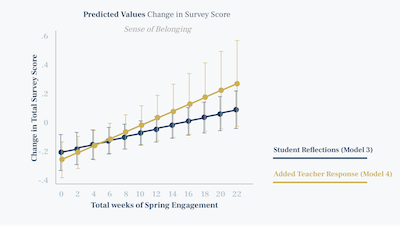
Attendance: One of the clearest patterns we’ve observed is that students who consistently engage in reflection on the Sown To Grow platform demonstrate higher attendance rates compared to those who participate less frequently or not at all.
Proactive Support: In schools where the implementation of Sown To Grow is strong, educators gain greater visibility into student experiences. This allows schools to identify challenges earlier and provide proactive support before Tier 3 interventions are needed.
Authentic Engagement: Not all reflection is equal. When students provide surface-level responses or engage as an act of compliance, the potential impact is very limited. However, when students engage authentically and with depth, the outcomes are significantly stronger. Across all Sown To Grow high school users, we consistently see students share meaningful insights when given the right structure and space.
Reflection doesn’t need to be time-consuming to be impactful. When implemented thoughtfully, even small moments of reflection can lead to meaningful change. The question is no longer whether we have time for reflection – it’s what it costs us when we don’t make space for it.
.png)
.png)
.png)
.png)
.png)