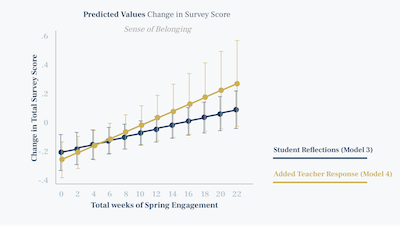
Wisconsin students’ sense of belonging is dwindling—but here’s why Madison Metro defies the data, and how other districts can, too


Identifying a Statewide Problem
Feeling welcomed, accepted, respected, and valued at school shouldn’t be something experienced by only half of students, but unfortunately, the numbers don’t lie.
According to a study by the Wisconsin Office Of Children’s Mental Health (OCMH), the last decade has seen a 37% decrease in the state’s students feeling like they belong at school—and the statistics are worse for marginalized groups.

As originally covered by Wisconsin Public Radio, the negative outcomes of these figures can impact students’ physical, social, emotional, and mental health, as well as their ability to learn, grow, and thrive in today’s world. To improve the declining data and combat these detrimental effects, the state published The Wisconsin School Mental Health Framework in 2021. The 42-page document provides a vision to better empower schools on promoting student and staff mental health, and outlines the components to implement these systems.
MMSD Zeroes in on a Solution
One district well-aligned with the state on this is Madison Metropolitan School District (MMSD), the second largest district in Wisconsin, where leaders have been on a multi-year mission to elevate student success and well-being.
Guided by their own universal framework—which centers around sense of belonging and safety within the school community—is one reason MMSD’s data ranks higher than the state average. Additionally, it’s the administration’s dedication to continuous improvements and advancements that helps move the needle.


“Our climate survey results provide a signal, but they do not capture the full student experience on their own,” explained Cynthia Moore, District Lead for Culture and Climate. “To truly understand, we need to go beyond the numbers by using qualitative approaches such as listening sessions, empathy interviews, focus groups, and classroom level insights. Because understanding the student experience requires hearing the stories behind the data and being willing to challenge the assumptions about what the numbers initially appear to show.”
This insightful, proactive approach is what fortifies the necessity of student well-being practices across the district, and in the long run, establishes more inclusive, equitable, and supportive learning environments. Doing so has also helped drive MMSD’s impressive 3.9% percentage point increase in districtwide attendance over the last five years, which was discussed during the Feb. 2026 webinar, "Beyond Crisis Management...".

“I'm really grounded in this belief,” Moore explained, “that people do their best learning, growing, and work when they feel that they’re valued, seen and heard.”
Along with getting students to show up for school, this compassionate mindset has been fundamental throughout MMSD’s social emotional learning transformation, detailed Emily Peterson, District Culture & Climate Coach. Guided by MMSD’s carefully developed universal framework model, the process of fostering ‘sense of belonging’ in the district has been incredibly intentional and strategic.

“We’ve been through about a 2- to 3-year-long journey with SEL in our district,” Peterson said, “and it still isn’t perfect, and there are many barriers, but when SEL was given to our team as a bucket of work, we saw it as an opportunity to really create a social emotional learning experience for our students that wasn’t just lessons, but more so, ‘How are we living our values and contributing to a more just and equitable community?’, ‘How are we with ourselves?’, ‘How do we show compassion and empathy for ourselves?’ and also encouraging students to embrace the many identities that they have, and all that they have to offer our world.”
The SEL Investment: MMSD’s Mission-Aligned Partnership
To complement the ongoing efforts with culture, climate, mental health, and well-being, in the spring of 2025, MMSD sought a SEL platform to fulfill three main outcome goals:
🔹 Increase students’ sense of belonging from pre- to post-screener
🔹 Increase skills in student self-identified SEL area
🔹 Reduce chronic absenteeism
The district’s first priority was selecting a SEL curriculum to strengthen and standardize Tier 1, support relationship-building, and promote consistent schoolwide expectations. Through a referral from a trusted administrator at Oakland Unified School District, MMSD leadership learned about Sown To Grow, an organization that appealed to the district based on its mission to lift up youth voices and create a space for students to share.
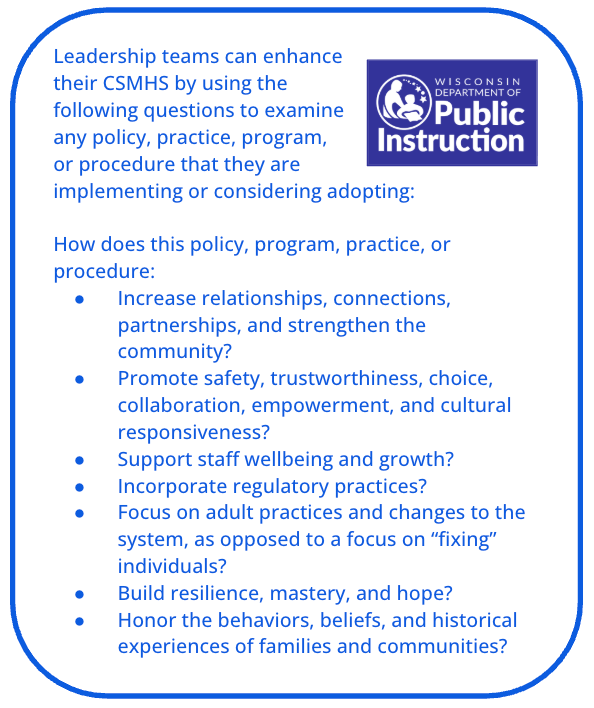
Following nearly a year-long process to carefully evaluate the impact of the platform and its alignment with The Wisconsin School Mental Health Framework criteria, MMSD officially decided to partner with Sown To Grow to help guide the next steps in social emotional learning.
Early Indicators of Impact
Although MMSD’s Sown To Grow implementation is still fairly new, initial data signals are promising and meet the district’s long-term vision for student well-being.
In time, the goal is for educators across the district to be able to report stronger, more consistent insights into student experiences—allowing them to respond in real time, adjust supports, and deepen relationships in ways not previously possible.
Rather than relying solely on end-of-year surveys or assumptions, MMSD is building a more dynamic, responsive system—one where student voice is not just collected, but actively used to shape the learning environment.


With approximately eight schools partially onboarded as of spring 2026, the plan is for a districtwide rollout for fall 2026.
A Path Forward for Wisconsin Schools
MMSD’s progress offers an important reminder for other schools across the state: reversing a decade-long decline doesn’t come through a single program or initiative. It requires a clear vision, aligned systems, and an ongoing commitment to listening, learning, and evolving.
For Wisconsin districts looking to follow a similar path, the starting point isn’t perfection—it’s intention.
Framework Guidelines
The Wisconsin School Mental Health Framework provides a strong foundation, but its impact depends on how it’s brought to life at the local level. Districts can begin by:
🔹 Establishing a shared definition of belonging that resonates with their community
🔹 Creating structures that elevate student voice regularly—not just periodically
🔹 Aligning SEL, climate, and mental health efforts under a cohesive, values-driven framework
🔹 Using both quantitative and qualitative data to inform decisions and challenge assumptions
🔹 Prioritizing adult practices and mindsets alongside student supports
Funding Assistance
Finding the resources to support initiatives like this is never easy, but Wisconsin’s School-Based Mental Health Services State Funding Program is helping change that. The program awards grants specifically for providing mental health services to students in collaboration with community mental health providers, and the funding is substantial: $40M allocated in the fiscal year 2026, followed by $10M in the fiscal year 2027.

Wisconsin’s Cooperative Educational Service Agencies (CESAs) are another potential avenue for funding given how they distribute state and federal dollars to local schools across the state. For example, CESA 2’s Behavior & Mental Health Center of Excellence permits expenses for a variety of resources, tools, training, and coaching needed to support healthy behaviors for both students and staff and encourage positive social-emotional learning (SEL).
As an organization that directly aligns with these CESA requirements and PBIS Wisconsin frameworks, Sown To Grow works with districts to identify funding pathways so cost doesn’t become a barrier to student support. Learn more here about how we can help you bring our tools to your students with minimal budget impact.
The Key to Progress
What sets MMSD apart is not just what they’ve implemented, but how they’ve approached the work—with curiosity, humility, and a deep belief that belonging is essential, not optional.

As educators across Wisconsin continue to navigate rising student needs, one thing is clear: when students feel seen, heard, and valued, everything else—from attendance to achievement—has a stronger chance to follow.
Rebuilding a sense of belonging statewide takes time, but with intentional frameworks and a commitment to centering student experience, it’s not only possible—it’s already happening.
---
If you're a Wisconsin school or district leader looking for a thought-partner in any of these areas, let's chat— book a meeting!
.png)
.png)
.png)
.png)
.png)