Evaluating Technology’s Role in K-12 Education


The Economist recently published an article examining the education technology industry's impact on K-12 student academic outcomes, and found the overall results lacking. As a team at Sown To Grow, we've reflected on this piece, and while we agree with several of its core critiques, we also believe there's an important nuance worth exploring about where technology can genuinely advance student learning and outcomes.
Where the criticism is valid

The article makes several points that resonate strongly with our own observations of the edtech landscape. There's the reality that funding dollars too often chase ‘flashy’ technologies that don't actually solve real classroom or learning problems in scalable, effective ways. We've seen this pattern play out repeatedly, and it does a disservice to both educators and students.
This emphasizes something we consider foundational to our work at Sown To Grow: edtech developers need to build in tandem with educators in a research-backed way. Products should demonstrably solve real problems, and developers need to measure impact and share those results. This isn't optional. It's a core responsibility of anyone building tools for schools.
An important point laid out in the article related to the belief that too much screentime has additional negative effects on students: “Particularly for younger children, what’s most important is that they are interacting with other humans,” says Jeffrey Greene of the University of North Carolina. For older ages, Ms Esping and Rodney Trice, a North Carolina district superintendent, advocate “limited, intentional use.”
This resonates with us, and we occasionally hear from educators who are cautious about technology’s role in student support. That concern is understandable. At the same time, there are also powerful and responsible ways technology can be used as a helpful entry point to deeper human connection.
Where technology opens doors

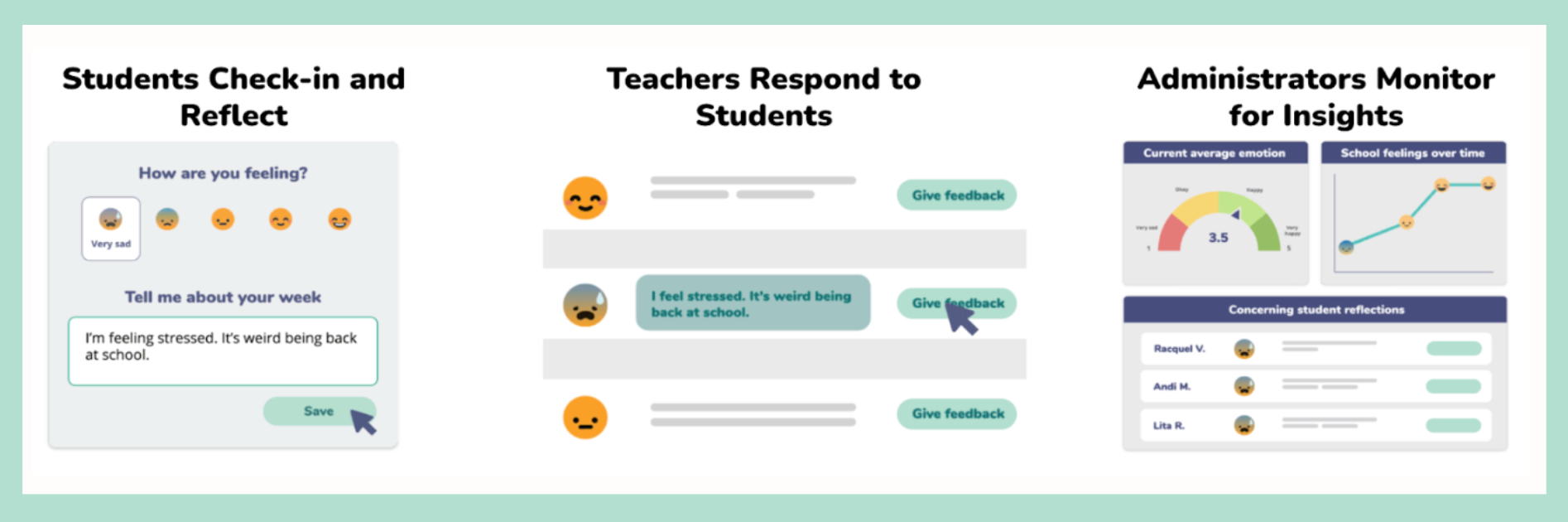
Sown To Grow’s weekly student reflection and teacher response protocol happens through a web application, and creates a unique space that's difficult to replicate offline—but the technology itself isn’t the point.
Some students need a less direct avenue to begin building trust with their teachers. Through these brief online check-ins, students who aren’t yet comfortable sharing face-to-face have a lower pressure way to open up and share what’s on their mind and happening in their life.
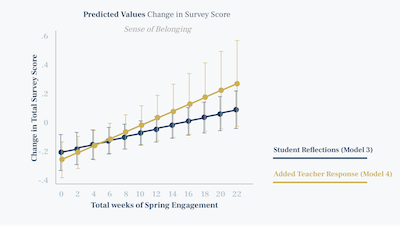
This matters more than it might seem at first glance, and we consistently receive feedback through teacher surveys and student focus groups that this happens in practice, especially among more introverted students who might otherwise remain unheard or unseen.
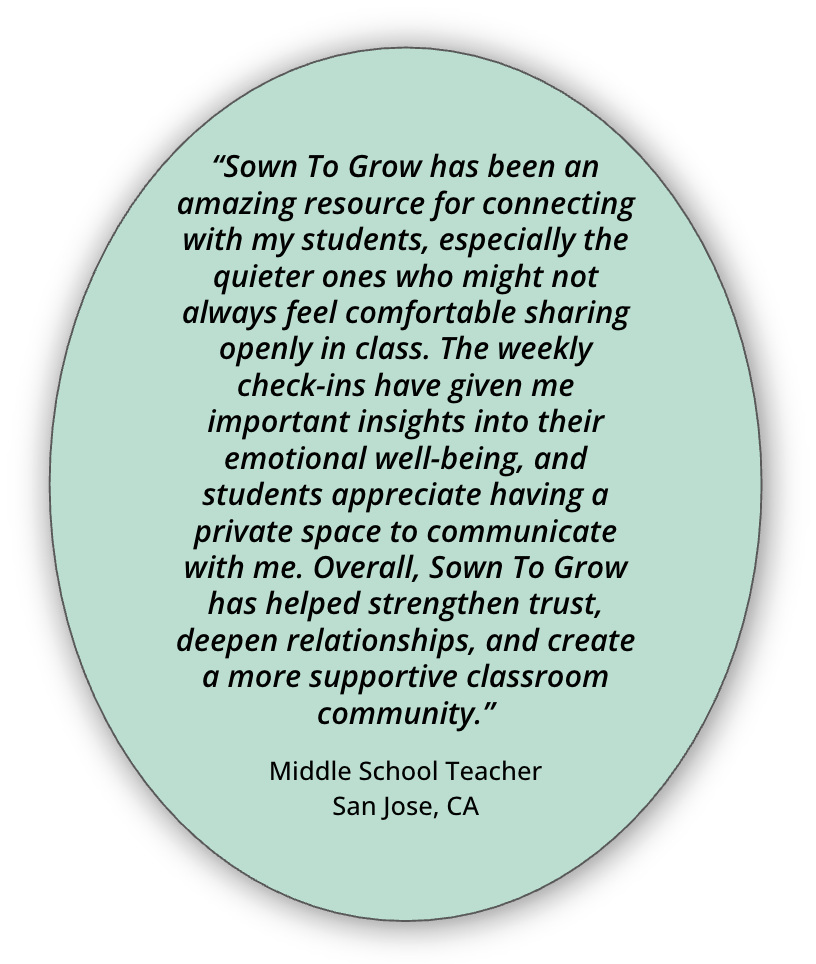
The approach is also scalable in a way that purely face-to-face methods struggle to be. In a classroom of 30 students, creating meaningful touchpoints with each student every week is challenging for teachers. However, technology like Sown To Grow can help make those connections possible without replacing the human work that follows.
There are practical benefits beyond the classroom as well. When students share concerns through check-ins, support staff can be alerted more quickly of potential issues and access a clearer record of past interactions. This continuity of information helps ensure that students get the right support at the right time, rather than slipping through the cracks.
Continuing the conversation offline
The most critical student well-being work isn’t on a screen—it happens in a school’s classrooms and hallways, during office hours, or in a follow-up conversation with a counselor.

That’s why our philosophy has always been that Sown To Grow is useful as a way to start conversations—not replace them. We have intentionally designed the app to facilitate taking ongoing dialogue offline, and the features we build (and don't build) reflect that priority.
The check-in practice only takes 5 to 10 minutes of student screen time per week. Rather than decreasing human interaction and pulling students further into digital spaces, Sown To Grow actually opens up connection opportunities in person by giving teachers and students a shared starting point for more authentic relationships based on trust and care.
The broader point, and a better path ahead

The Economist article is right to push the edtech industry toward greater accountability and real impact. Schools need fewer flashy solutions and more evidence-based tools that solve actual problems.
But as we hold the industry to higher standards, we should also avoid sweeping generalizations and be open to the ways technology can aid student learning.
The key is being honest about what technology can and cannot do, designing with educator involvement, constantly measuring outcomes, and staying focused on what students truly need.
.png)
.png)
.png)
.png)