AI That Puts Students First: What School Leaders Need to Know

Artificial intelligence is everywhere in education right now—in the tools districts are evaluating, in the conversations happening at leadership tables, and increasingly in the day-to-day work of student support professionals.
But with that momentum comes a critical question: how do we make sure AI is actually serving students, not just serving a trend?

On May 6, Sown To Grow partnered with Digital Promise and the National Science Foundation for a webinar exploring exactly that. The conversation united voices from product, data science, EdTech research, and federal funding—and it surfaced some of the most practical and honest thinking we've seen on responsible AI use in student support.
Click to access the slides and recording, and read on to check out key insights from the event.
AI works best when it amplifies human judgment, not replaces it
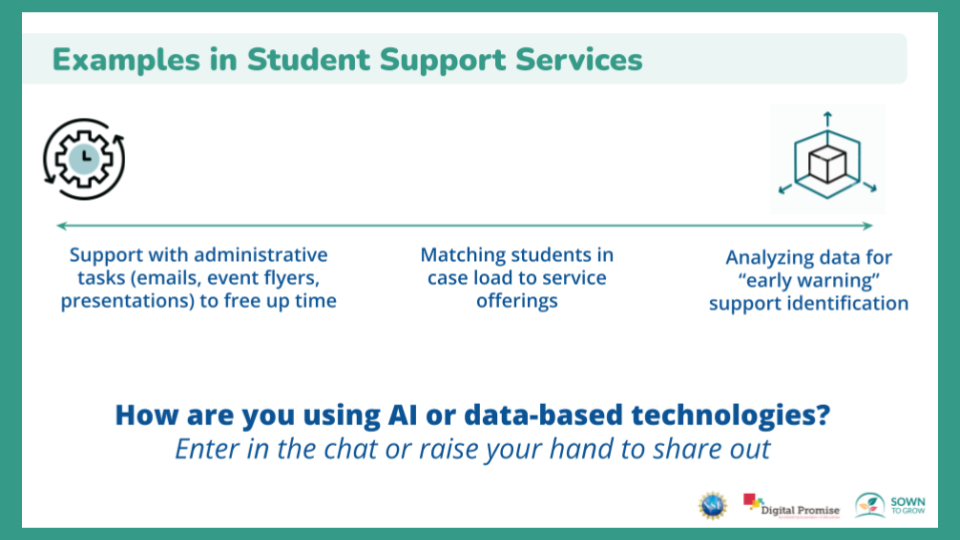
The most valuable use cases for AI in student support fall into two categories, explained Will Bielinkski, Senior Director of Product, Research, and Analytics. There’s efficiency (freeing up time by handling administrative tasks) and new horizons (making things possible that human capacity alone couldn't achieve)—and the key is knowing which is which.
In terms of cautiously and responsibly harnessing AI to effectively enhance student support for educators, Sown To Grow built three different AI pathways—each with explicit guardrails in place:
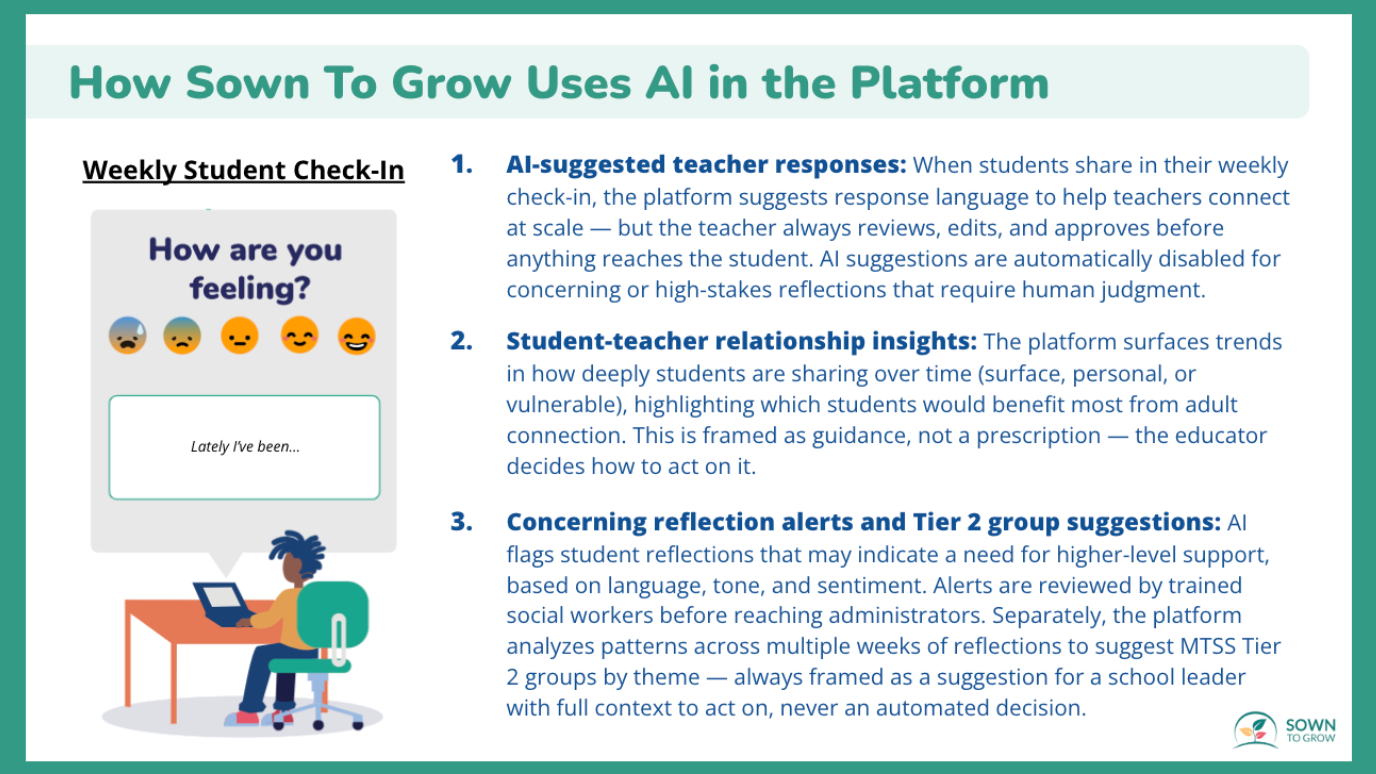
“The most important guardrail that we put in place is using AI-driven output is always a choice for educators,” said Disha Gupta, Director of Data Science and Machine Learning. “They can always edit, they can always skip the suggestions, they use it only when they think it's relevant for their students. So what Sown To Grow’s AI enables is it helps teachers make connections with each of their students, and also builds capacity to support their students, while still having complete control and autonomy to decide what is shared with the students.”
AI risks are real — and worth naming directly
While AI presents meaningful opportunities for schools, the conversation cannot stop at innovation alone. When evaluating any AI or data-based EdTech tool, three areas demand particular scrutiny: privacy and security, potential for bias, and inaccuracies.
These concerns resonated with many attendees such as Andrea Kyndhail, School Counselor and 504 Coordinator at Oregon Charter Academy.
“I was very hesitant to accept AI in a professional practice, particularly working with K through 12 schoolchildren because there's just so much involved in protecting student privacy and well-being,” Kyndhail said. “But one of the mindsets that has helped me understand how to use AI is to think of it not like a colleague, but more like an assistant.”
Bielinski echoed the importance of this, and highlighted how it’s necessary to treat AI outputs as a starting point, but know that they still require human understanding, validation, and expertise. Sown To Grow's guiding principles for AI address these topics directly:

Staying vigilant, Gupta noted, requires ongoing effort, diverse teams, and transparency with educators about how the technology works.
Ask the right questions before you buy
One of the most useful and simple framework takeaways from the webinar: when evaluating a tool, ask two questions:
🔸 Does this solve a real challenge and drive meaningful outcomes — or is it a solution looking for a problem?
🔸 Does it enhance what your staff do best, or is it trying to substitute something humans are better positioned to handle?
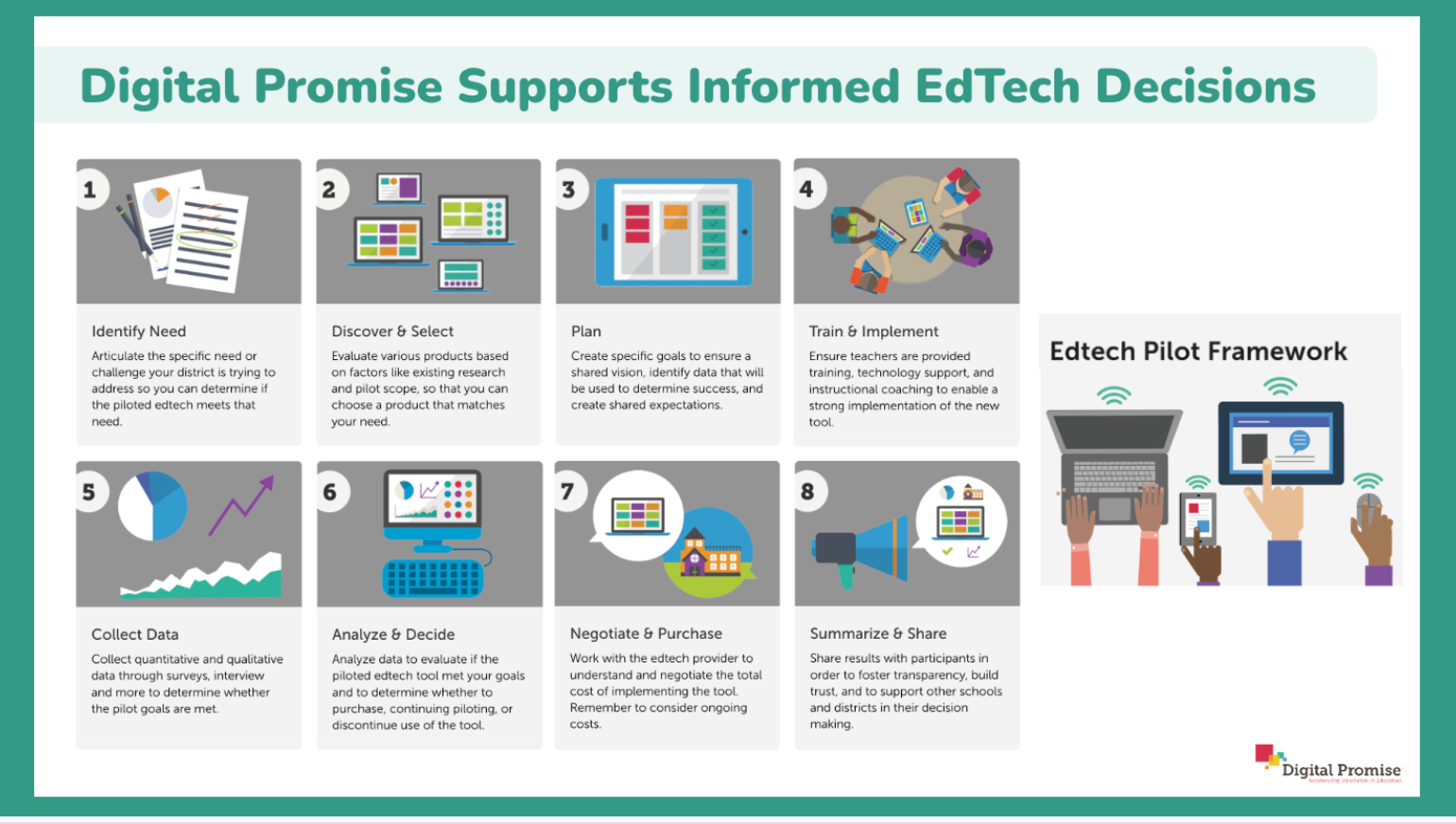
To get even more specific on this criteria, AJ Foster of Digital Promise spoke about her team’s research and development work to help education leaders make guided and informed decisions on technology that are personalized to their district.
“We’re really all about working and co-designing alongside district leaders,” Foster explained as she referenced Digital Promise’s eight-step process to vet tech tools.
Technology should strengthen the human connection at the center of student support
Ideas emerged at the end of the conversation about what the educational technology landscape may look like in five years. Most seemed optimistic that the human elements of education would remain intact, and even thrive with the help of AI.
Whether it’s MTSS tier suggestions, counselor caseloads, or early warning identification, the goal of technology in student support should always be to help adults show up more fully for kids—not to take their place.
When AI is used intentionally — grounded in clear principles, evaluated against real student outcomes, and designed with guardrails that keep professionals in control — it can genuinely expand what's possible for students who need support most.
.png)
.png)
.png)
.png)