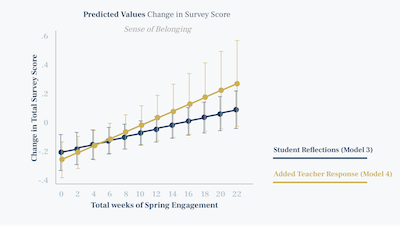
Lead with Love: A Community School in Action at Scholarship Prep South Bay

What does a community school actually look like on a Wednesday morning? At the National Community Schools and Family Engagement Conference in Long Beach (May 27–29), forty leaders from schools, districts, and community organizations across the country got to find out. Visitors boarded buses for a morning site visit to Scholarship Prep's South Bay campus (a TK–8 community school part of a 6 school charter network) to see the model not on a slide, but in action.
The morning opened the way the whole visit would continue: with students front and center. Three groups of the campus's Dolphin Dancers performed for the crowd, a reminder that a community school is, first and foremost, a place where kids feel seen. From there, attendees got to visit classrooms and modeled the community meeting structure.
A Routine Built for Belonging
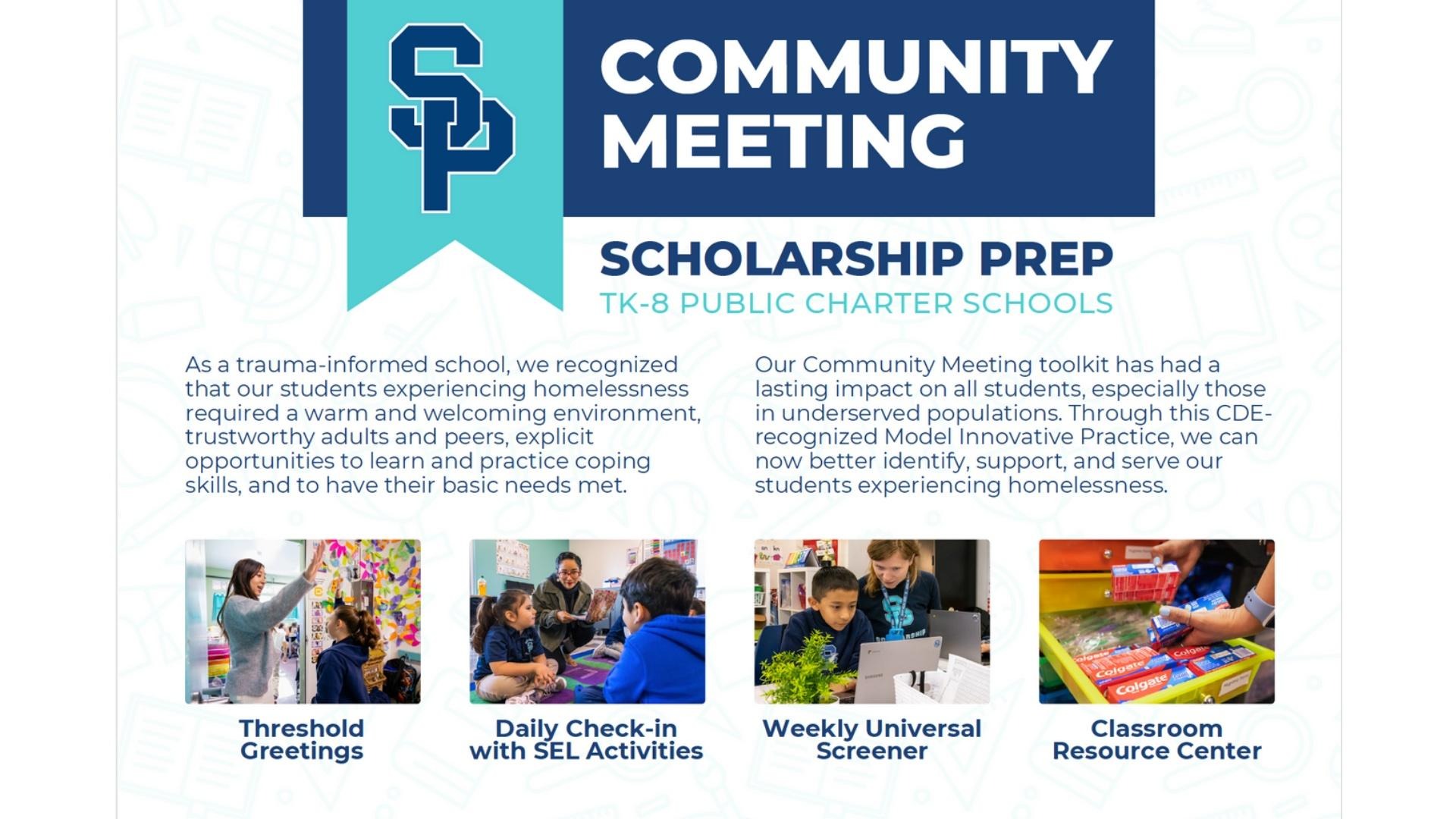
The community schools strategy organizes a campus around the whole child: integrated student supports, real family engagement, and a culture where basic needs are met so learning can happen. Scholarship Prep operationalizes that vision through a five-part Community Meeting toolkit, grounded in trauma-informed practice.
That trauma-informed lens showed up everywhere. The team works to interrupt the trauma cycle by prioritizing the 5 Cs: asking for Consent, providing Consistency and Clarity, using Common language, and reinforcing Coping skills. They train adults to deflect, de-escalate, and manage their own demeanor with kids, intentionally building the safe spaces and safe adults that make trust possible. As Director of Family Engagement Dennise Allotey put it, the guiding question is simple: "How will the child remember you?"
It Starts at the Threshold
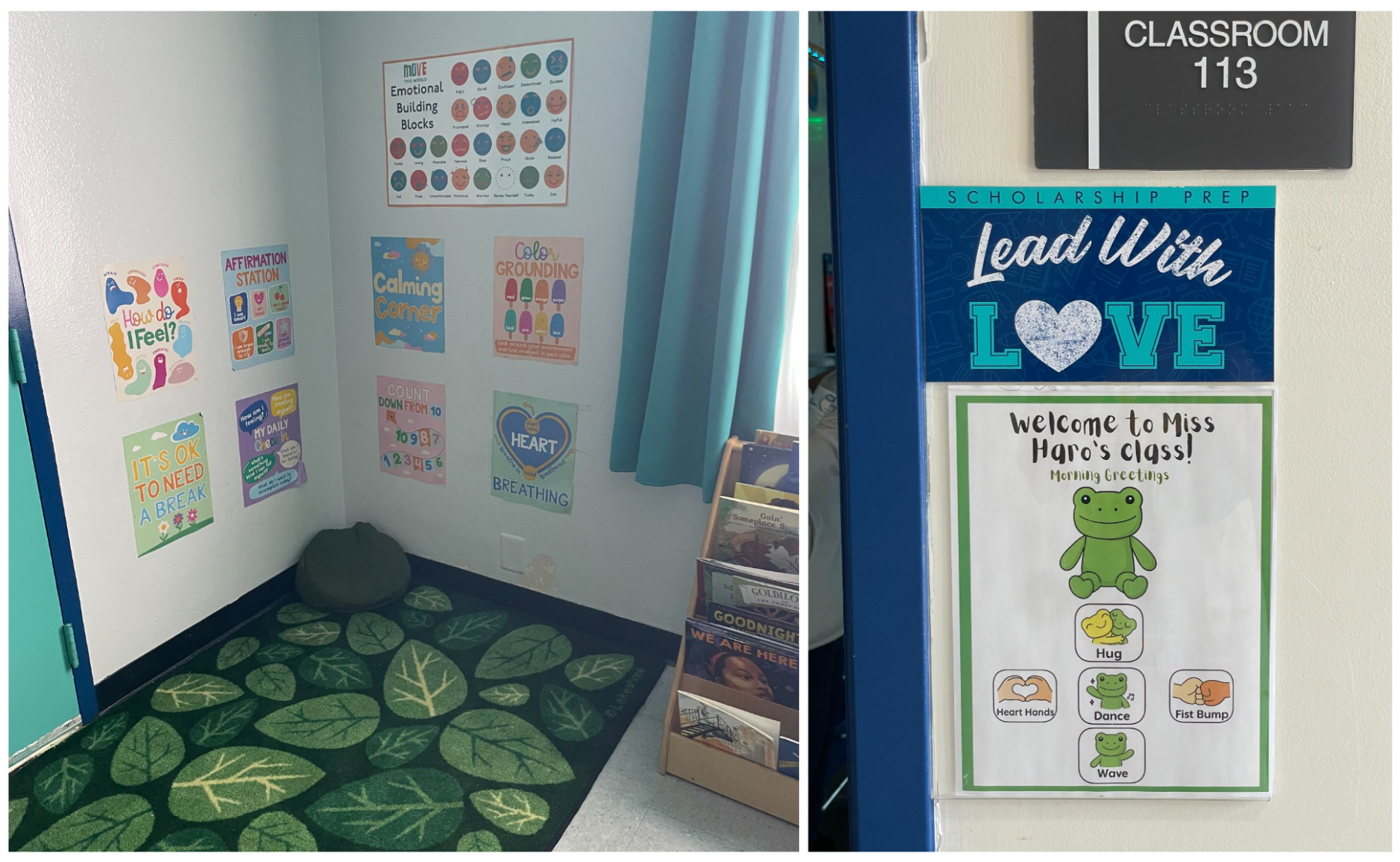
Every student is greeted by name, every day. Threshold greetings, where students get to choose from a high five, a handshake, a call-and-response, a quiet "good morning,” or other preferred greeting, give each child a dependable connection to a trusted adult. This routine also gives staff a daily read on how that student is arriving. It's belonging and a first-line screen for emotional or physical needs, rolled into one warm moment at the door.
Inside classrooms, daily SEL lessons build a common language across the campus. Each day as a part of a morning routine, Scholarship Prep uses Move This World to help students practice naming emotions, self-regulation, and strengthening connection. Because every classroom uses the same vocabulary, students and staff can navigate hard moments with shared tools rather than improvised ones. Visitors got to see this in action by participating in a mock SEL lesson.
No Questions Asked: Resources with Dignity
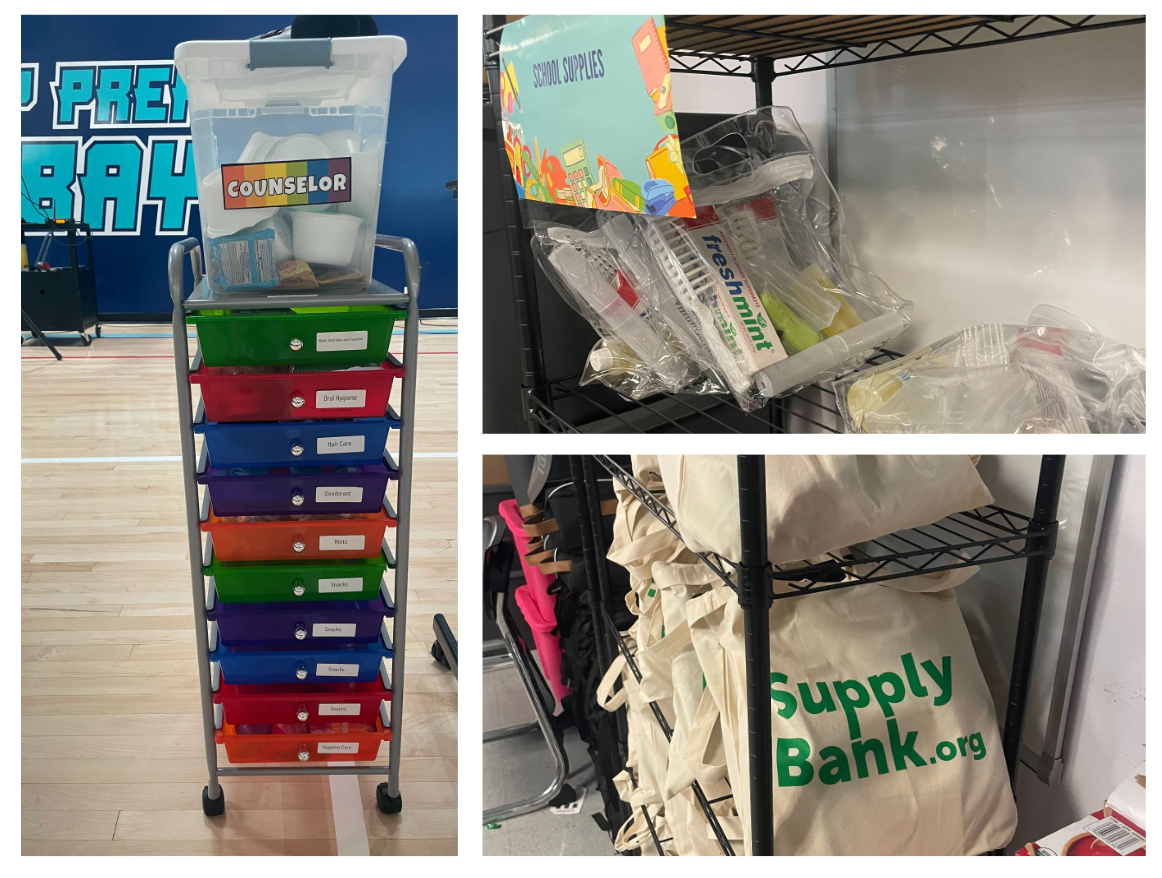
In every room sits a "rainbow cart” stocked with snacks, hygiene items, and school supplies that students can access without shame or explanation. Universal meals (breakfast, lunch, and snacks) are available to all scholars. A larger family resource center on campus has its own outside-facing door, so families can come weekly for supplies and support while keeping their privacy and dignity intact.
During the visit, the philosophy behind the resource centers stood out to attendees. Staff don't gatekeep, but they do teach students to use resources responsibly and to recognize and advocate for their real needs. The carts double as a quiet data source: what runs out fastest, or which students return again and again, can signal a wider need worth a closer look.
The same care extends to families. As the South Bay school counselor described it: "If I know of a resource or an event, I'll say, 'Hey, the City of Carson has a food pantry. If anyone, or any family or neighbor, needs it, it's here.' I don't single anyone out. I just make sure they know it's available." Attendees repeatedly named how support that protects family autonomy as a practice they wanted to bring home.
From Check-In to Action
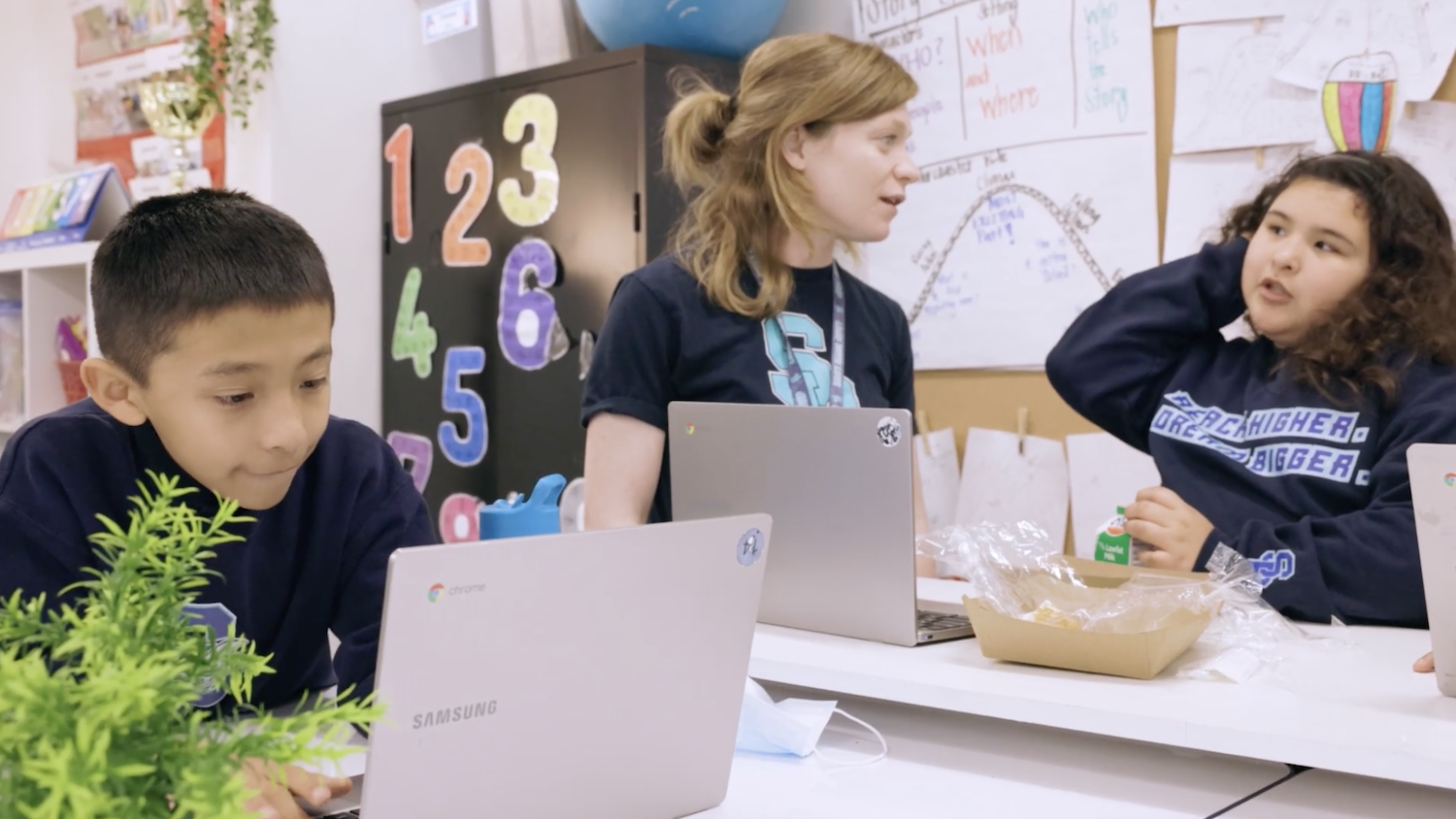
Another routine visitors got to experience firsthand is the weekly universal screener completed through Sown To Grow. Each week, students share how they're feeling and respond to a prompt, giving every child a standing line to a trusted adult, and giving the counselor an early, proactive read on who needs support. Adult visitors completed their own check-in, and the school’s counselor shared their practices for reading and responding to students. Scholarship Prep runs this with remarkable consistency: near-100% student reflection read rates and teacher response rates, and a habit of staying on top of every alert.
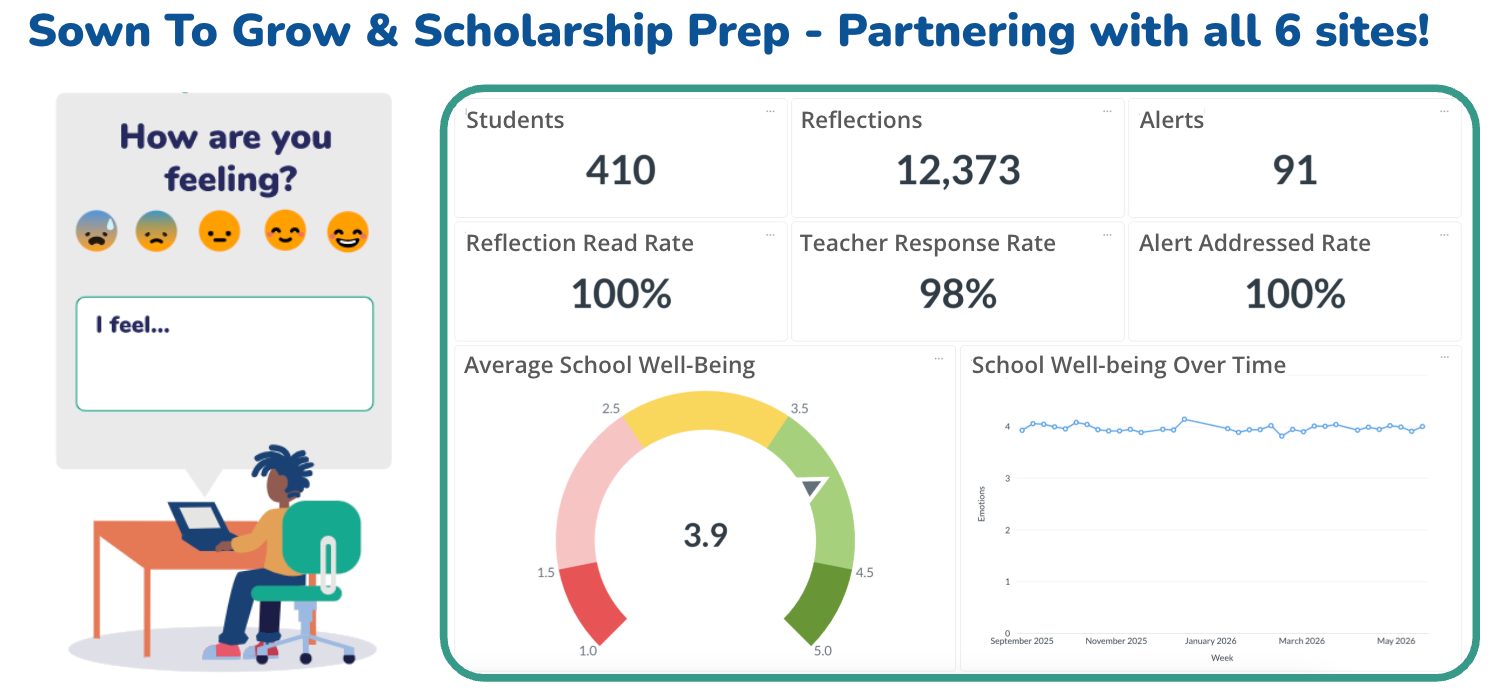
That structure turns student voice into action at every tier. For Tier 1 and Tier 2, patterns in the data shape instruction. "If I see there's a lot of peer conflict, like here's drama in sixth grade, I know about all the drama, then I'll tell the teacher, 'Can I come in next Tuesday? I think I need to teach a lesson,'" the counselor explained.
For individual students, the log of their well-being matters: "If I'm meeting a student I don't know, I'll check their Sown To Grow to catch up on their life. 'I see ups and downs — let me check last year. Is this a pattern?' You can track it over time."
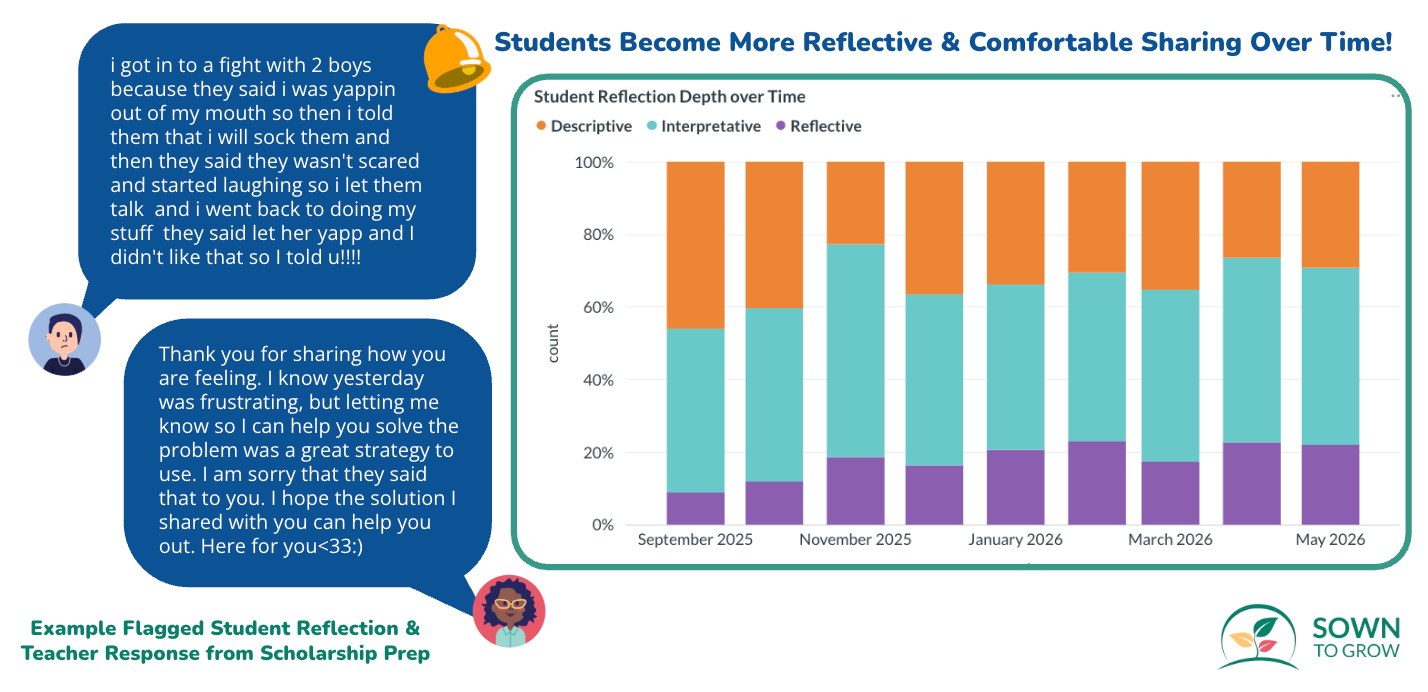
For urgent flags, the counselor described a clear triage routine. Teachers must respond to alerts immediately and document that they checked in with the student in person. "For me, that's triaging. A Tier 3 emergency, then I need to go. But 'I'm sad because our dog ran away'? A teacher can connect with them privately in the moment. It's figuring out who's needed: me, the principal, or the teacher?"
Scholarship Prep leaders how this is designed to support, not replace human connection. "It's how you use it. If it's just students come in, log in, do it, whatever. I don't see it, the counselor doesn't use it, then it doesn't do anything. It still requires that human element, the community element.” As Scholarship Prep showed, when that human care is supported by the right tools, powerful community building occurs.
Lead With Love
Lead with Love is the network’s model for the 2025-26 school year and it was evident in tangible ways to visitors: belonging built into every space and routine, dignity upheld through resource distribution, and a weekly check-in that lets a counselor get ahead of needs instead of reacting to them. Scholarship Prep is an exemplar of the community schools model and the visit provided a thought-provoking start to the conference.
If you're building or growing a community school, book a time to see how Sown To Grow can support your check-in and early-identification practices.
.png)
.png)
.png)
.png)
.png)