AI with Intention: How We're Thinking About AI at Sown To Grow

Few questions come up more often in our conversations with school and district leaders right now than this one: What are you doing with AI? Usually a second question follows right behind: Should I be worried?
Both are fair. In just a few years, generative AI and large language models (LLMs) have gone from novelty to something nearly every edtech vendor says it uses. The technology is evolving faster than district policies can keep up, leaving student support leaders to distinguish real capabilities from marketing claims, often with little visibility into what's happening under the hood.
We first wrote about how and why we use AI in 2020 and revisited the topic last year. Since then, Generative AI and large language models (LLMs) have become dramatically more capable, with no signs of slowing down. The principles guiding how we use it at Sown To Grow haven't changed nearly as much.
Start with the problem, not the technology
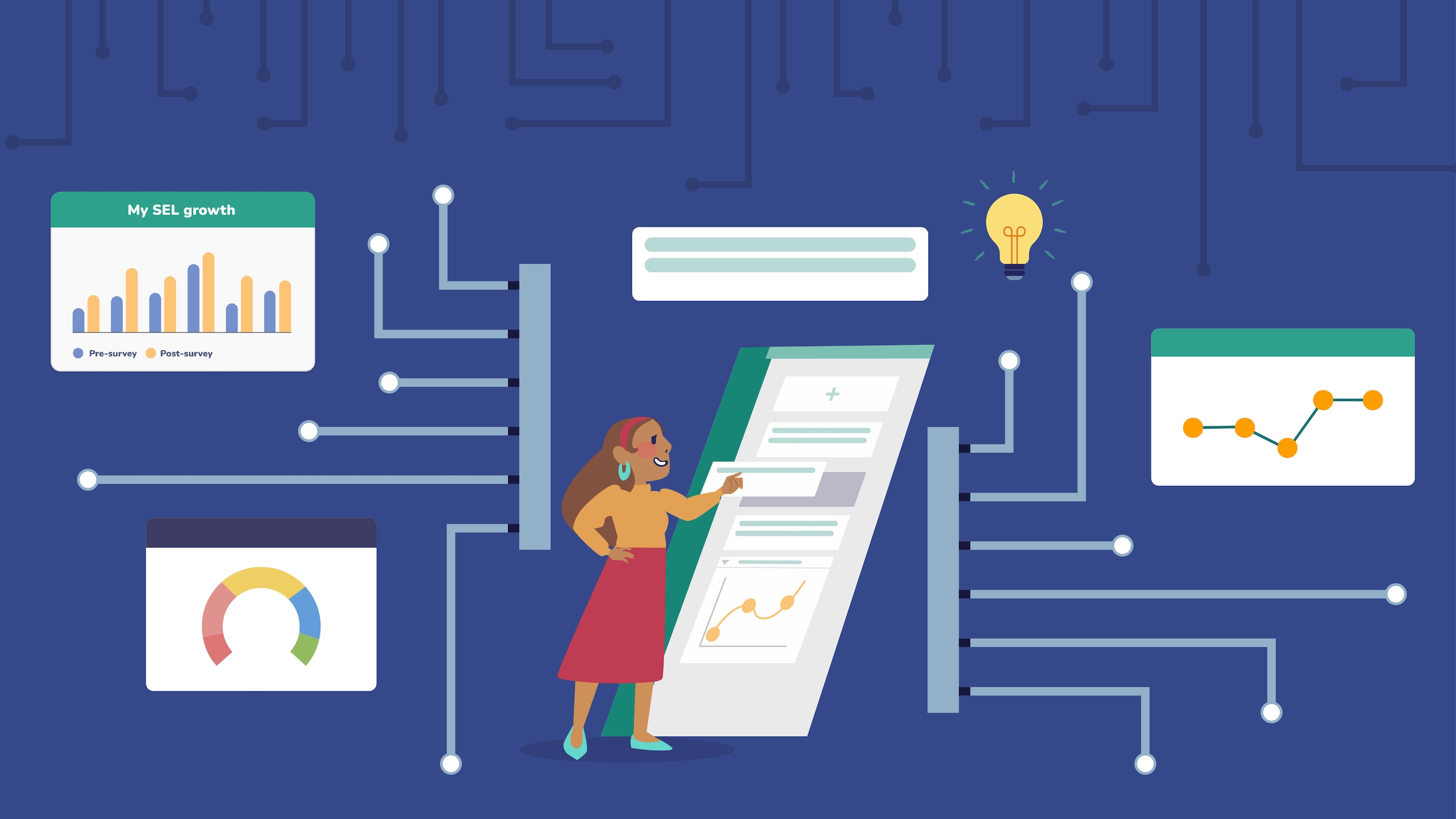
Machine learning already does quiet, specific work inside Sown To Grow. It helps identify trends in student reflections, surface reflections that may require an educator's attention, find patterns in how students reflect over time, and support teachers in responding thoughtfully.
Most of these models are intentionally narrow. Each was built to answer one well-defined question, such as Does this reflection contain a particular theme? or Does something here require additional attention? Because the question is narrow, we can define and measure whether our models are doing their job well.
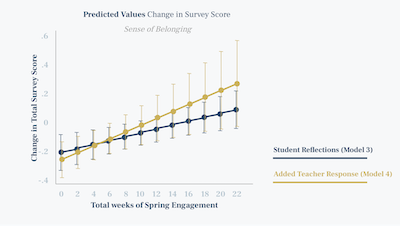
Our NSF-supported work around student-teacher connection is a good example. Before building any model, we had to consider what we were trying to understand. Through pedagogical research, conversations with experts, and review of anonymized student-teacher interactions, we developed frameworks for understanding reflective depth, self-disclosure, and the ways teachers respond to students. Only then did we ask how machine learning might help us understand those interactions at scale.
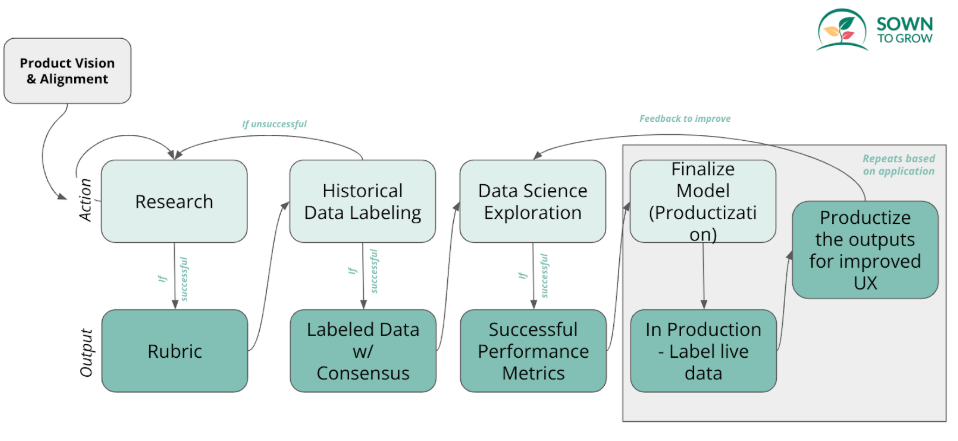
As the above diagram shows, the model is one step in a longer process. Research, a rubric, and carefully labeled data come before it; ongoing monitoring and refinement come after. We didn't start with AI and look for a problem. We started with a problem and asked where AI could help.
What changes with generative AI
Traditional models answer narrow questions well. Generative AI opens up different possibilities. It can take large amounts of unstructured information, reason across it, and let people explore that information using everyday language. Picture a counselor asking, in plain words, how a group of students' reflections have shifted this month, and getting an answer drawn from the data rather than having to sift through the information themselves.
That possibility is what led us to STGpt, an internal project we use to explore what generative AI could look like in our platform.
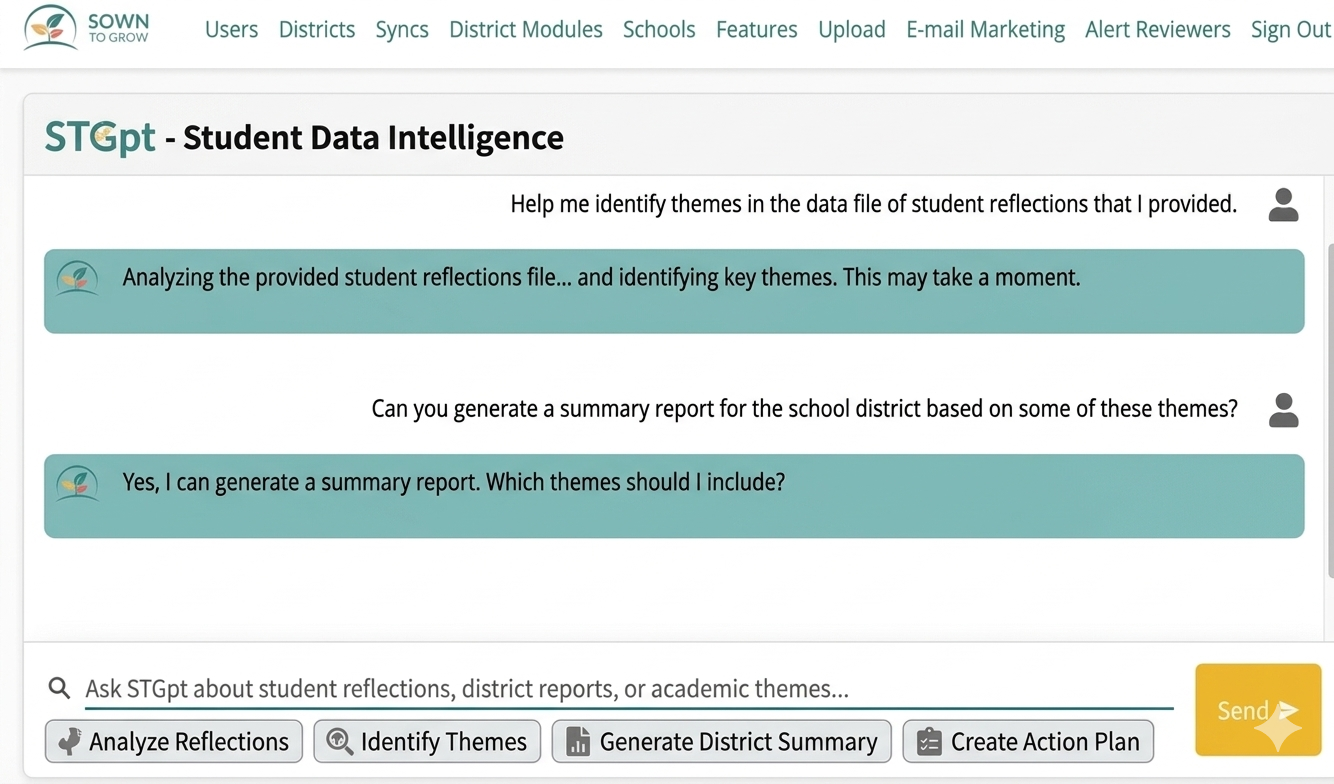
Working on STGpt has involved experimenting with different LLMs and approaches for securely connecting them with our data. Our biggest lesson so far: the model itself is only one piece of the system. An answer can sound right without being right. A model can misread a question, miss context, or make assumptions the data doesn't support. When the data represents real students, "probably right" isn't good enough.
That’s why we focus on questions that go beyond the model itself::
- Is the answer grounded in actual student data?
- What information should the model be able to access, and what should it never see?
- How do we evaluate an open-ended answer when there's no single correct response?
- How do we protect student information at every step?
- Is an LLM the right tool here, or would a traditional model or rules-based approach be more reliable?
The goal isn't to use generative AI everywhere. It's to find where it genuinely improves the experience for educators, and to build the system around it that makes that improvement responsible.
We're continuing to test these approaches, identify where generative AI can add meaningful value, and understand where its limitations outweigh its benefits. Before bringing new capabilities to educators, we'll evaluate their accuracy, privacy safeguards, and usefulness in real school contexts. The next step isn't simply to make AI available, but to make sure it earns its place.
The commitments that don't change
The AI models we're experimenting with today will probably look outdated surprisingly soon. But better models don't eliminate the need to think carefully about how we use them. In many ways, they make that responsibility greater.
At Sown To Grow, AI with intention means being willing to experiment boldly while deploying thoughtfully. It means choosing the simplest technology that solves the problem rather than the newest one. It means evaluating the system around the model, not just the model itself. And it means recognizing that there are places where human judgment is always needed.
Our technology has changed considerably since we first wrote about AI in 2020. Our north star remains the same: to build technology that helps educators better see, understand, and support their students.
Revisit Sown To Grow’s ethics for building with AI: