Designing with, Not for, Educators and Students


Educators and students are the experts in their own experiences. They know what helps students feel engaged, supported, and ready to learn—and how technology can better support them.
Too often, though, edtech products are designed for educators and students rather than with them. At Sown To Grow, we believe the people who use our products should have a meaningful role in shaping them. That means creating opportunities for students, teachers, and school leaders to share their experiences, challenge our assumptions, and help design solutions that truly meet their needs.
How Listening and Learning Shapes Our Product
Our product team is constantly learning from the educators and students who use Sown To Grow.
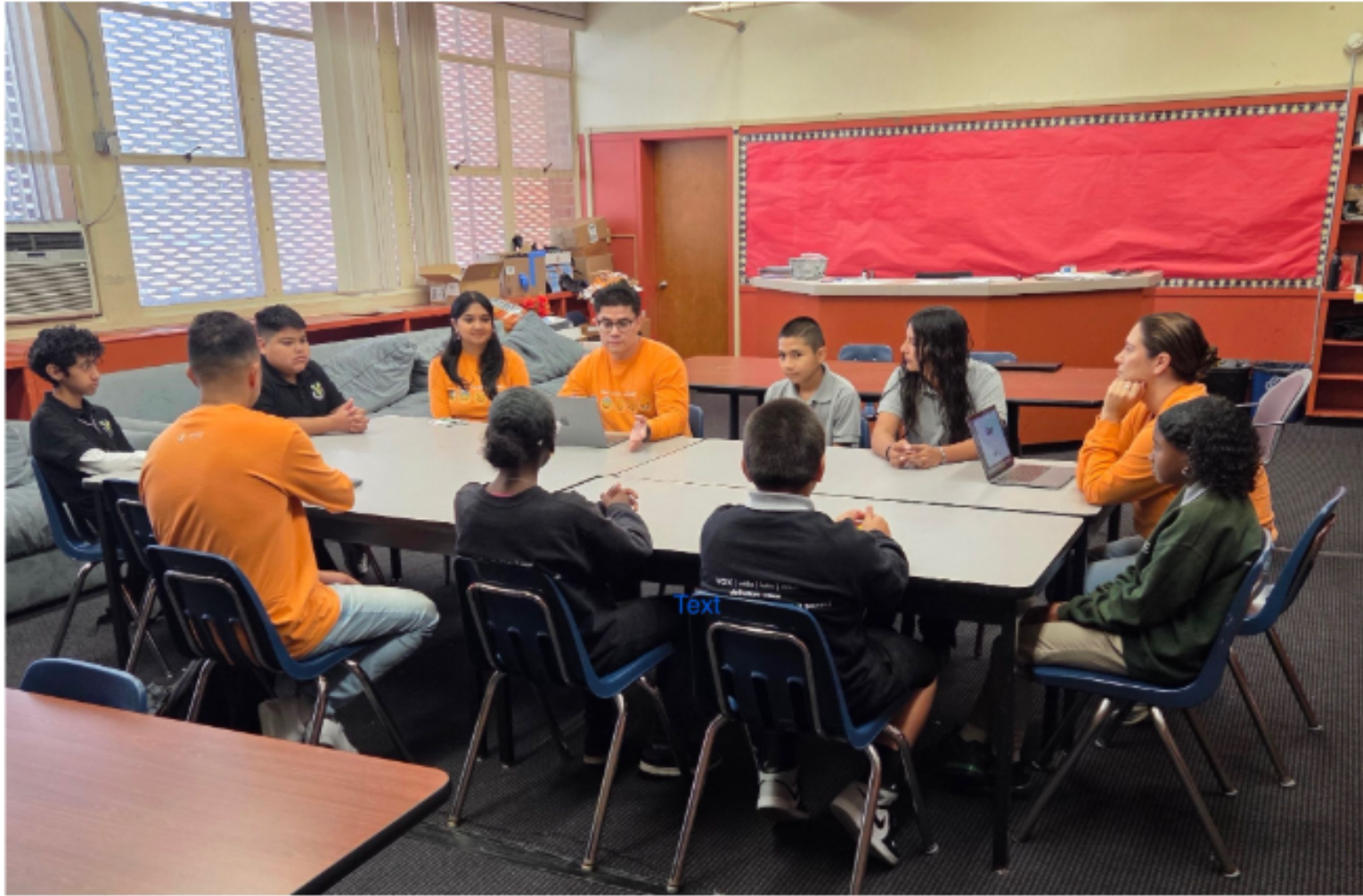
We gather feedback in many ways, including interviews with teachers, administrators, and school leaders, as well as targeted surveys to better understand specific problems or opportunities.
Some of our most valuable learning happens in schools. Each year, our team visits more than a dozen schools to watch Sown To Grow in use and hear directly from teachers, staff, and students about what's working and what could work better.
This feedback helps us answer an important question: What problems are worth solving?
From there, we test potential solutions with educators through virtual usability sessions, giving them a chance to try new experiences and identify what feels confusing, useful, or missing. Once a feature is built, we often pilot it with selected schools for a month to a full school year, using their feedback to refine it before expanding to more schools
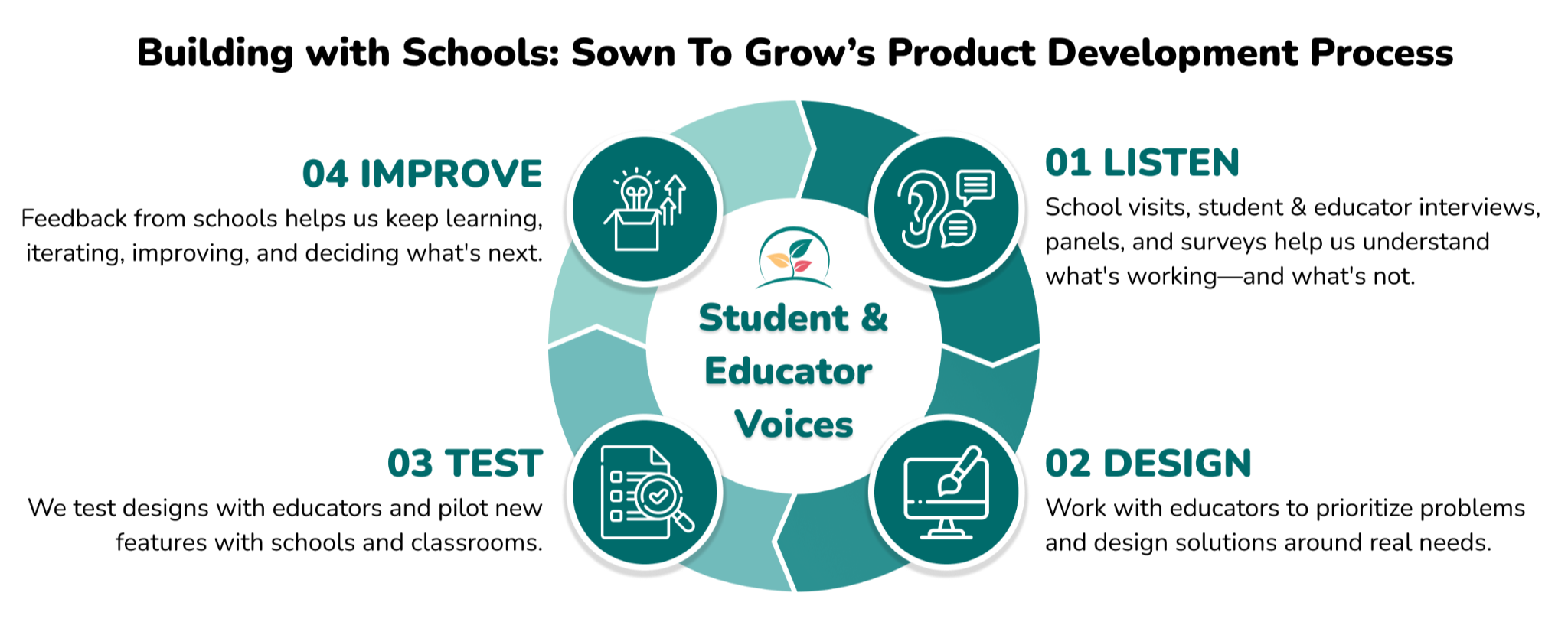
In other words, educator input shapes the problem, the solution, and every iteration that follows.
Co-Design: Putting Students and Educators in the Designer's Seat

Co-design takes this approach a step further by inviting the people who will use a product to collaborate in its development. Rather than describing their pain points and leaving experts to find the solution, students and educators help envision what gets built. Our role is to facilitate, bring product and technical expertise, and turn their ideas into something real. This approach is central to how we develop products at Sown To Grow, and has earned us a Co-Design Certification from LeanLab Education. The development of our K–2 Simplified Check-In offers a strong example of how we use co-design in practice.
Working with educators, we learned our standard check-in wasn't fully meeting the needs of our youngest learners. Teachers pointed to accessibility needs like reading and writing support, and to developmental ones: simpler screens, fewer options, and room for students to open up to their teachers.
“It’s helpful to only focus on one thing at a time.” - Brandi, a Kinder teacher
“Kids want to share but they just don’t have the capacity for typing yet.” - Harvest, a 1st grade teacher
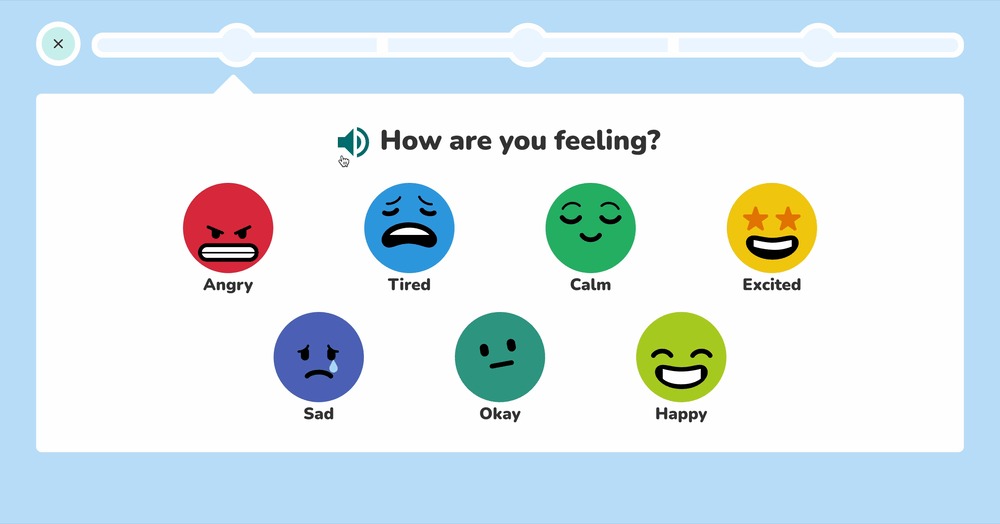
Those insights shaped the simplified experience, which breaks the check-in into shorter steps and includes features such as read aloud and talk-to-text.
Co-Design in Action: Rethinking the High School Check-In
This spring, we brought the same approach to our work with high school students. This work was made possible through a partnership with Digital Promise, a nonprofit dedicated to expanding opportunity for every learner by bringing together research, practice, and technology.
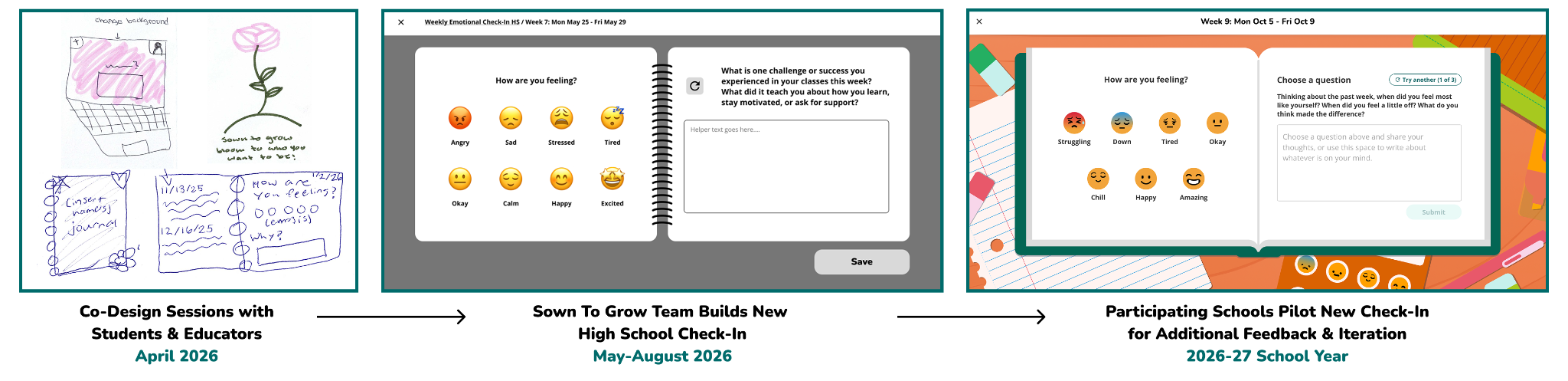
In April, school and district leaders from four schools in Wisconsin, Tennessee, and California joined an in-person session to rethink the weekly check-in for high schoolers. We also held two sessions with high school students in Los Angeles and San Diego.
The conversations were candid, creative, and full of ideas. Participants challenged us to rethink what a weekly check-in could look and feel like for teenagers—and what would make them want to come back each week.
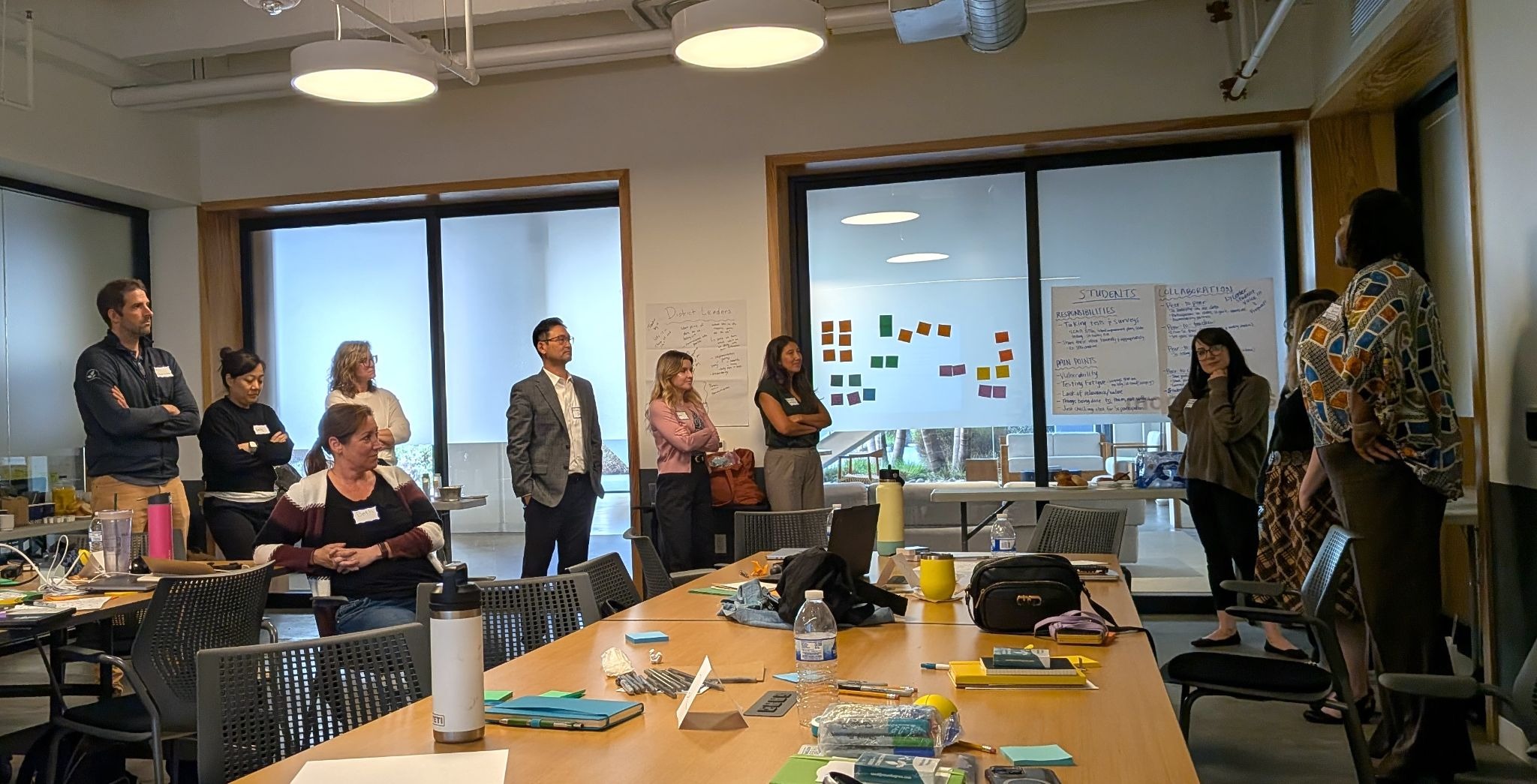
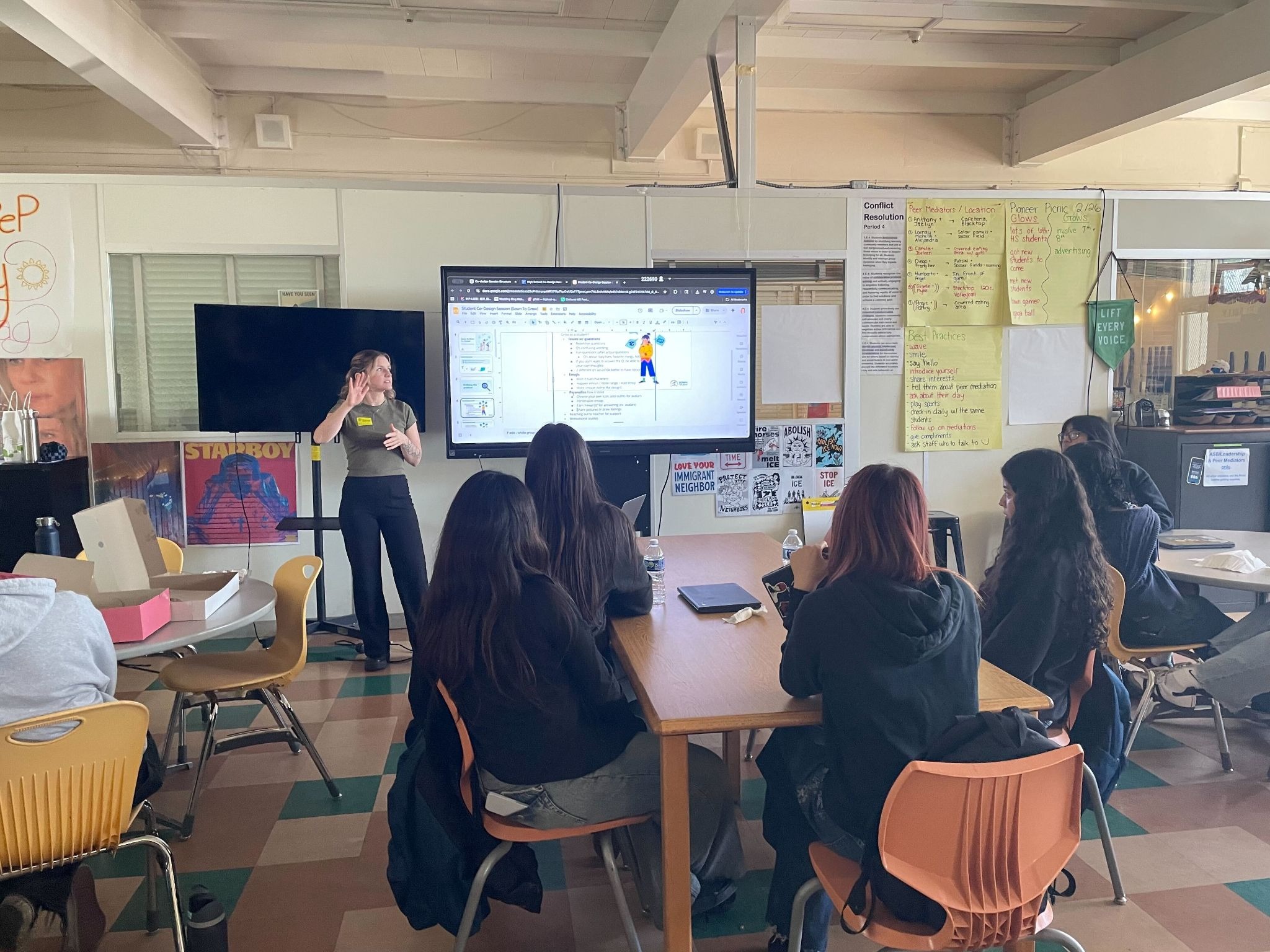
What we heard directly informed the new check-in experience we built over the summer, giving high school students more choice, agency, and engagement in the check-in experience.
A Weekly Check-In Designed for Teenagers
The redesigned high school check-in includes three new key features:
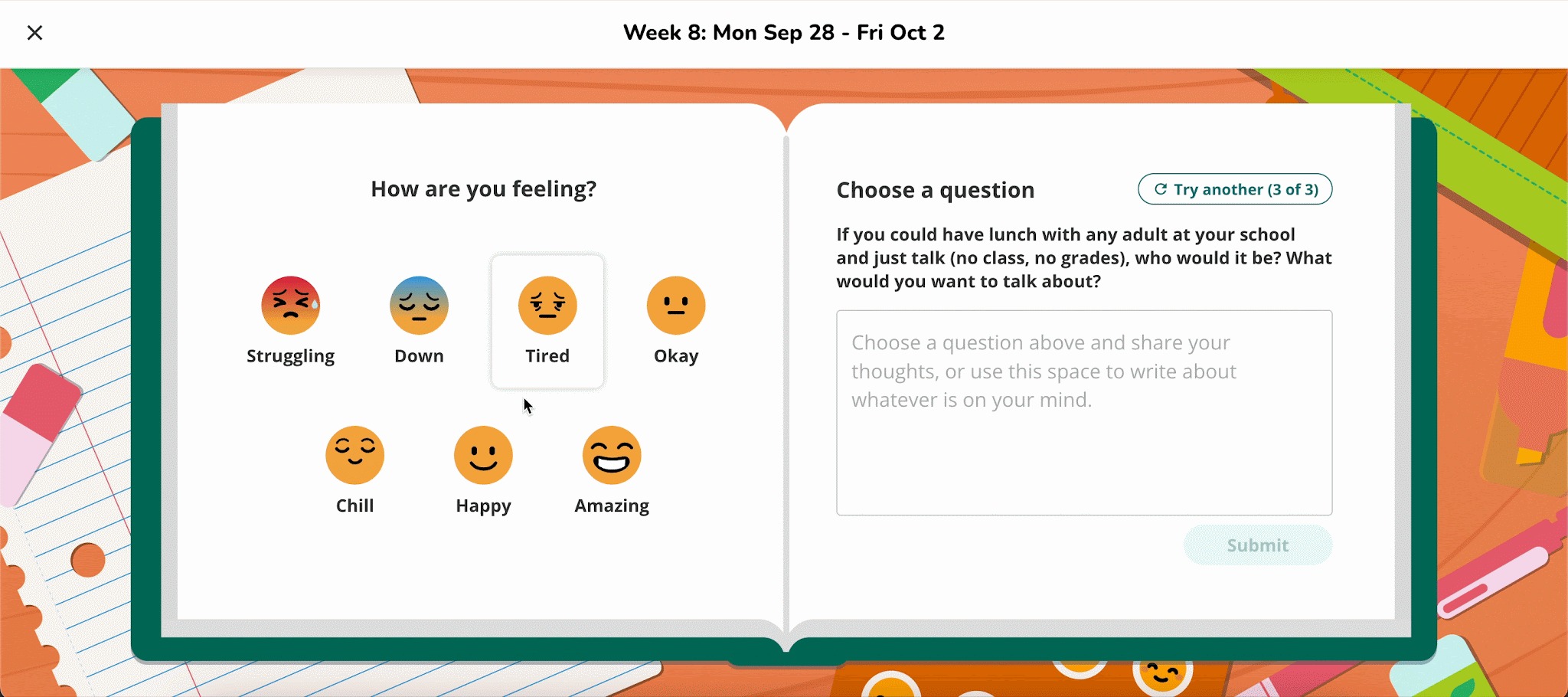
- More ways to express how they feel: Students told us our existing emotions didn't always match how they felt. The new check-in adds more nuanced options, like "tired" and "chill."
- More choice in what they reflect on: Agency matters more as teens grow more independent. Students now choose their reflection question: an SEL-focused question, an academic one, or something lighthearted.
- A more personal experience: At one student's suggestion, we redesigned the interface to feel like a journal. After submitting, students see a motivational quote and a plant that grows throughout the school year
The experience is designed to reinforce a simple idea: taking time to reflect is part of growing.
What Comes Next
The new high school check-in is now being piloted at selected schools during the 2026–27 school year, giving us another opportunity to learn directly from the students and educators using it.
Throughout the year, we'll continue collecting feedback and using what we learn to improve the experience before making it available more broadly. We'll also hold two additional virtual co-design sessions with educators to explore new ways Sown To Grow can support student needs at their schools.
For us, thoughtful edtech means more than meeting a set of requirements. It means giving the people who use our tools a hand in shaping them.
We're grateful to our school partners for sharing their experiences, challenging our thinking, and building alongside us.