Built to Last: EMPOWER Summit 2026 and the Future of California Community Schools

For four years, the EMPOWER Summit has brought California community school practitioners together to compare notes on building something new. This year, the summit returned to Ontario on September 10–11, and the conversation shifted. With California community schools funding moving from a one-time competitive grant model toward an annual allocation, practitioners were looking beyond how to build sustainable systems within a five-year grant cycle and asking what becomes possible when community schools funding is built to last.
That change reframed many of the conversations at EMPOWER and sharpened a question practitioners kept returning to: how can community schools build systems to address the challenges students and schools are facing right now — keeping students in school, engaged, connected, and able to thrive?
What Comes Next: Preparing for the Opt-In
The California Department of Education's session on the upcoming investment drew a packed crowd. Lisa Clark-Devine, Education Administrator at CDE, walked through what's changing and what isn't.
The new allocation model is expected to expand access to community schools funding while providing a path for existing community schools to continue their work beyond the initial grant period. For districts that have spent years developing partnerships, governance structures, and new ways of supporting students and families, the message was clear: the work already underway is the foundation for what comes next.
A few things to know:
- LEAs can opt in for planning or implementation. The funding allocation remains the same, while planning provides an additional 24 months for LEAs to establish governance structures, strengthen relationships, and build readiness.
- The focus is on strengthening what already exists. Revisit needs and assets assessments, implementation plans, and alignment across current efforts rather than treating the funding as a brand-new initiative.
- More guidance is coming. Details on the opt-in process are expected soon, with communication likely going to superintendents.
Our Partners on Stage
Three of our partner districts took the stage, and a common theme emerged: lasting change starts with understanding what students are experiencing, then building systems that let adults respond earlier and more intentionally.
Belonging as an Attendance Strategy
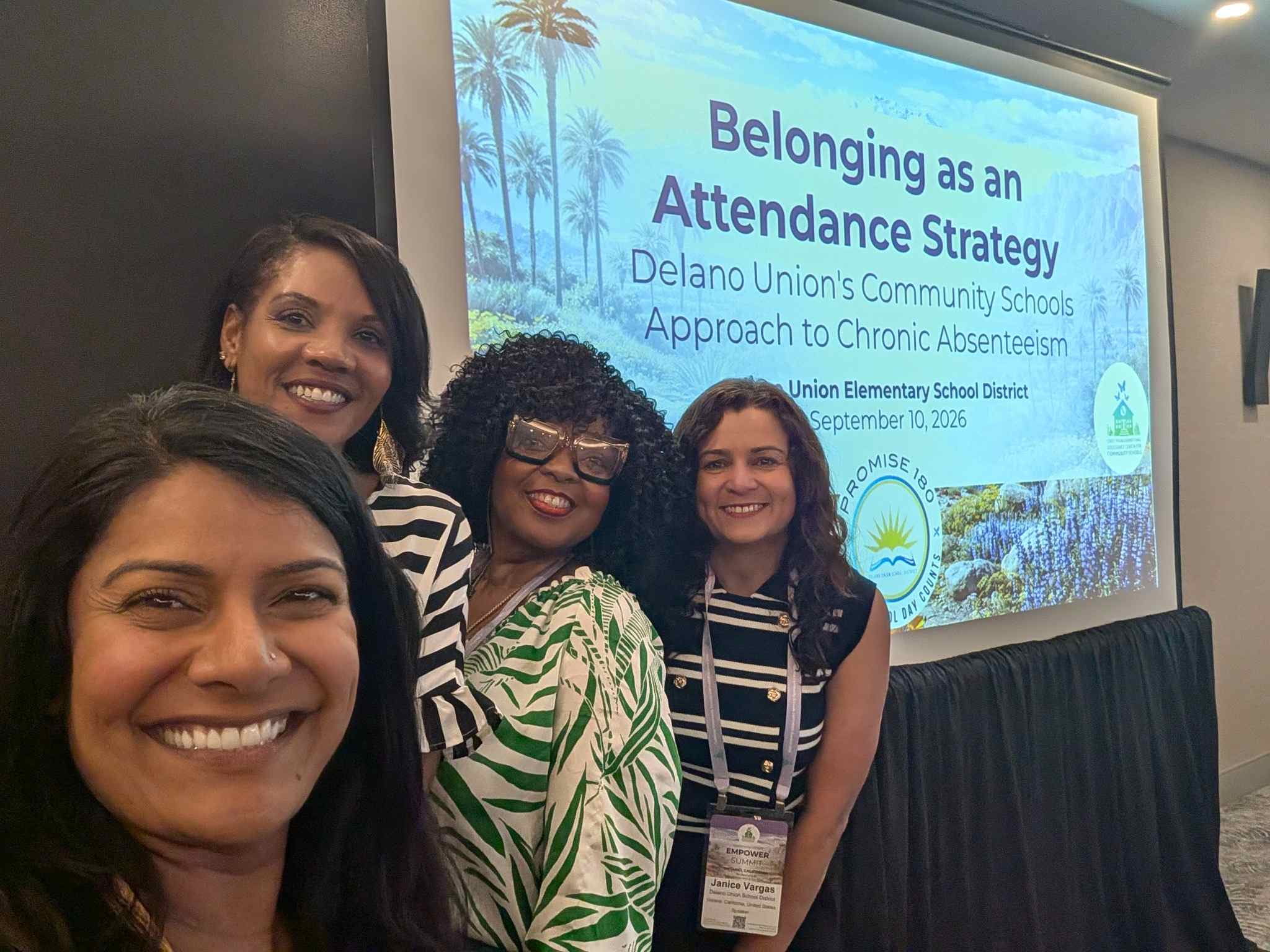
Scheduled opposite the highly anticipated CDE information session, Delano Union’s presentation on their attendance strategy still drew more than 100 attendees. Monica Coverson, Executive of District Partner Success at Sown To Grow, presented alongside Tina Tyler Smith, Director of Student Support Services, and Janice Vargas, Principal at Albany Park Elementary.
They opened with the uncomfortable data. California's chronic absenteeism rate remains well above pre-pandemic levels, while schools continue to grapple with strategies that don't always stick. Delano made the case that absence is a symptom. Barriers, aversion, disengagement, and misconceptions each call for a different response, and catching those challenges early requires trusting relationships.
Their Promise 180: Every School Day Counts initiative puts this principle into practice, combining protected morning collaboration time for school admin with weekly Sown To Grow check-ins. The results speak for themselves: as student sense of belonging has grown for four consecutive years, Delano’s chronic absenteeism has dropped from 28.7% to 4.8%.
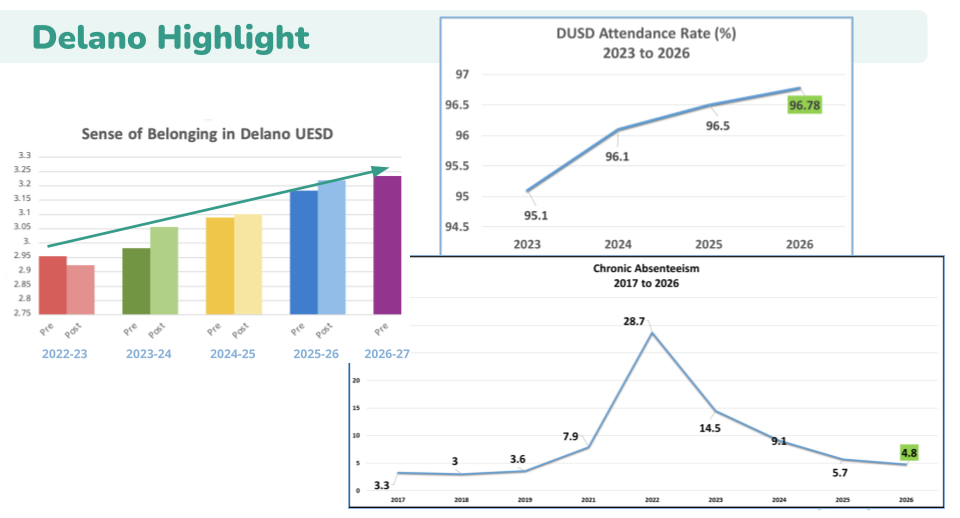
The overarching lesson: attendance data tells schools where to look, but relationships help educators understand what students need.
From Student Voice to Proactive Support
Delano wasn't the only district at EMPOWER showing what it looks like to center community school systems around student experience. Whittier City and Lancaster School Districts approached the work from different angles, but both are using student and family voice to move from reactive responses toward more proactive support.
Whittier City School District Community Schools Coordinator Jeffrey Ng and colleagues reflected on a shift away from relying primarily on PBIS and office discipline referrals to understand student needs. After more than a decade of collecting data on negative incidents, the team recognized that what you collect is what you focus on—and the approach wasn't changing the underlying patterns. Needs and assets assessments from students, families, and staff instead pointed toward social-emotional and mental health needs.
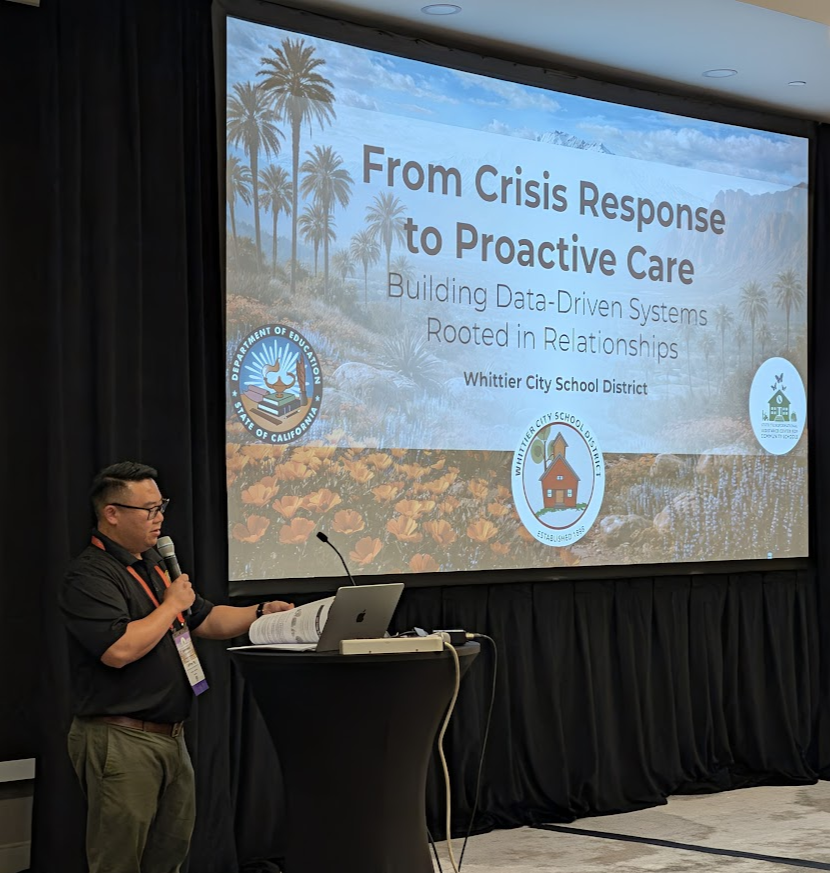
At Dexter Middle School, Sorensen Science Academy, and Orange Grove Elementary, weekly Sown To Grow check-ins gave teachers a simple Tier 1 routine for bringing student voice into the school day. Teams can now plan from current student data rather than anecdotes, behavior technicians have a shared tool for building relationships alongside teachers, and wellness data sits alongside academics in the same conversation.
Lancaster School District approached proactive support through a broader family and community lens. Sam Yuom, Director of Student and Family Programs, described how barriers to housing, transportation, and health care shape students' ability to arrive ready to learn. Rather than asking families to navigate those systems alone, Lancaster has brought services directly to them. A vaccine clinic and wellness and resource center operate inside the district enrollment center, alongside a mini food bank, clothing, diapers, and a family laundry facility. Community school liaisons who share lived experience in the region connect families to resources, while weekly Sown To Grow check-ins help the district understand how students are doing as those supports take hold.
The approaches look different, but the underlying principle is the same: community schools become more responsive when districts have systems for listening to students and families—and using what they hear to guide action.
Building for the Long Haul
Across EMPOWER, practitioners shared what they have learned from years of developing community school systems. California’s new annual allocation creates more opportunity to build on that foundation, giving this work time to mature and grow stronger. Attendees left with actionable strategies they can put into practice now and a renewed sense of what is possible with a longer runway.
Ready to integrate belonging and student voice into your community schools strategy? Meet with us to discuss your district’s goals.
.png)
.png)
.png)
.png)
.png)