The Weekly Rhythm One Teacher Used to Make Well-Being Routine

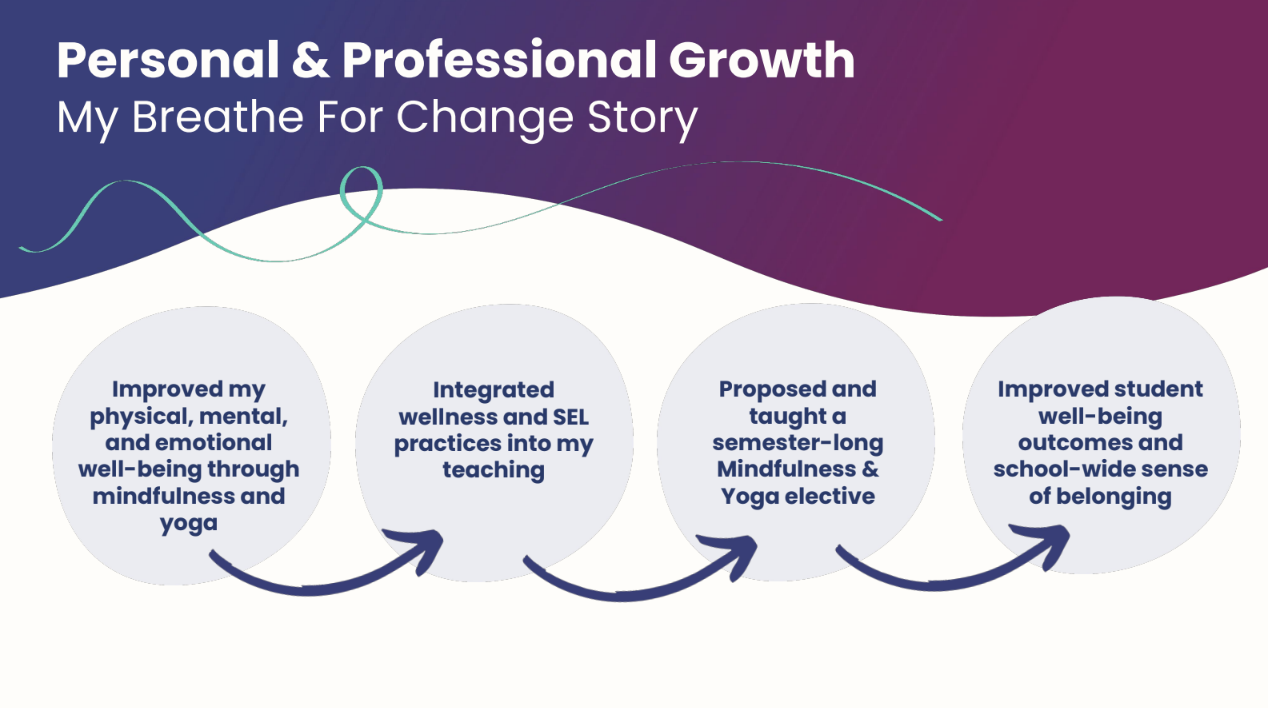
In her tenth year of teaching, Ellen Colvig was thinking about leaving the profession she loved. "I had the hardest class that I've ever had," she recalls being overwhelmed by behavior management needs. "That was a lot of stress for me, a lot of anxiety, and I knew something needed to change in order for me to remain a classroom teacher."
Mindfulness and social-emotional learning ultimately grounded her as an educator. As her career progressed, Ellen suspected that the practices that steadied her own life and could do the same for her students. Today Ellen is a Teacher Leader and site SEL lead at Alta Loma Middle School in South San Francisco Unified School District.
As the SEL lead, she integrated Sown To Grow’s emotional well-being check-in throughout the school, and earned Alta Loma a J. Russell Kent Award. The Kent award is San Mateo County School Board’s recognition of outstanding school initiatives.
Ellen’s passion for mindfulness transformed her career and her classroom, and now she’s sharing some of what she’s designed with other educators who may be facing the same challenges she once did.
The conviction behind the class
For her Master of Science in Education in Transformative Leadership (William Jewell University & Breathe for Change), focused on SEL, mindfulness, and yoga, Ellen created a semester-long Mindfulness and Yoga elective for seventh and eighth graders. Her reasoning is plain: "Students cannot succeed academically if they are struggling mentally." At a school of nearly 700 that until recently had only two counselors, she saw a gap and acted within the limits she had.
Ellen brought in techniques from her personal experience as a certified wellness educator and yoga instructor, and grounded the semester course in Sown To Grow’s SEL curriculum. "I knew there were things I could sprinkle in that I'd already been doing. But really what I needed [was] curriculum. Having that from Sown to Grow was like, oh my god, I have the solution."
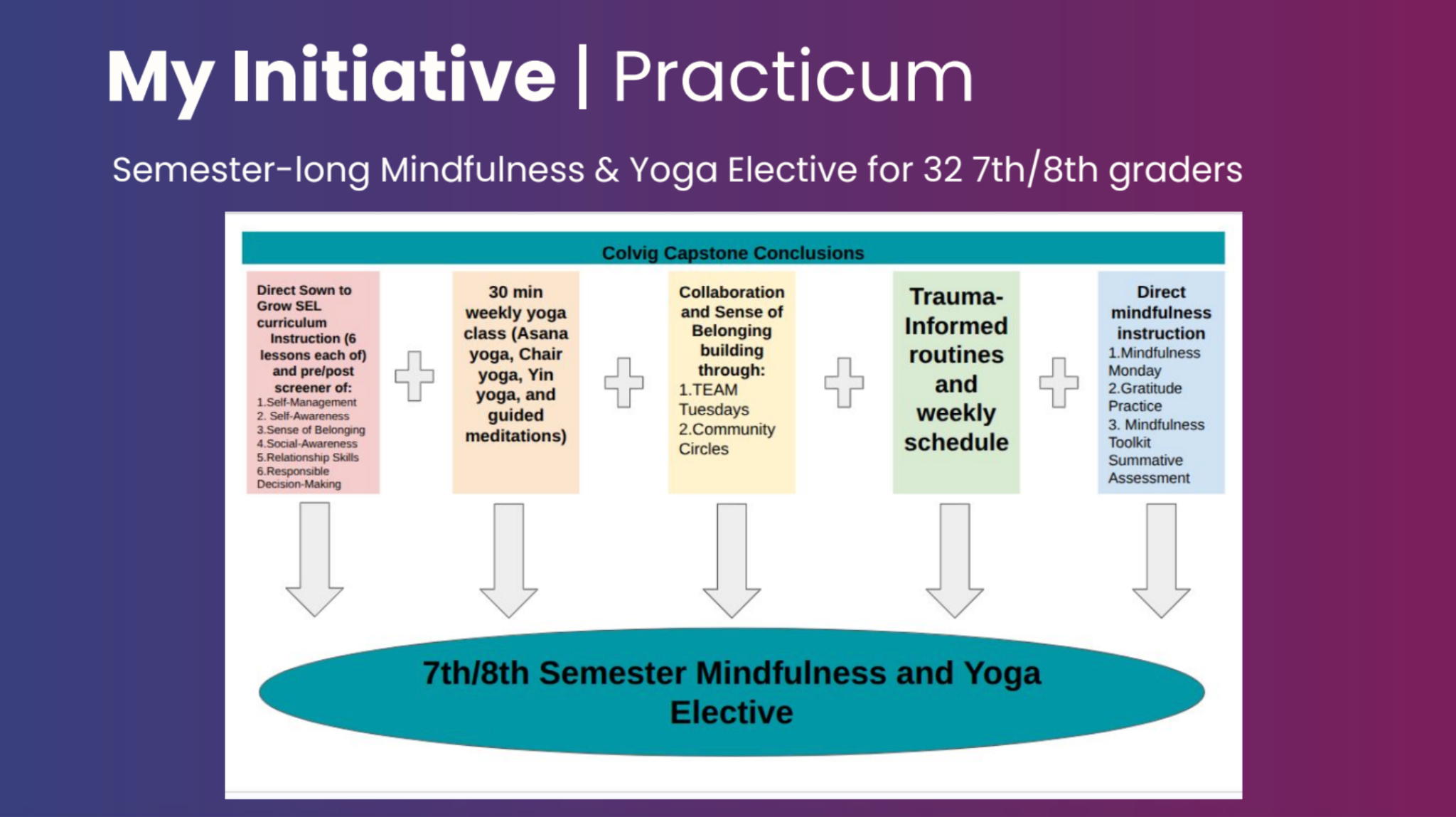
She taught all 44 CASEL-aligned lessons across the semester and layered in roughly thirty mindfulness techniques, weekly yoga, and structured peer collaboration, deliberately offering variety so each student could "find the things that worked for them."
A weekly rhythm you can borrow
Ellen built the class around a structured weekly cadence, knowing that predictable routines are a trauma-informed practice. You do not need a full elective to integrate these systems though. Think of her model as repeatable building blocks that fit a standalone class, an advisory period, a MTSS block, or a slot inside a content course:
- A consistent opening ritual: ten minutes of silent reading and a daily gratitude prompt to settle the room.
- A recurring mindfulness slot: "Mindfulness Mondays" introduced one new strategy a week, from breathing to walking meditation, building a menu students could name and reach for.
- Structured peer connection: "Team Tuesdays" used short collaborative games to build relationship skills and belonging.
- A body-based regulation practice: a weekly 30-minute yoga class, bringing in simple stretches and breathing exercises that could be done outside of gym.
- A regular reflective check-in: Friday check-ins and post-yoga reflections that gave Ellen real-time insight into how her students felt about the instruction.
- Direct, sequenced SEL instruction in small chunks every day as a through-line.
Keep the pieces that fit your schedule and adapt the rest.
She measured whether it worked
What sets the project apart is the rigor behind Ellen's claims. "Having data to support that is vital," she says. "It tells you here's where we need change, or here's what's working well."
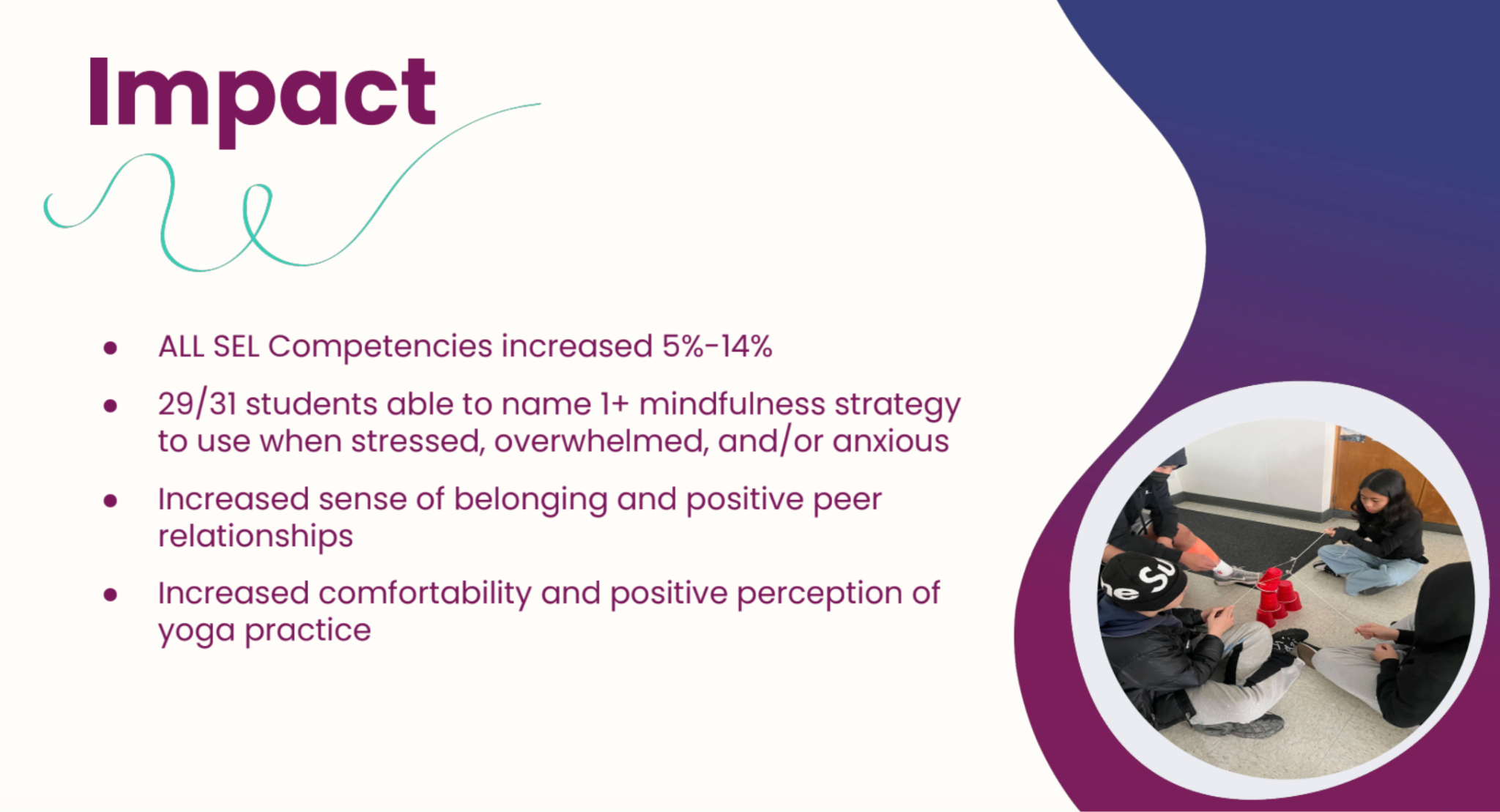
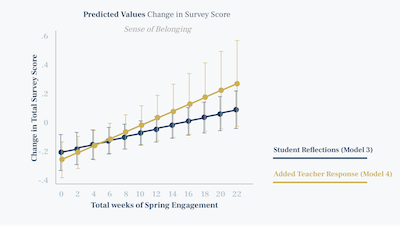
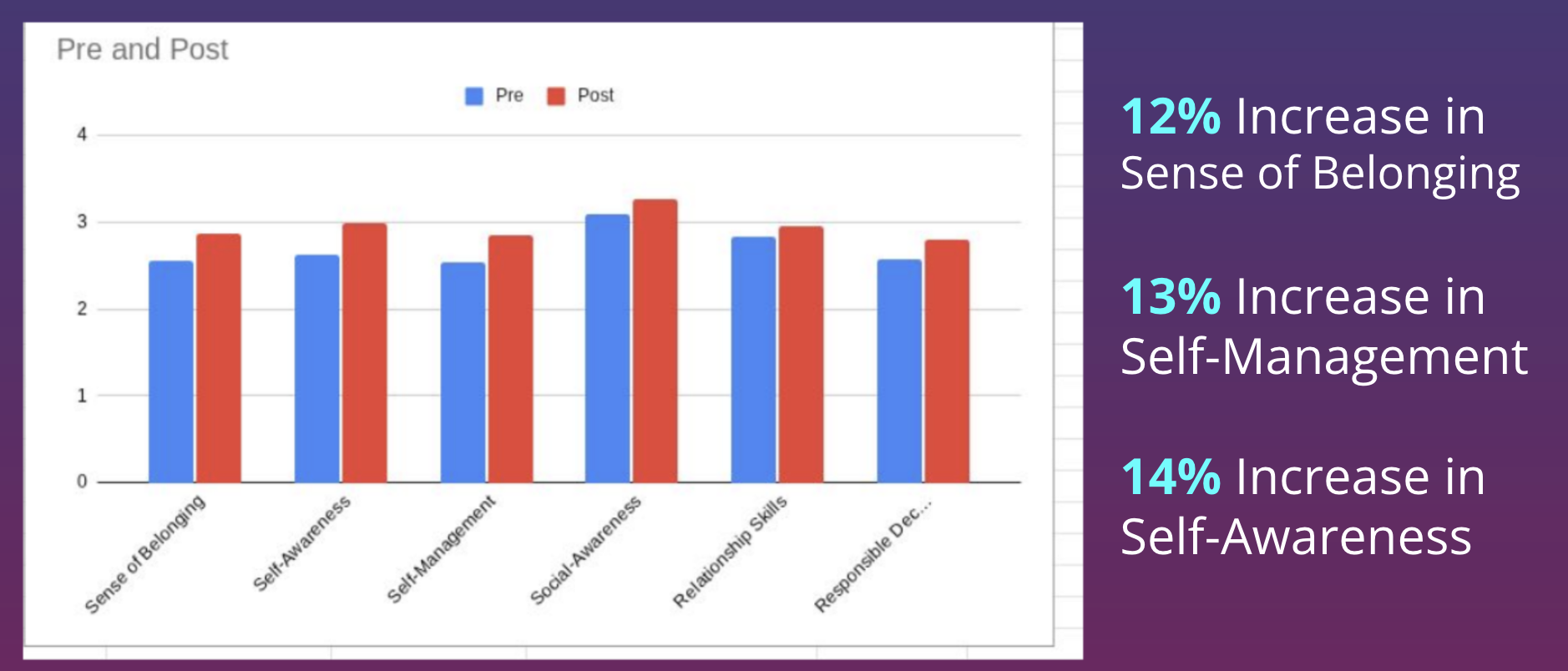
Using Sown To Grow's SEL screener, she found that every CASEL competency plus Sense of Belonging rose, with class-average gains between five and fourteen percent. Self-Awareness, Self-Management, & Sense of Belonging were the biggest areas of growth.
By the end of the course, ninety-four percent of students could name at least one strategy for stressful moments, and seventy percent could name five. The results held true across both semesters she taught, with two separate student groups.
What letting go taught her
Some of Ellen's sharpest insights came from changing course mid-stream. Early on she required students to follow along with yoga poses, and it backfired. "There was a lot of reluctancy, so I stopped doing forced participation, and their comfortability immediately went up."
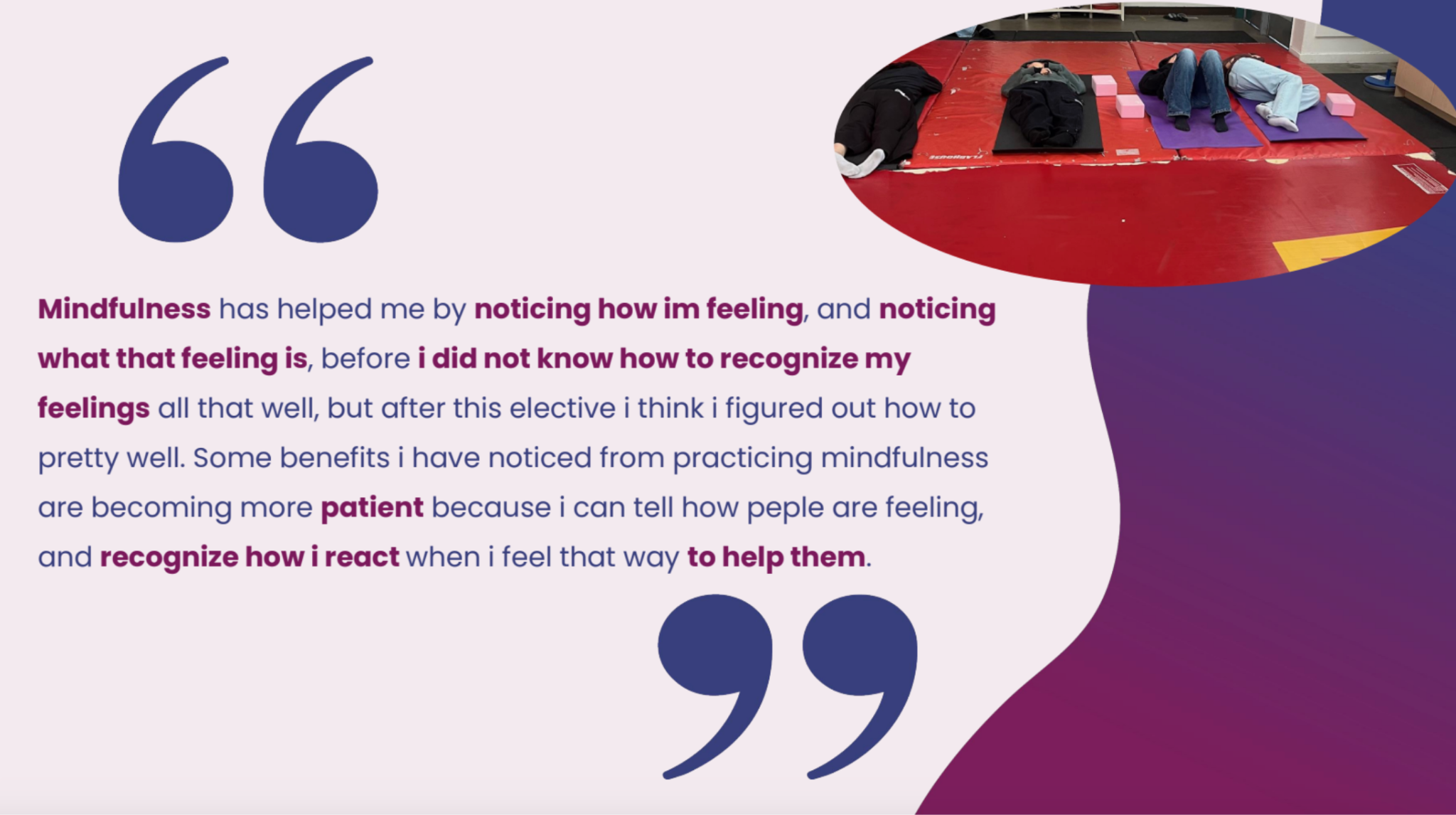
She reframed the rest as the practice itself: "You can be in savasana for thirty minutes. That is a yoga pose. You are regulating your body, you are regulating your emotions." Student comfort with yoga rose twenty-two percent over the semester.
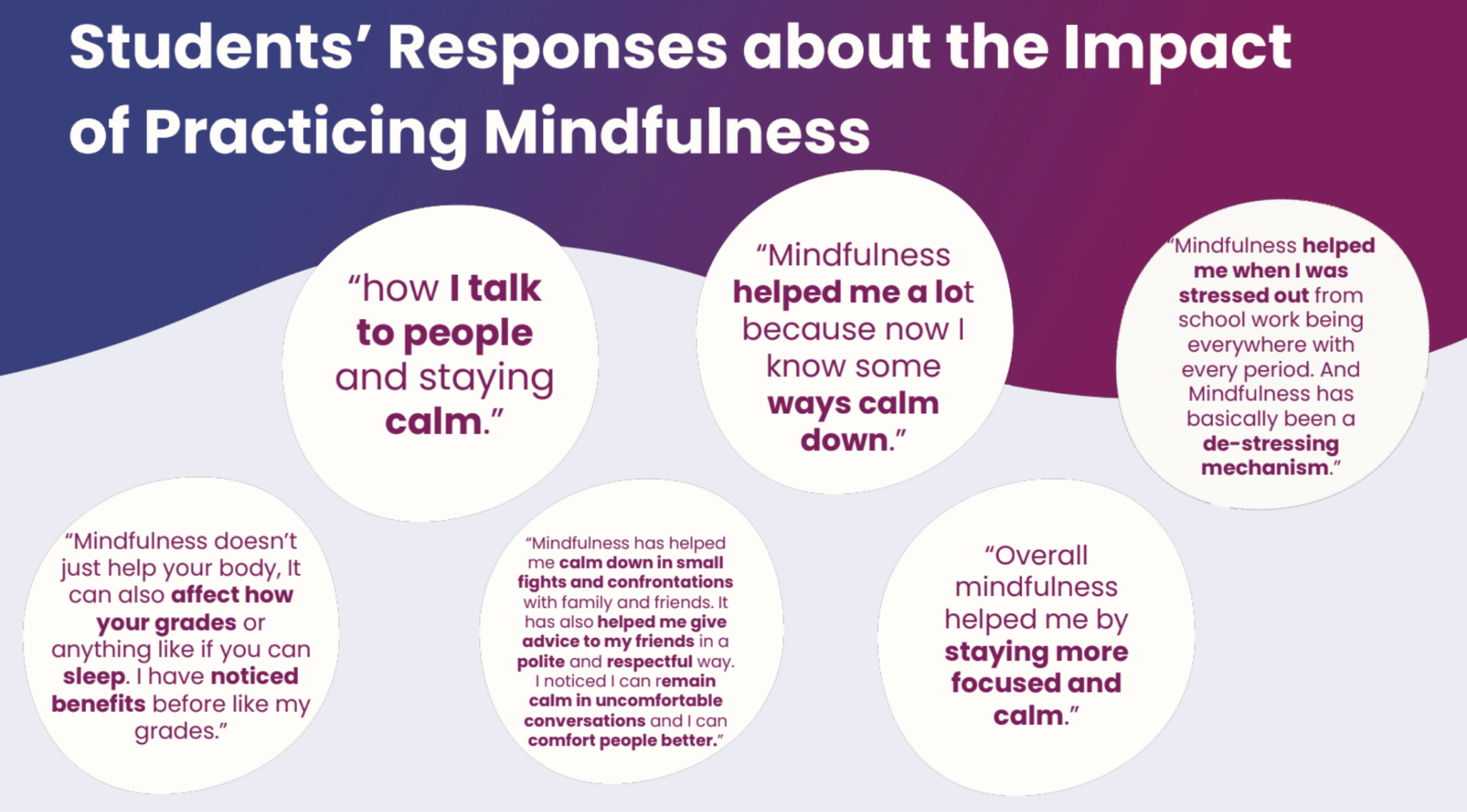
She also pushes back on the most common student review, that the class was "chill" and "easy." "Asking middle school students to sit in silence or to analyze how they're feeling is not necessarily an easy skill," she says. "Their sense of ease comes from our routines, our engagement, the SEL instruction from Sown To Grow, and the ability to access the content in a way that felt accessible."
Takeaways for leaders building a culture of well-being
- Make the structure predictable before you make it ambitious. Routine is what makes students feel safe enough to practice.
- Give students tools they can name. Ownership, not exposure, is what helps students actually apply skills.
- Pair experience with explicit instruction. Yoga and mindfulness supplied the experience; SEL lessons backed it up with language.
- Make Measurement Meaningful. Pre/Post surveys can be an excellent tool, but seeking feedback mid-cycle helps you adapt to the needs of your students.
Finally, Ellen’s work reminds us of the importance of investing in adults too. SEL and mindfulness helped save Ellen from burnout, but these tools weren’t taught as a part of her teacher credentialing program. Ellen never has SEL or trauma-informed teaching in her own credential program. Professional development and wellness routines aimed at adults can have ripple effects across a school’s culture.
For Ellen, the case is grounded in years of hearing the same thing from students: "I can achieve academically because I feel safe and supported in this classroom."
Congratulations to Ellen and the team at Alta Loma Middle School!
.png)
.png)
.png)
.png)
.png)