No Student Too Quiet to Be Missed: How River Rouge Turns Reflection into Proactive Support

.png)
At Ann Visger K-5 Preparatory Academy in Michigan’s River Rouge School District, student support starts with a simple belief: relationships come before academics.
For Janae McEwen, the district’s MTSS Coordinator and a longtime SEL leader, that philosophy is foundational to how the school approaches student well-being. As a trauma-informed district, River Rouge prioritizes knowing students, understanding what they need, and creating opportunities for them to be heard before challenges escalate.
That’s why Sown To Grow has become a natural extension of the work already happening across the school.
“I was always on board from the start,” McEwen said.
Teachers consistently use Sown To Grow’s SEL curriculum and student emotional check-ins as part of their weekly routines, choosing a time that works best for their classrooms. But for McEwen, the real value comes from what happens after students check in.
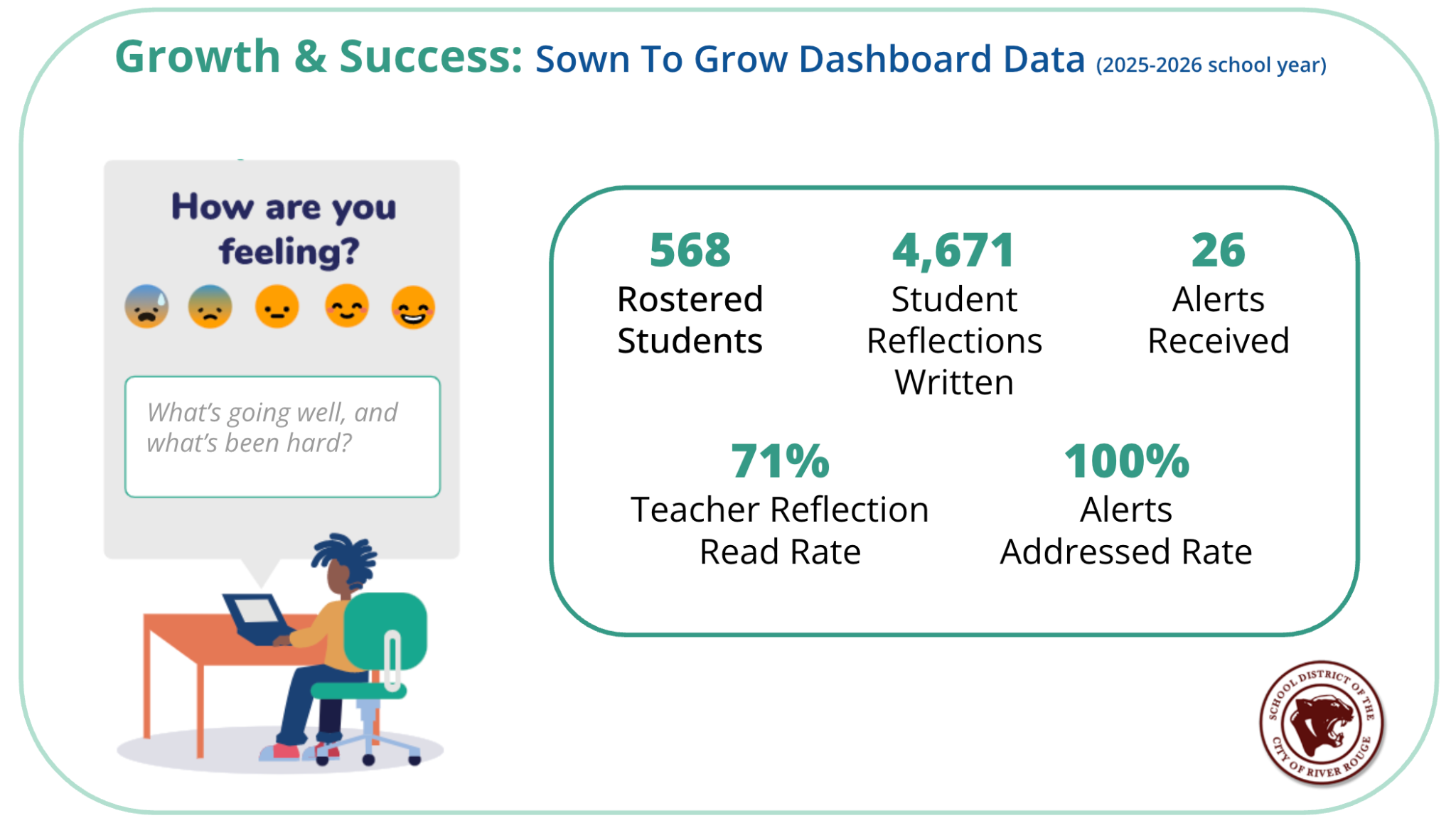
She regularly reviews participation and reflection data, celebrates teachers who are consistently engaging students, and—most importantly—reads what students are actually saying.
Those student voices can reveal things that might otherwise go unnoticed.
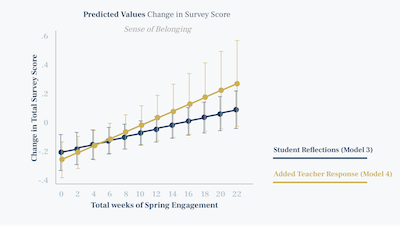
McEwen has found that students flagged in Sown To Grow for lower sense of belonging are often the quieter students—the ones who may not exhibit outward behavioral concerns or readily ask for help. The school can use that information to place students in targeted MTSS groups, provide additional lessons and interventions, and intentionally build their confidence.
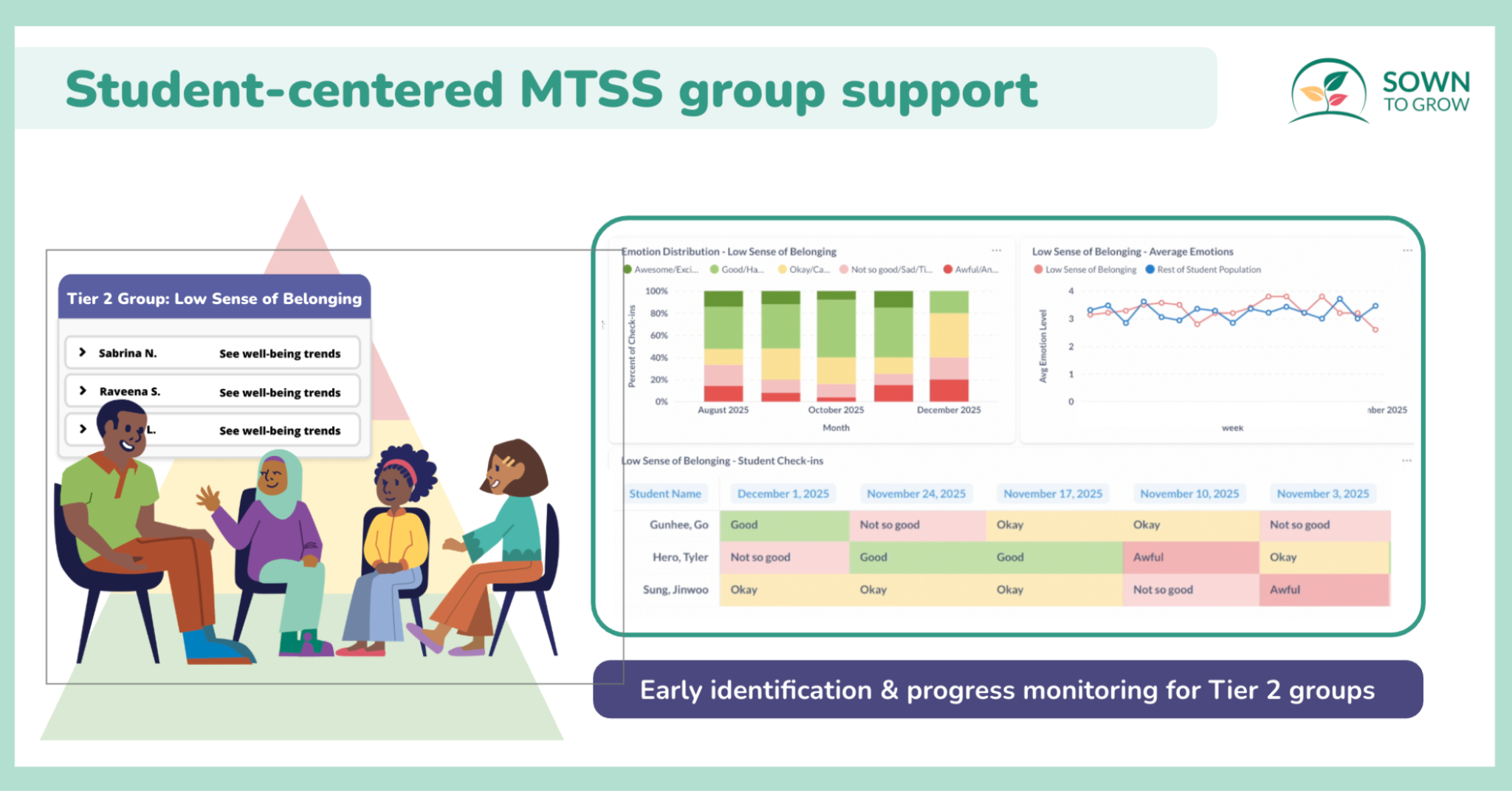
In other words, student reflection data isn’t simply information to collect. It’s a starting point for action.
The same proactive approach applies when Sown To Grow’s alerts surface potentially concerning language in a student check-in. McEwen, along with administrators and the school social worker, receives those alerts and can follow up when something warrants a closer look.
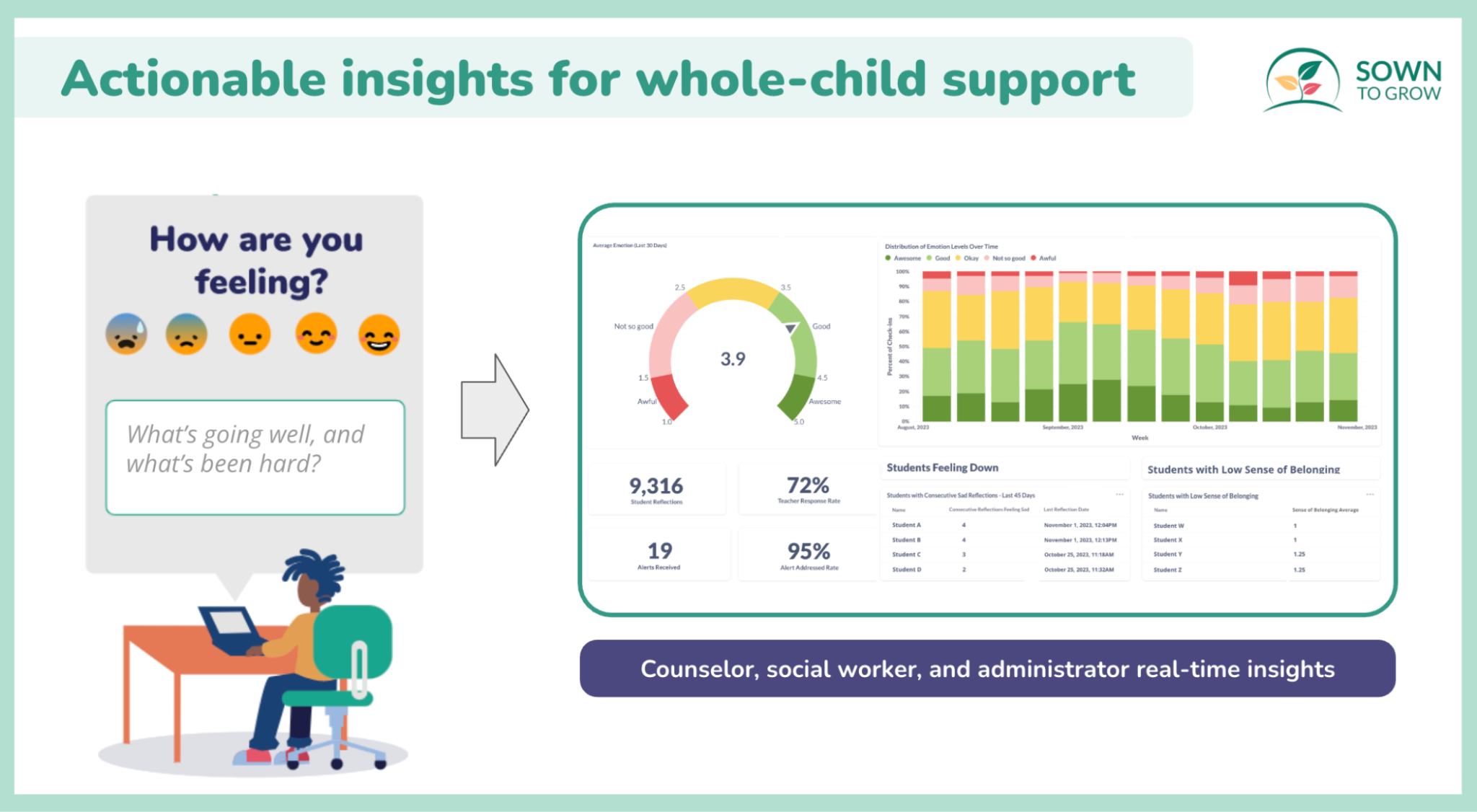
“We’ve definitely gotten some concerning alerts that need to be addressed,” she explained. “Nine times out of 10, it’s fine, it’s just a trigger word—but there was a particular alert where further guidance was needed for sure.”
That ‘one’ is precisely why creating multiple avenues for students to communicate matters.
As McEwen points out, children don’t always know how to verbalize what they’re experiencing—or may choose not to say it out loud. Giving them a space like Sown To Grow to put their thoughts into words can create an opening for an adult to notice, investigate, and respond.
Even the district’s youngest students are using the platform’s Simplified Check-In, which offers several accessibility options for little learners.
For River Rouge, the goal isn’t to wait for a student to struggle visibly before offering support. It’s to build systems that make it easier to hear every student, identify needs early, and connect students with the right support when they need it.
Now, McEwen’s focus for the coming year is straightforward: maximize consistency and keep pushing SEL forward across the school.
Because when it comes to student well-being, River Rouge isn’t willing to leave anyone unheard—or leave support to chance.
---
Interested in learning how Sown To Grow may fit with the student support goals in your own school or district? Click here or below to chat with a member of our team!
.png)
.png)
.png)
.png)
.png)