Webinar Recap - Relationships & Responsiveness: Belonging in Mental & Behavioral Help Support

I often say kids show up with more in their backpacks than just books. Proactive mental and behavioral health support doesn't start with a referral. It starts with relationships that help us understand our students more completely.
That was the heart of our October 6 edWebinar, Relationships & Responsiveness: Tier 1 Belonging in Mental and Behavioral Health Support. I was joined by my colleague LaKisha Hoffman, MSW, Senior Advisor of SEL Pedagogy & Product at Sown To Grow, and Leslie Santiago, MSW, school social worker at Sojourner Truth Independent Study in Oakland Unified.
Missed it? Watch the recording on edWeb and complete the short quiz to earn a continuing education certificate. View the slides.
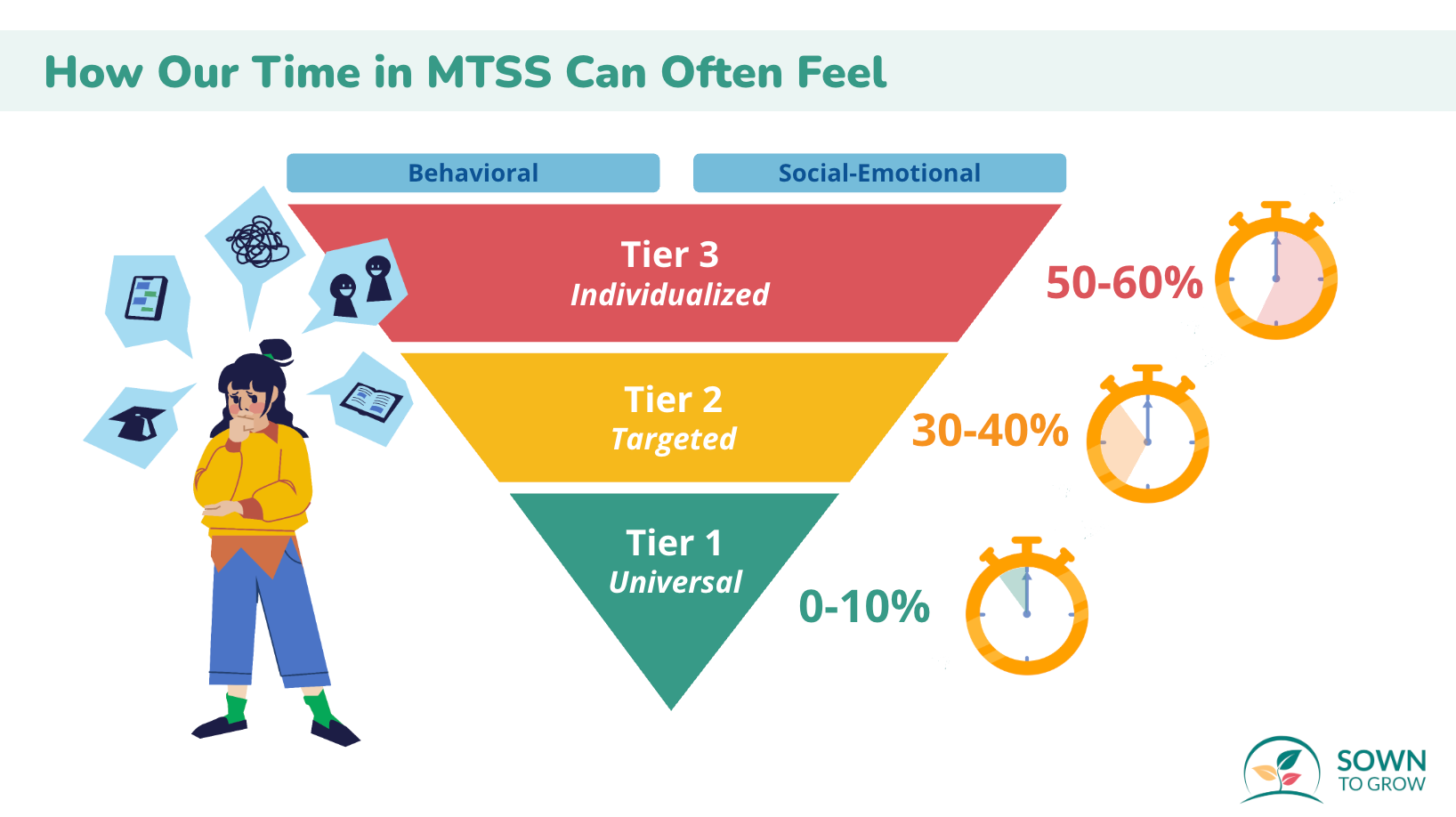
When Tier 1 is weak, the pyramid flips
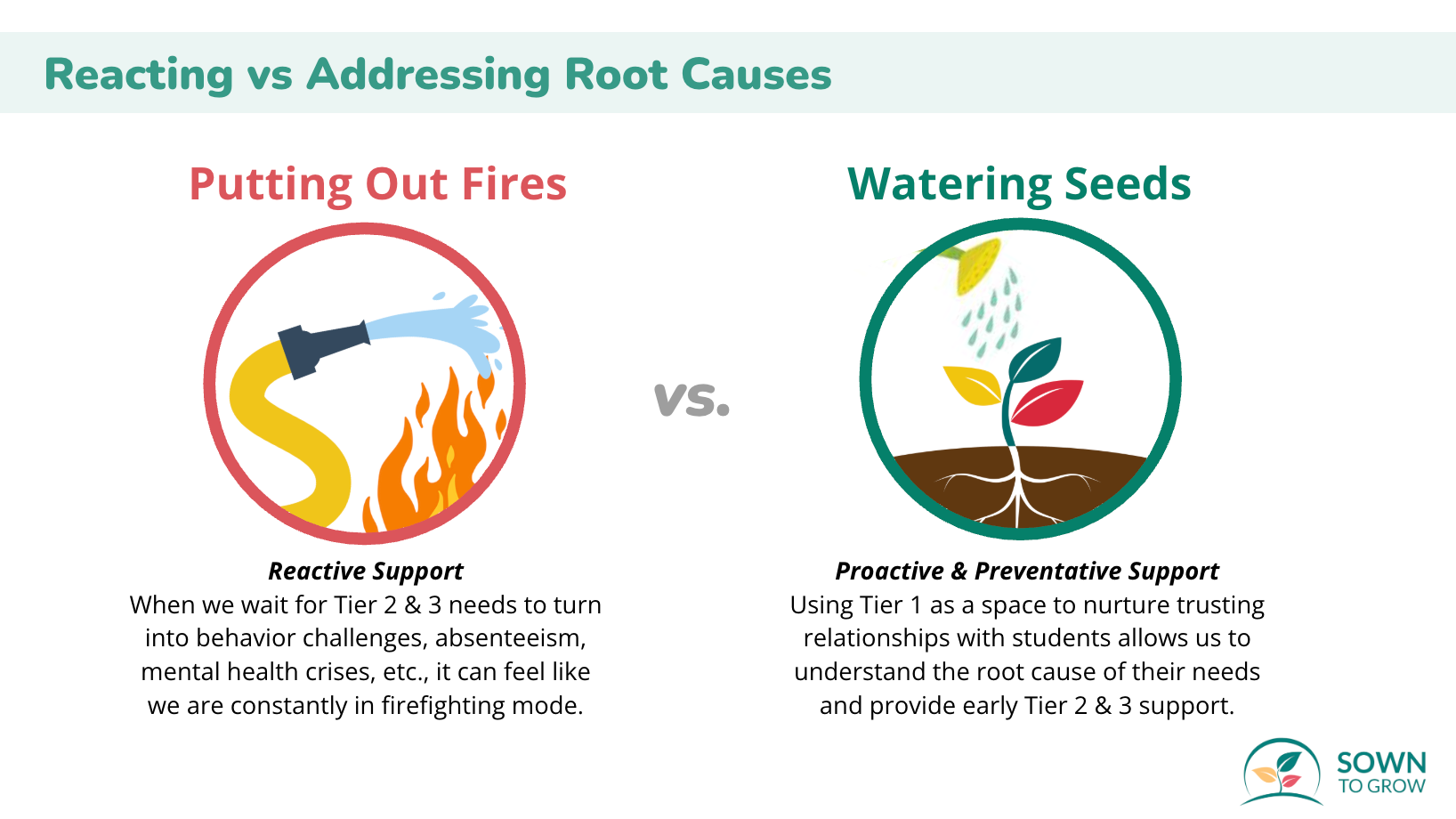
70–80% of youth who receive mental health services get them at school. When Tier 1 is consistent, proactive, and grounded in relationships, it should meet the needs of 80-100% of students. But across the country, we often see 30-40% of students in Tier 2 while only a sliver of our time goes to strengthening Tier 1. We end up putting out fires instead of watering seeds.
Belonging changes that. Students who have an adult at school who cares about them attend more often, engage more, and see up to a 35% reduction in course failure. In CDC data, 40% of high schoolers who didn't feel connected at school reported poor mental health, compared with 22% of those who did.
To every teacher who has told me, "I'm not a clinician": you don't have to be one to make an impact.
C.A.R.M.A.: Building healing-centered classrooms
Healing-centered classrooms go beyond trauma-informed practice. They create conditions where students can heal, grow, and thrive. Drawing on Dr. Shawn Ginwright's work, LaKisha walked us through C.A.R.M.A.
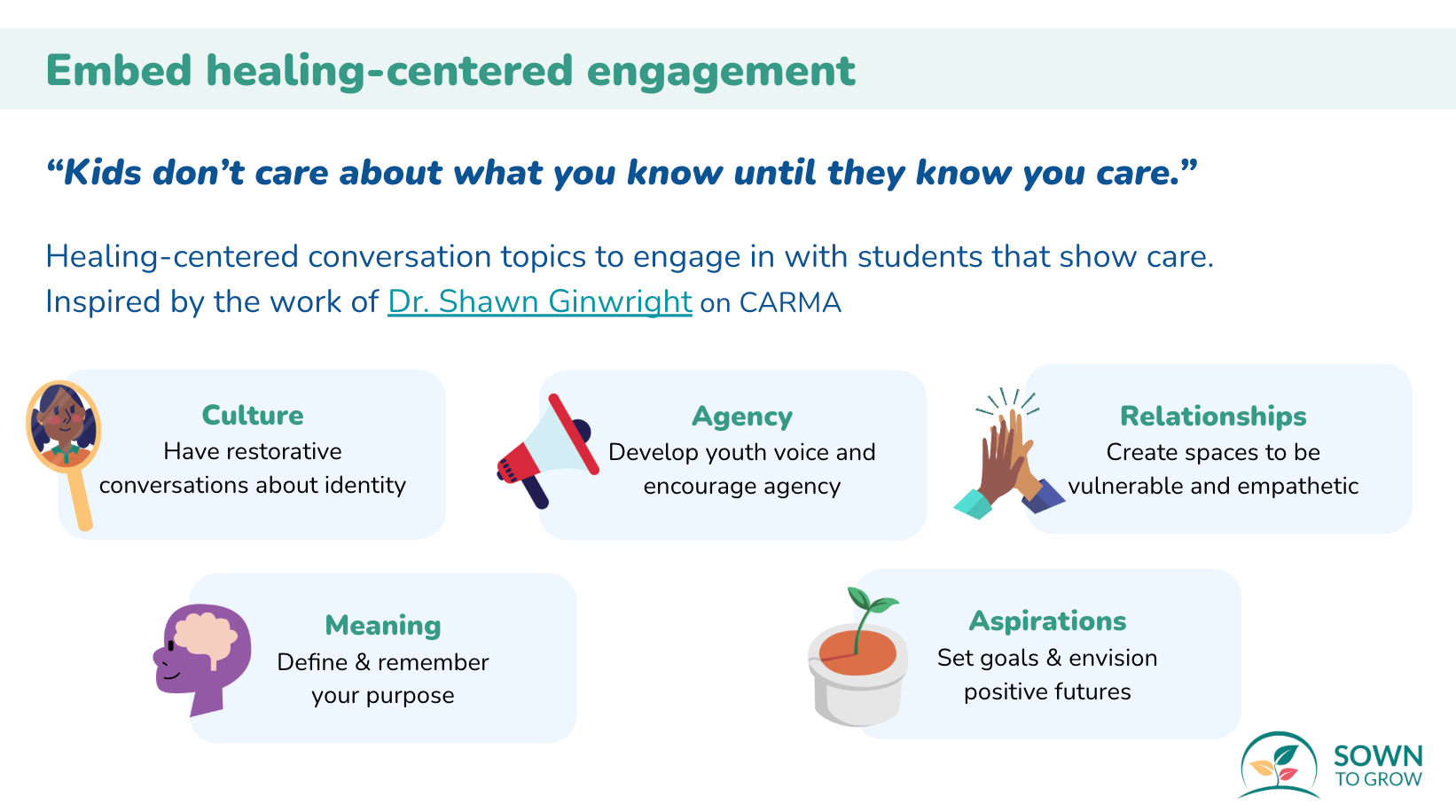
- Culture: Reflect students' identities in books, prompts, and routines.
- Agency: Co-create classroom norms and give students real leadership. As an assistant principal, LaKisha had student leaders help interview teacher candidates.
- Relationships: Make sure every student is known by at least one adult.
- Meaning: Connect learning to students' lives and futures.
- Aspirations: Set goals and celebrate progress, not perfection.
"Anything that works for students that have been impacted by trauma works for everyone," LaKisha said. Her coaching mantra for teachers: "Connection before correction."
When she talked about aspirations, one attendee captured the spirit in two words in the chat: "Hope declares."
Notice. Talk. Act.: A role for every adult
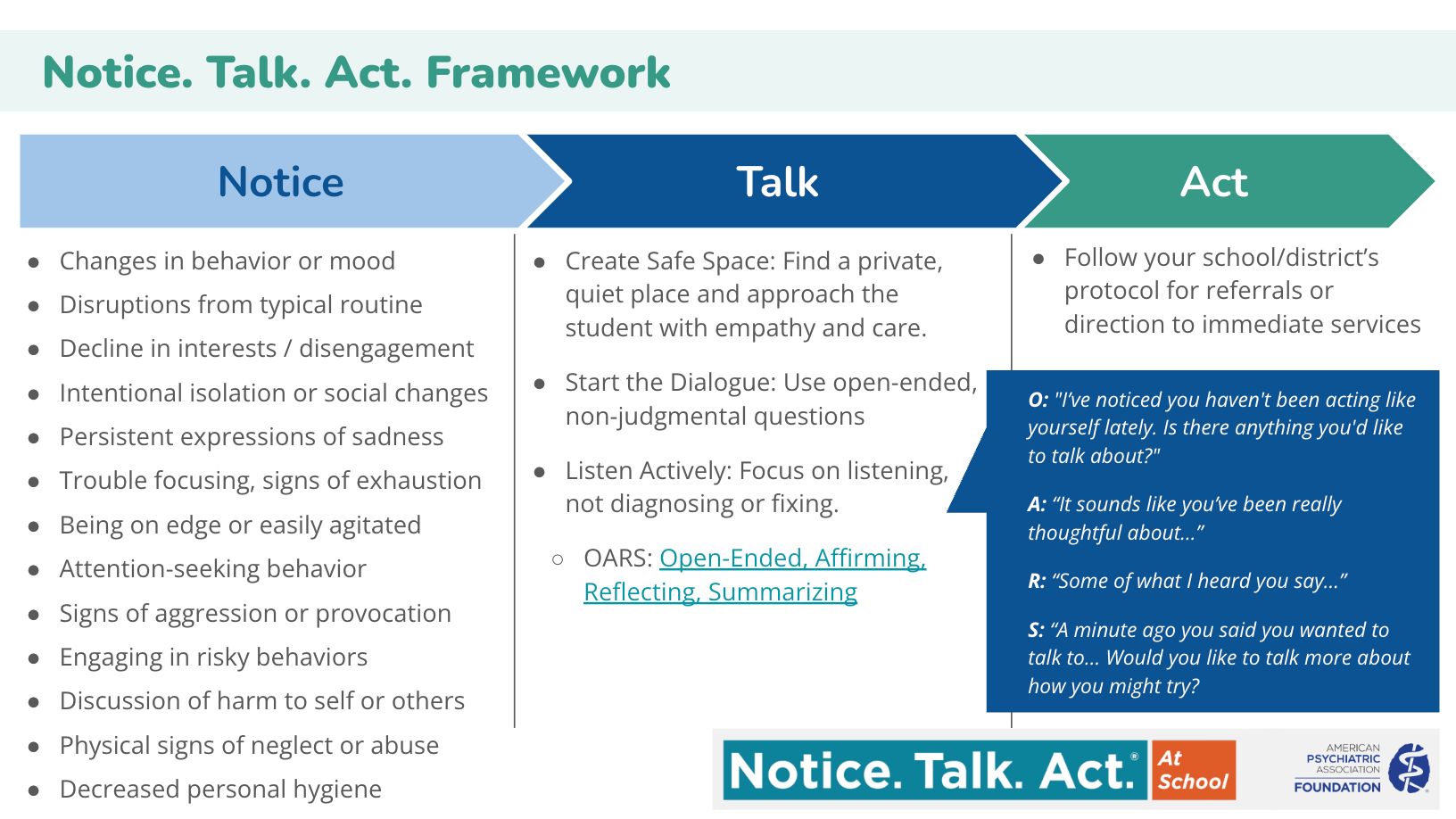
Some students will still need more. Notice. Talk. Act. gives any adult a starting point. Notice changes in mood, behavior, or engagement. Talk privately, with open-ended, nonjudgmental questions; you're listening, not diagnosing. Then act by following your school's referral protocol. Sometimes that just means asking who the student would like to talk to. They might name the PE teacher, and that's a great first step.
In action: Belonging in a virtual school
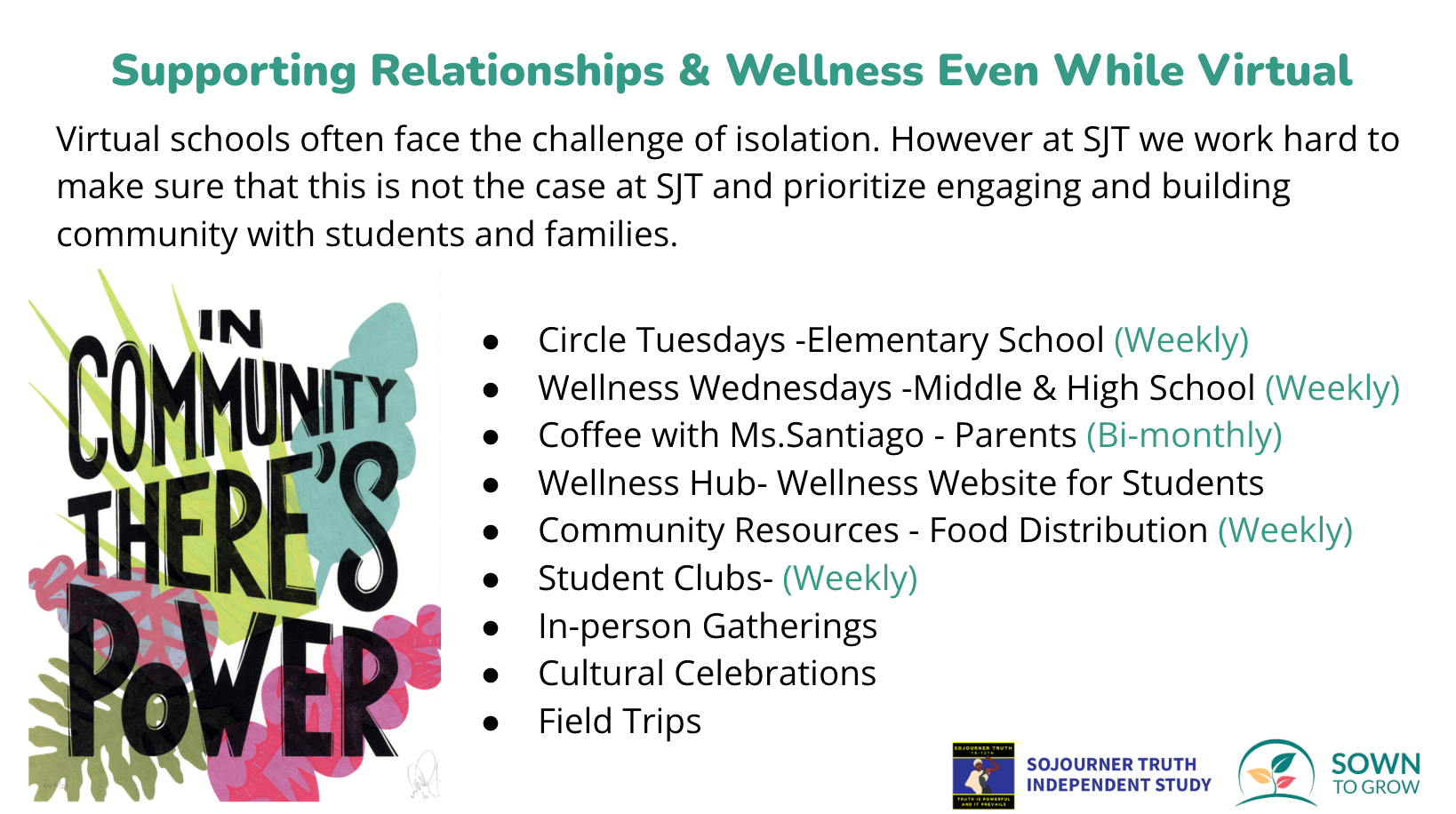
Sojourner Truth is Oakland Unified's only virtual school, serving about 500 students in grades 1–12. Without hallways, Leslie's team builds belonging on purpose: Wellness Wednesday assemblies, "Coffee with Ms. Santiago" for caregivers, weekly food distribution, and in-person cultural celebrations.
Weekly Sown To Grow check-ins give them a regular window into how every student is doing. Last year, students submitted 5,663 reflections, and all 51 alerts were addressed. Teachers respond first because they hold the relationship, and Leslie steps in when a need rises to Tier 2 or 3.
"All of our alerted reflections are always addressed within 24 hours," Leslie shared. "And that's something we're really proud of."
How Sown To Grow strengthens Tier 1
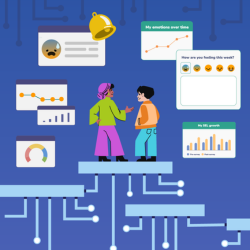
Students spend three to five minutes each week choosing an emoji and reflecting on what's going well and what's been hard. Teachers respond, and insights roll up so counselors, social workers, and administrators can spot patterns and act early.
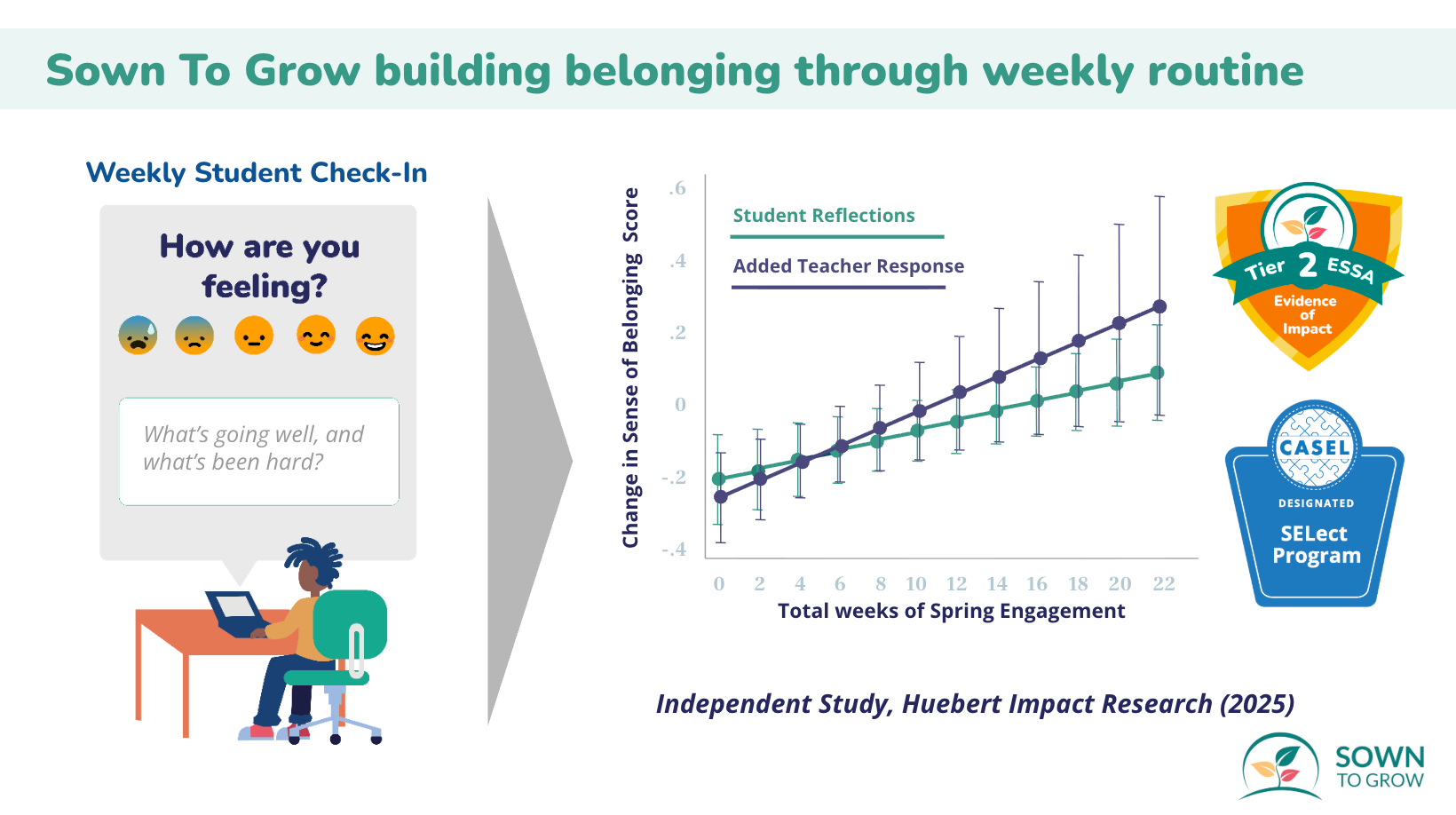
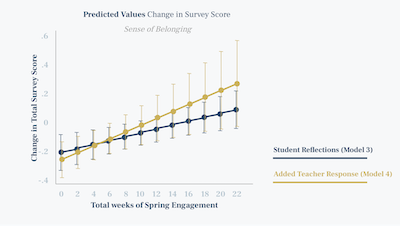
Independent research shows these check-ins correlate with a statistically significant increase in students' sense of belonging, and growth accelerates when teachers respond. In California Community Schools, those using Sown To Grow with strong practice saw nearly three times the reduction in exclusionary discipline of peer schools.
Ongoing Resources
The appendix of the slide deck includes the H.O.P.E. framework (Healthy Outcomes from Positive Experiences), self-regulation tools, and calm-corner ideas you can use this week and beyond.